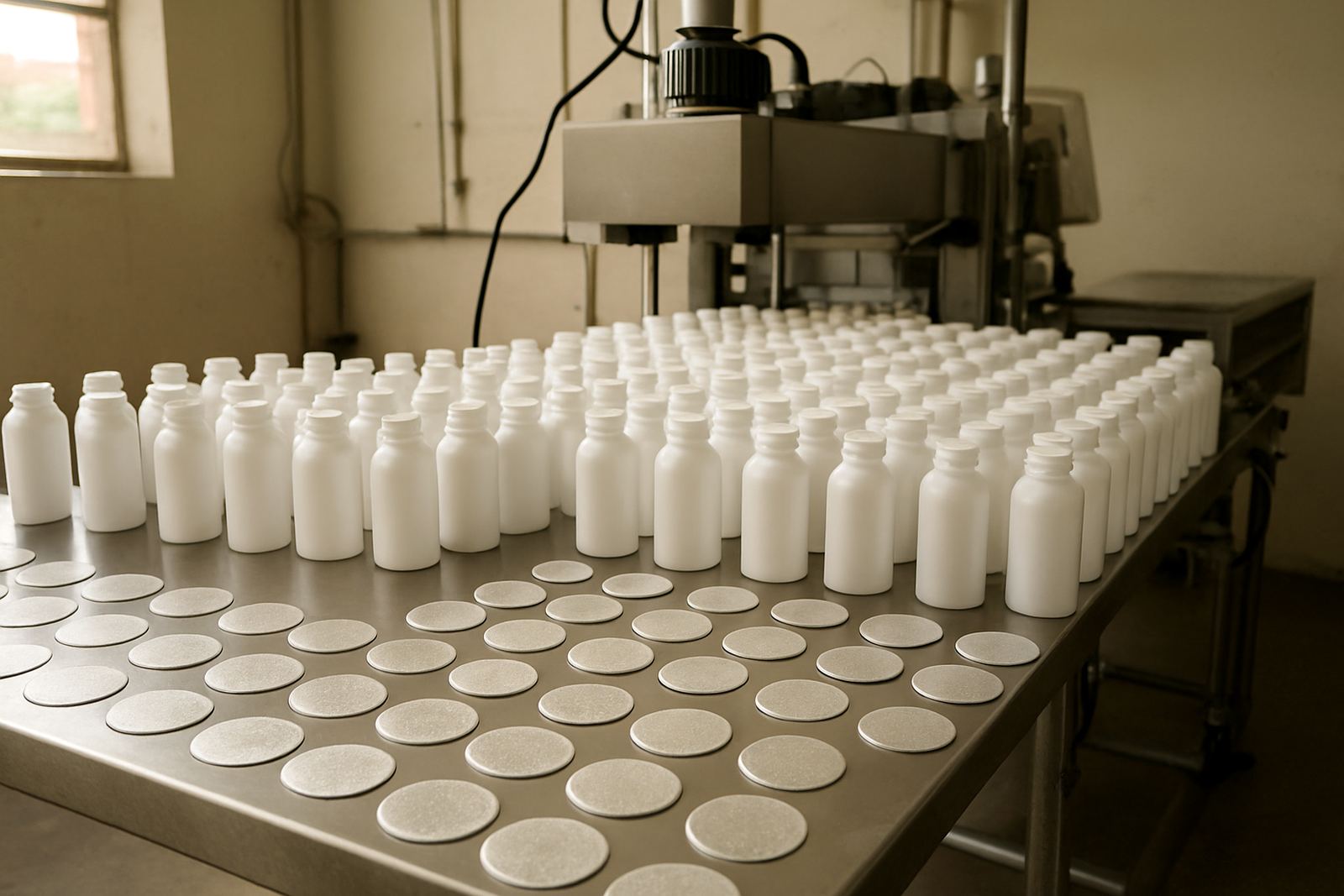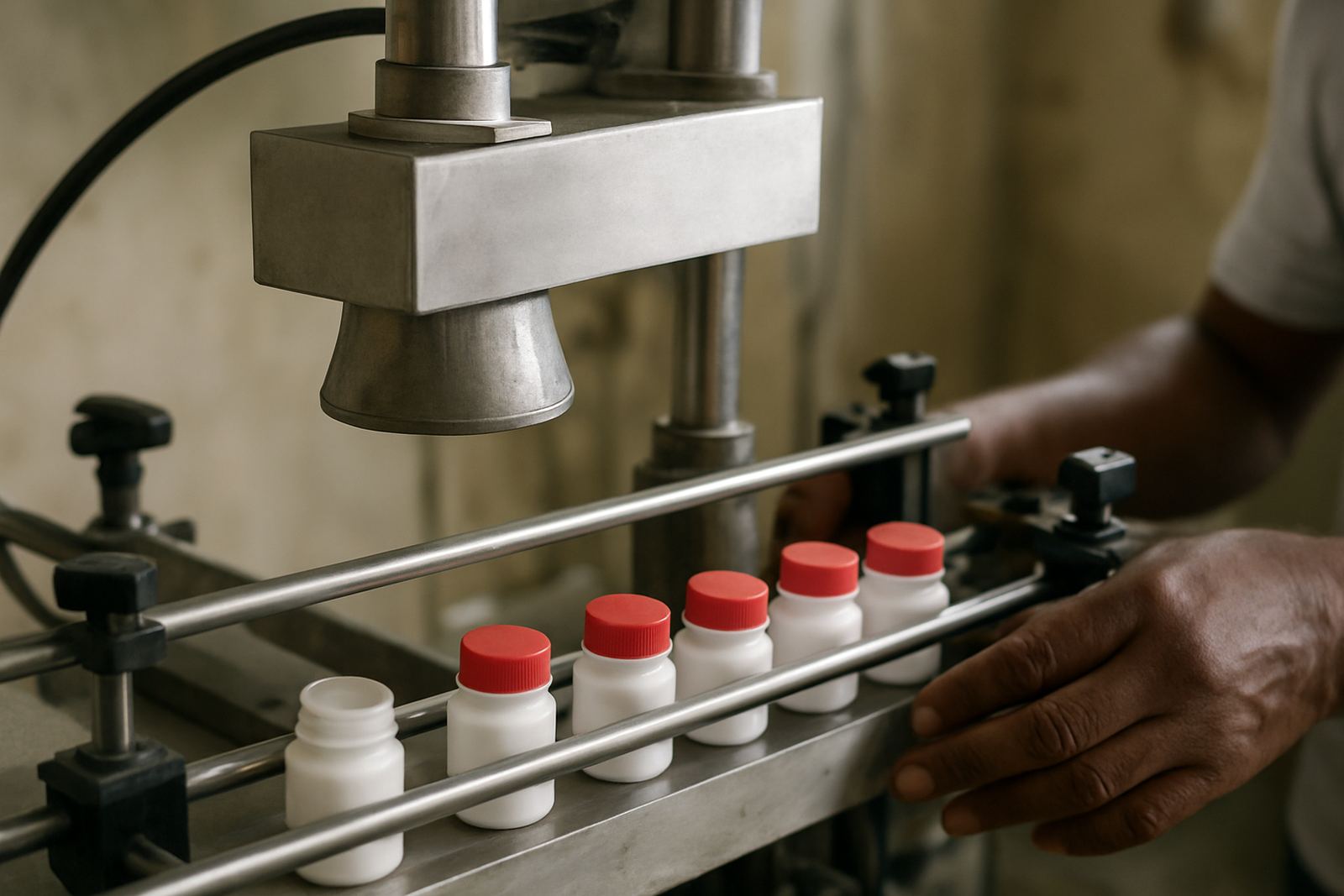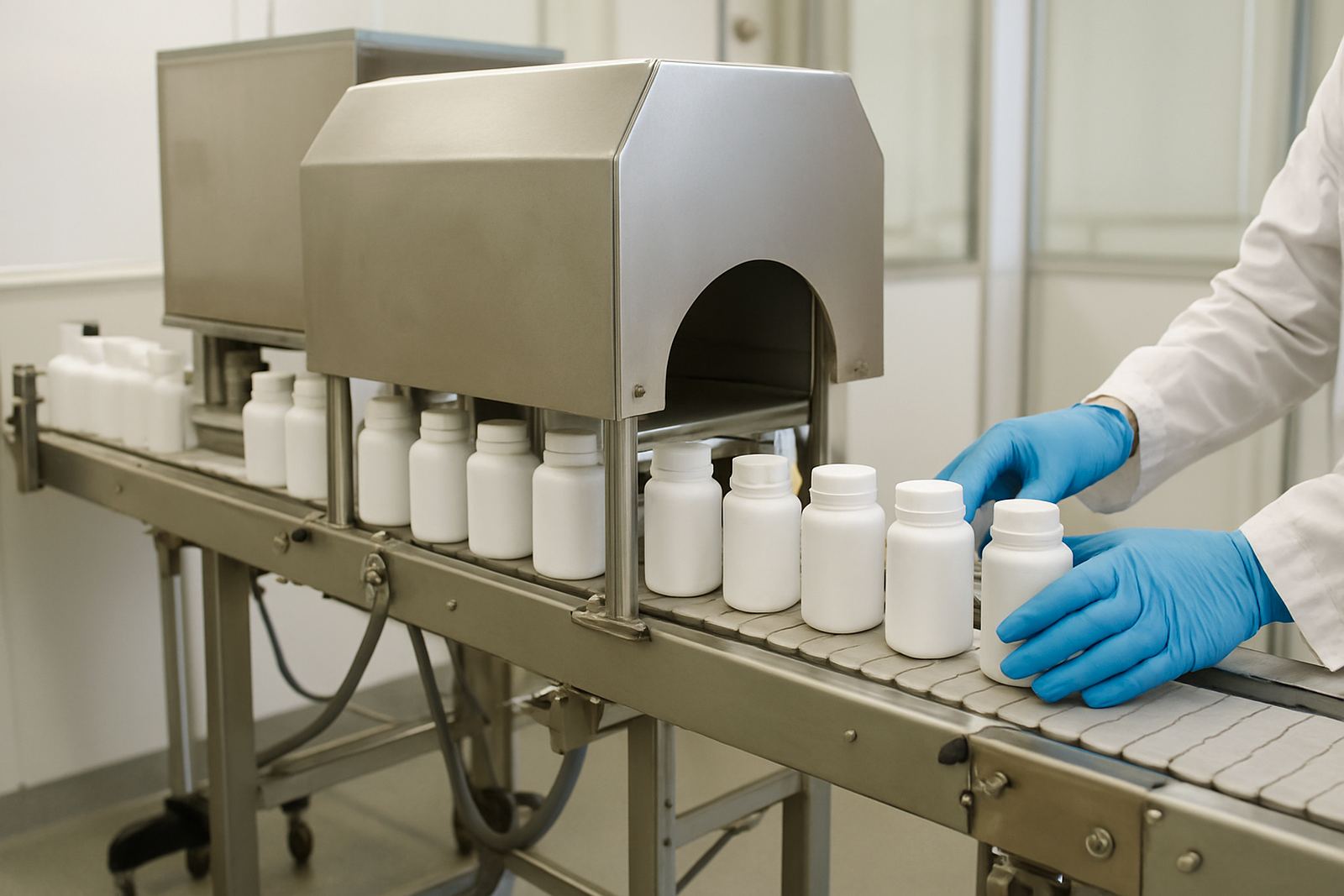
What the Pharma Line Sealer does on your packing line
This unit applies induction heat through a foil liner in the cap, creating a secure seal across the mouth of the container without direct contact with the product. It is suited to pharmaceutical filling rooms where closures must stay neat, tamper evident and repeatable from one run to the next. In practice, it helps reduce leaks, protect shelf life and support batch control in busy production rooms.
The sealer is designed for line work rather than loose bench use, so it fits continuous or semi automatic packing where containers pass under the sealing head at a fixed speed. For sites in Jacobs, Pinetown, Prospecton and Pietermaritzburg, that means less handling and fewer interruptions during changeovers. It is also a good fit where humidity, dust control and cleaning routines matter, because the sealing action itself stays outside the product path.
- Designed for rigid plastic and glass containers
- Suitable for foil liner induction sealing after capping
- Works on short, medium and longer production runs
- Supports tamper evidence and leak prevention
Sizes, heads and operating options
The Pharma Line Sealer can be specified to suit different bottle diameters, cap sizes and line speeds. Smaller heads are useful on narrow neck containers, while wider heads are chosen for larger closures and heavier packs. The right head size depends on the liner material, cap height and the product fill area, so matching matters before delivery.
Options are usually selected around throughput, container size and the sealing window needed for your pack format. Where a line handles mixed packs, the sealer may be set up with change parts or adjusted settings for different closure heights. That gives the operator a practical way to keep seal quality steady without over heating the liner or under sealing the cap.
- Available for small, medium and large cap formats
- Typical container range: 20 mm to 120 mm neck or cap sizes depending on setup
- Adjustable sealing height for different bottle and jar formats
- Line compatible options for conveyor mounted or inline placement
Best fit for pharma, nutraceutical and controlled liquids
This product suits pharmaceutical packaging where a reliable seal is part of the quality system, as well as nutraceutical, supplement and controlled liquid lines that use capped rigid containers. It is also useful for contract packers handling different customer requirements, since liner type and seal confirmation can be matched to the fill and cap arrangement. For coastal sites in Durban, a proper induction seal can also help protect packed goods in humid conditions that may affect closure performance.
It is not a one size fits all machine. The best results come from using the right foil liner, correct cap material and a container finish that gives even pressure during sealing. If the pack is intended for export, retail pharmacy shelves or regulated local distribution, the setup should be checked against the actual bottle, closure and product chemistry before final order. A quick test with sample packs usually saves trouble later, and it helps avoid liners that lift or wrinkle.
- Pharmaceutical syrups, tablets and liquid medicines in rigid packs
- Supplements, vitamin products and health product ranges
- Controlled liquids and chemical products with suitable closures
- Contract packing environments with changing batch requirements
Installation, electrical needs and line integration
The sealer needs correct positioning over the conveyor, with stable bottle presentation and enough clearance for the sealing head to work at line speed. In most cases, installation is planned around the current filling and capping line so the machine can be added without blocking operators or forcing major layout changes. Where there are power dips from load shedding, a site may also need power conditioning or a controlled shutdown plan so the electronics and conveyors are protected.
Electrical supply depends on the selected unit, but line-ready induction sealers commonly need single phase or three phase power depending on size and output. The machine should be installed on a clean, level area with proper earthing and access for maintenance. If the product line uses compressed air for guides or other handling equipment, the air supply must also be checked, although the sealing process itself is usually electric rather than gas based. Our team handles site installation, line commissioning and operator training from Jacobs, Durban and on projects nationwide.
- Check available electrical supply before ordering
- Allow space for infeed, outfeed and operator access
- Plan for earthing and safe cable routing
- Confirm any compressor or ancillary line needs at commissioning
Care, servicing and seal validation
Like any packing line unit, this sealer performs best when it is kept clean and checked at regular intervals. The sealing head should be wiped down, the conveyor area kept free of dust and offcuts, and the settings reviewed when cap or liner types change. If the line runs daily, preventive maintenance helps avoid sudden downtime and keeps seal results consistent from shift to shift.
Our service support includes breakdown repairs, spares supply, seal validation and remote support when a quick check is needed. This is useful for sites in Richards Bay, Pinetown or Pietermaritzburg that cannot afford long stoppages when a batch is waiting. During servicing, the technician should confirm head alignment, heat consistency, conveyor speed and liner response. A small drift in one of those areas can cause weak seals or cosmetic faults, so regular checks pay for themselves pretty fast.
- Preventive maintenance for scheduled production windows
- Breakdown repairs for line stoppages and seal faults
- Seal validation after new liner, cap or bottle trials
- Operator training for day to day checks and basic fault finding
What to check before you order
Before ordering, confirm the container material, neck finish, cap type and the foil liner you plan to use. It also helps to know your target output per hour, line speed and whether the machine must handle one format or several. If you are sealing products with different fill temperatures or chemical contents, that information matters too because some liner and cap combinations react differently under heat.
You should also send a sample bottle and closure for liner matching where possible. That lets us check the fit, closure depth and likely seal performance before the unit is commissioned. For factories in Jacobs or Prospecton, this step is especially useful when production space is tight and the line must be right first time. If the site already has conveyors and capping equipment, share photos or basic dimensions so the sealing head and mounting can be matched properly, no guesswork.
- Bottle or jar material and neck finish
- Cap type, liner type and closure height
- Required speed, batch size and daily output
- Power available on site and any line constraints
Key facts
| Product type | Inline induction cap sealer for foil liner closure |
|---|---|
| Typical use | Controlled pharmaceutical packaging lines |
| Container range | Approximately 20 mm to 120 mm cap or neck sizes depending on setup |
| Power | Single phase or three phase depending on selected configuration |
| Installation | Inline, conveyor mounted or line integrated |
| Support | Site installation, commissioning, training, validation and maintenance |