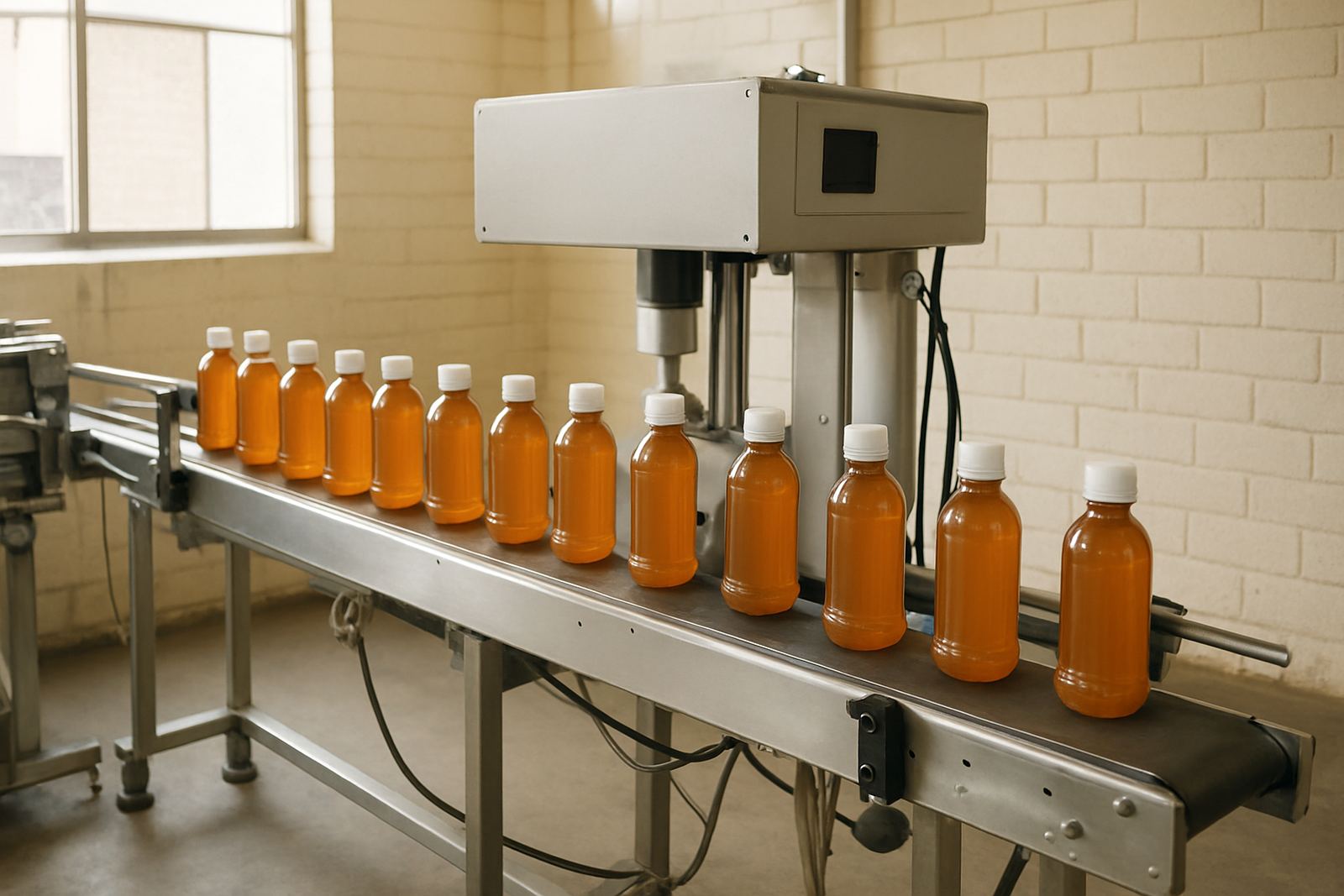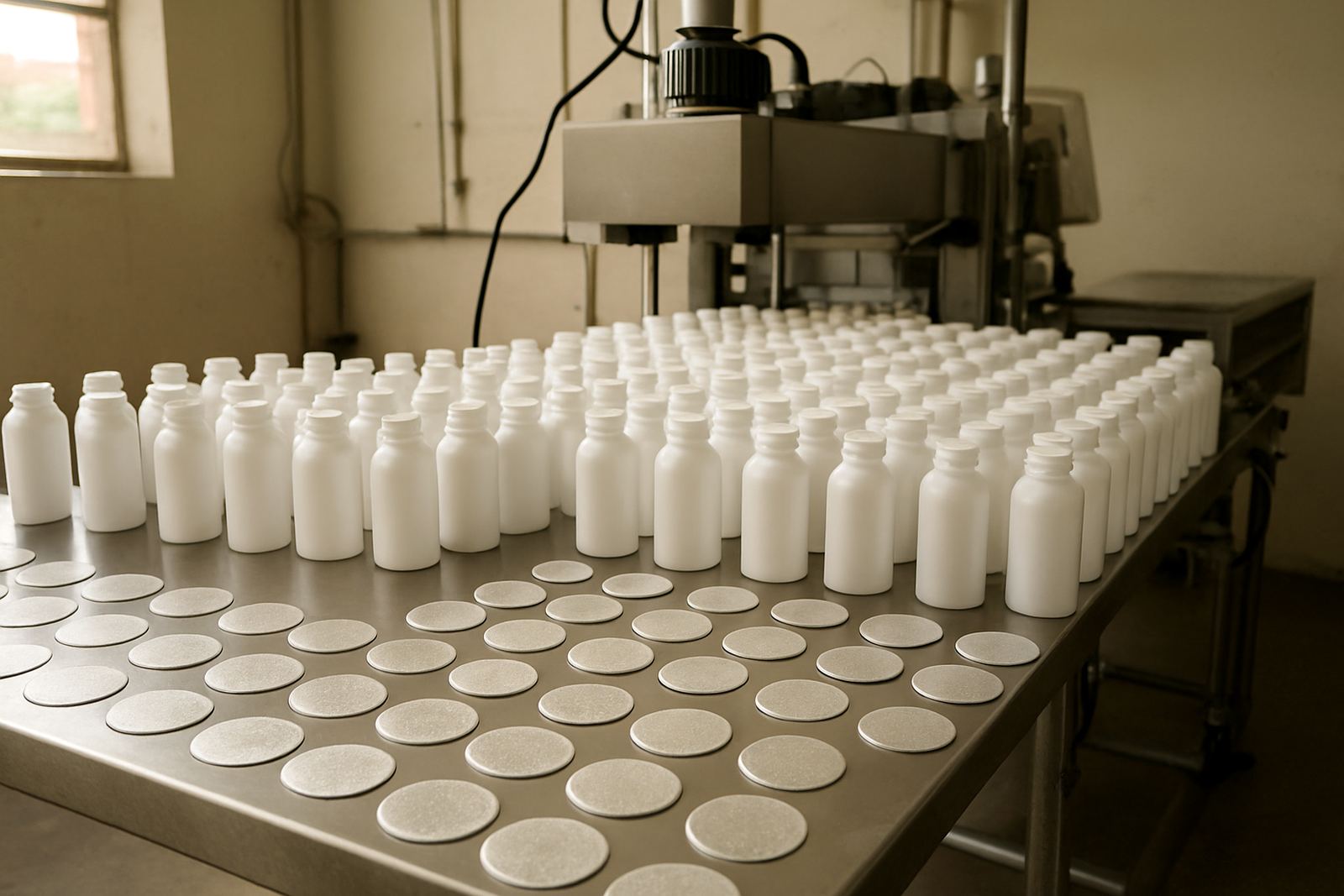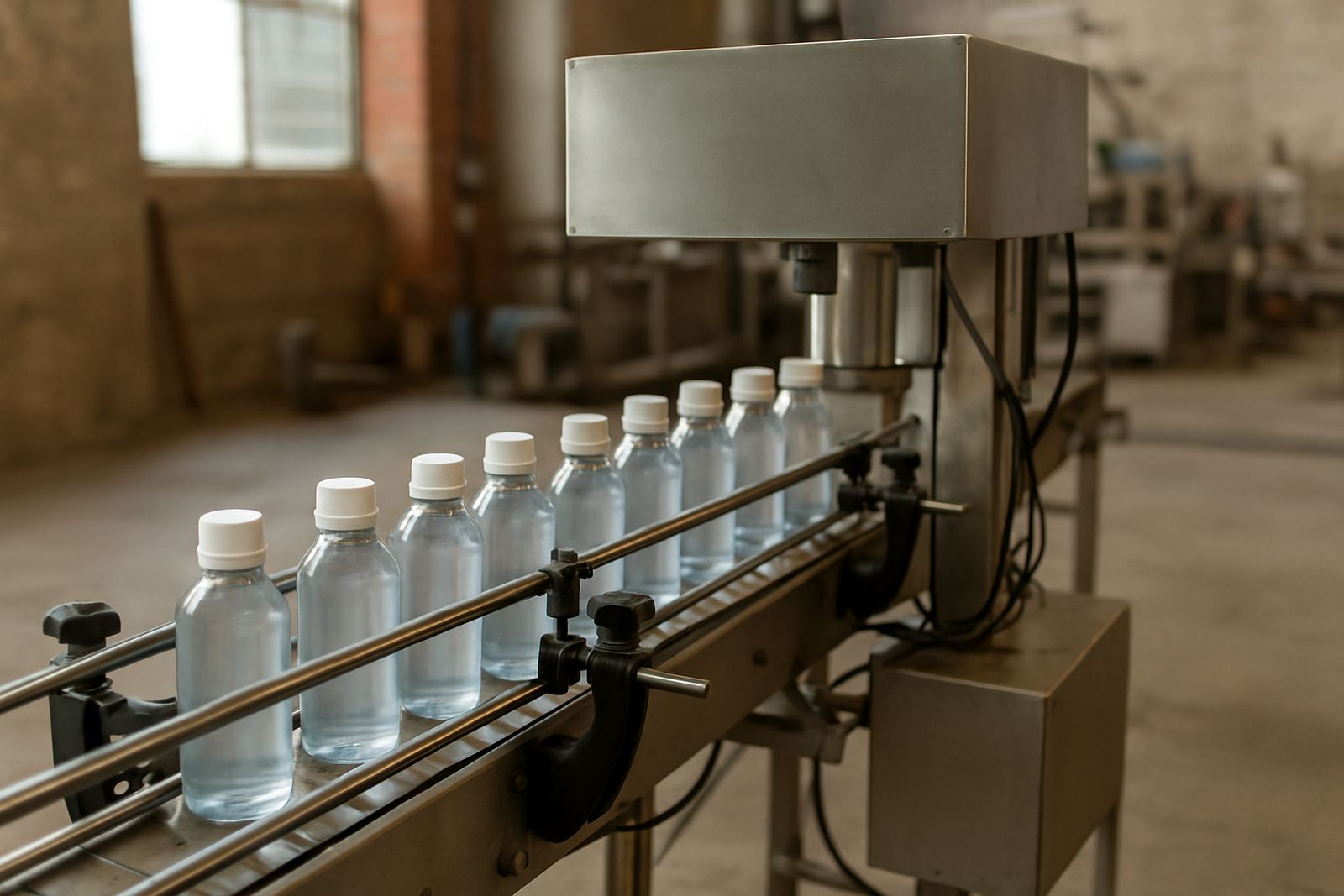
What the Cap Alignment Unit does on a filling line
The cap alignment unit sits before the induction sealer and corrects cap position before the seal is applied. Its job is simple: guide caps into a consistent presentation so the sealing head sees the same finish each time. That matters on high speed lines and on slower batch runs too, because poor cap presentation can cause weak seals, wrinkled liners, misapplied foil and avoidable stops.
In many South African plants, bottles move from filling to capping to sealing in a compact space. If the cap is sitting slightly skew or the neck finish varies, the alignment unit gives the operator one less problem to manage. It is especially useful when handling screw caps, tamper evident closures and containers where the foil liner must meet the bottle mouth squarely.
- Improves cap presentation before induction sealing
- Helps reduce crooked or incomplete seals
- Supports steadier line speed and fewer manual corrections
- Useful on new installations and older lines that need better control
Typical sizes and options for Durban and national lines
Cap alignment units are selected around the container range, closure type and line speed. Bottle Sealers supplies units for smaller pack sizes through to larger industrial containers used in pharmaceutical, food and chemical packing. The right setup depends on whether your line handles one bottle size, a short range of pack formats or frequent changeovers.
For Jacobs and Durban plants, we often see compact layouts where floor space is tight and the unit has to fit between the capper and sealer without slowing production. For plants in Pietermaritzburg, Richards Bay and Pinetown, the priority may be durability in hotter areas or in facilities where humidity and dust are common. The unit can be supplied to suit your existing conveyor height and bottle guide system.
- Single size or adjustable guide configuration
- Manual or operator set changeover, depending on the line
- Suitable for round and some square container formats
- Can be matched to stainless steel or coated frames as needed
Where the unit suits best
This helper unit is a good fit where sealing quality depends on accurate cap presentation and repeatable bottle handling. It is commonly used in pharmaceutical packing rooms, food bottling lines, chemical filling areas and contract packing operations. If your operation moves between products with different neck finishes or cap styles, the unit can save time during setup and reduce operator intervention.
It also suits sites that run through load-shedding or generator changeovers, where a line restart can leave caps misfed or bottles queued unevenly. A stable alignment stage helps the sealing section get back into rhythm quicker. It is not a cure for every packaging issue, but on the right line it cuts out a lot of small frustrations that build up over a shift.
- Pharmaceutical bottles and tamper evident closures
- Food jars, health products and beverage containers
- Cleaning chemicals, solvents and industrial liquids
- Sites with frequent start-stop running or shift changes
Installation, power and line setup
Installation is normally carried out on site so the unit can be aligned with your conveyor, capper and induction sealing head. The main requirement is a level, stable mounting position with enough approach and exit space for the bottle flow. On some lines the unit is fitted as part of a new sealing package, while on others it is added to an existing layout that needs a better cap presentation stage.
Power needs depend on the final configuration, but most units require a standard electrical supply for the control and drive components. No gas supply is normally needed for the alignment function itself. If the line is exposed to frequent washdown, coastal moisture or chemical vapours, we look at enclosure choice and cable routing so the unit stays practical in daily use. As with any line equipment, the better the installation, the fewer call backs later.
- Installed in line between capping and induction sealing
- Requires a level conveyor section and correct bottle guides
- Usually runs on standard electrical supply
- No gas connection required for the alignment unit itself
Care, cleaning and preventive servicing
Like the rest of a sealing line, the cap alignment unit works best when it is kept clean and checked regularly. Dust, product splash and worn guides can affect presentation over time. In wet areas or coastal sites such as Durban and Richards Bay, regular wiping and inspection are important because moisture can build up on moving parts and fasteners.
Preventive maintenance should include checking guide wear, fastener tightness, sensor position where fitted, and any drive belts or moving arms used by the unit. If bottles begin to drift or caps are arriving at the sealing head uneven, the problem is often easy to correct if caught early. It is cheaper to replace a worn guide than to keep scrapping product on a Friday afternoon.
- Daily wipe down and visual check by the operator
- Weekly inspection of guides, mounts and moving parts
- Scheduled service during planned line stoppages
- Keep spare wear parts on hand for critical runs
What to check before you order
To size the correct cap alignment unit, we need a few key details about your line. Bottle shape, neck finish, cap type and target line speed all affect the final selection. If the unit is going onto an existing line, it also helps to know the available space, conveyor height and whether the sealer is fixed or movable. A quick site discussion can save a lot of back and forth later.
For plants handling multiple products, it helps to know which pack sizes are most common and how often changeovers happen. If you are in a regulated environment, ask about validation needs and the records you keep for each batch. We can also advise on liner matching and whether the cap presentation stage should be adjusted before or after any filling checks.
- Bottle material, shape and neck finish
- Cap style, liner type and tamper evident requirements
- Line speed in bottles per minute
- Available space and conveyor height
- Power supply details and washdown conditions
Key facts
| Unit type | Cap presentation and alignment helper for induction sealing lines |
|---|---|
| Compatible containers | Plastic and glass bottles, plus selected jars and rigid containers |
| Typical use | Before induction sealing to improve cap position and seal consistency |
| Installation | Inline fit to existing conveyor and capper layout |
| Power | Standard electrical supply, final requirement depends on configuration |
| Service support | Installation, commissioning, operator training, maintenance and breakdown support nationwide |