Higher output bench sealing for day-to-day packing
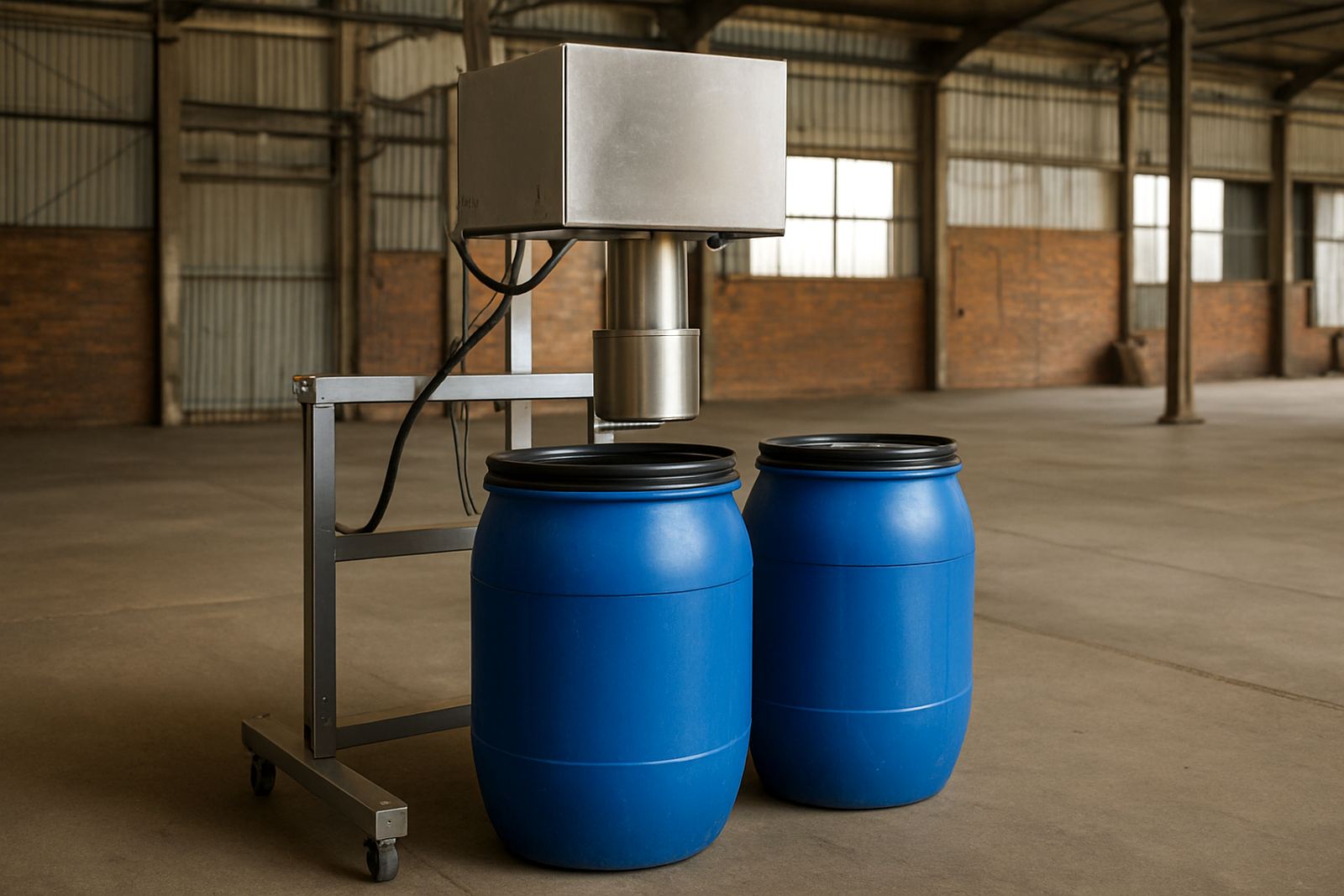
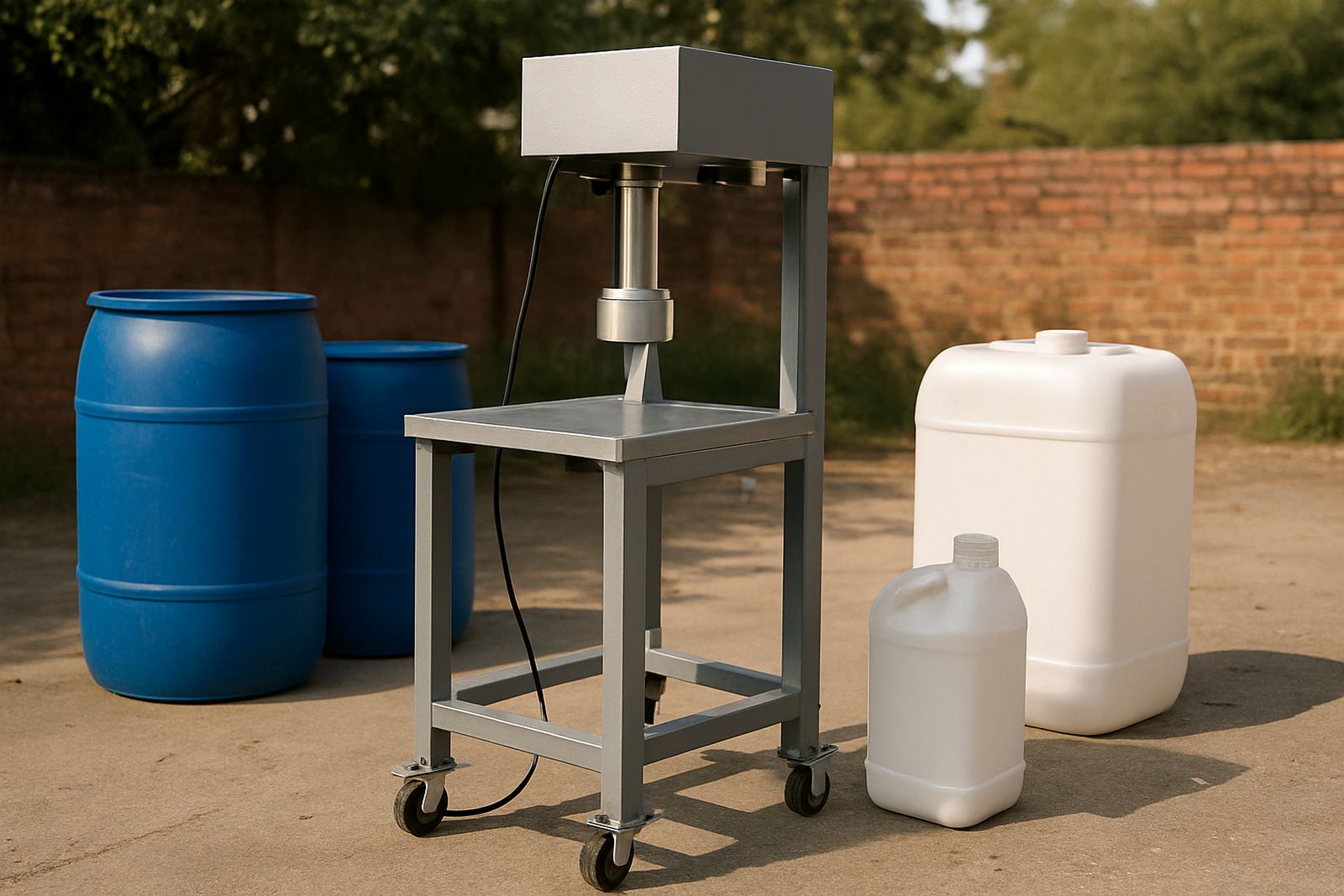
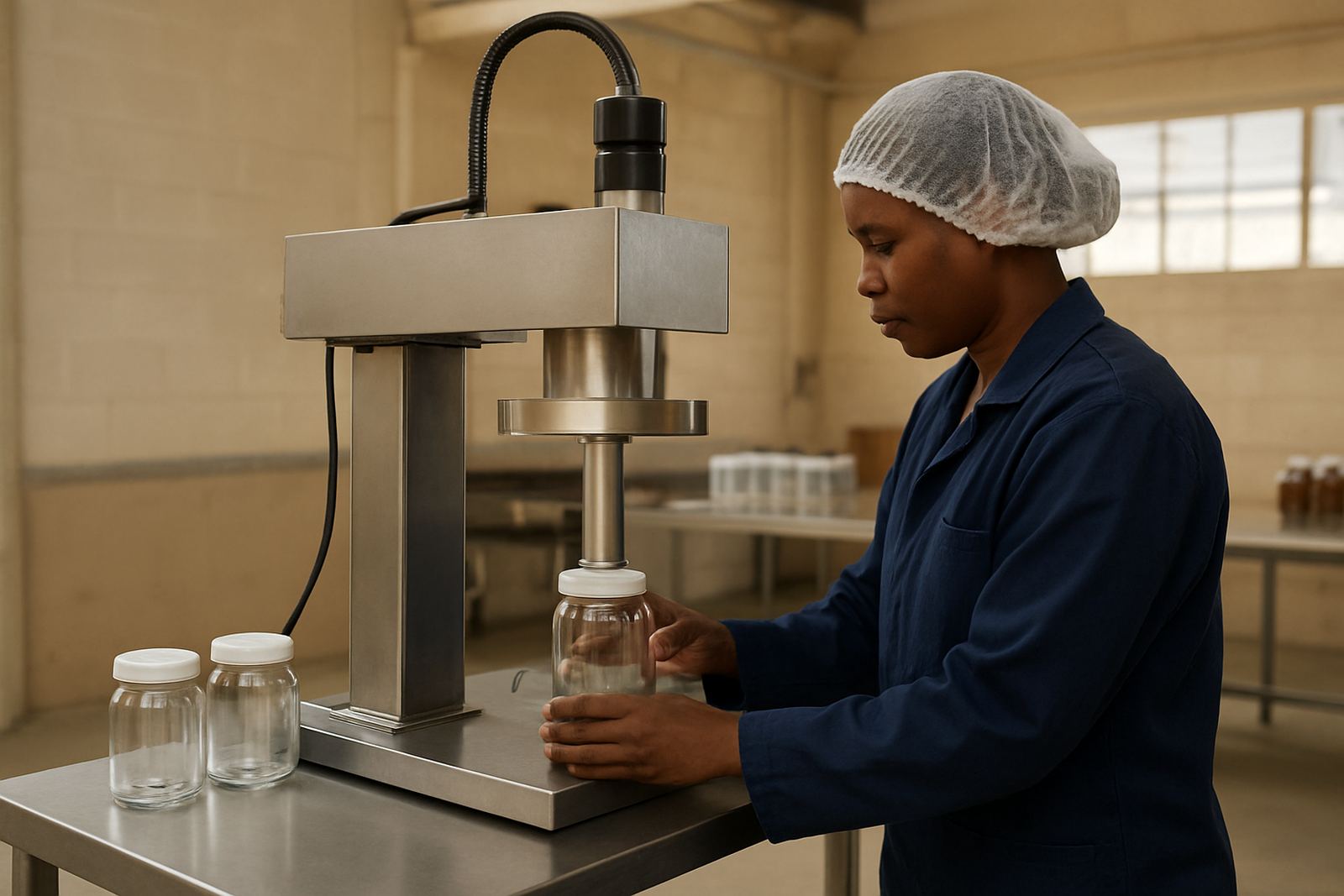
The Bench Sealer 1000 is used where a hand held unit is no longer enough, but a full inline system is not yet required. It sits on a packing table or a short stand and seals caps with an induction foil liner after the bottle has been filled and capped, giving a clean tamper evident closure for jars and bottles.
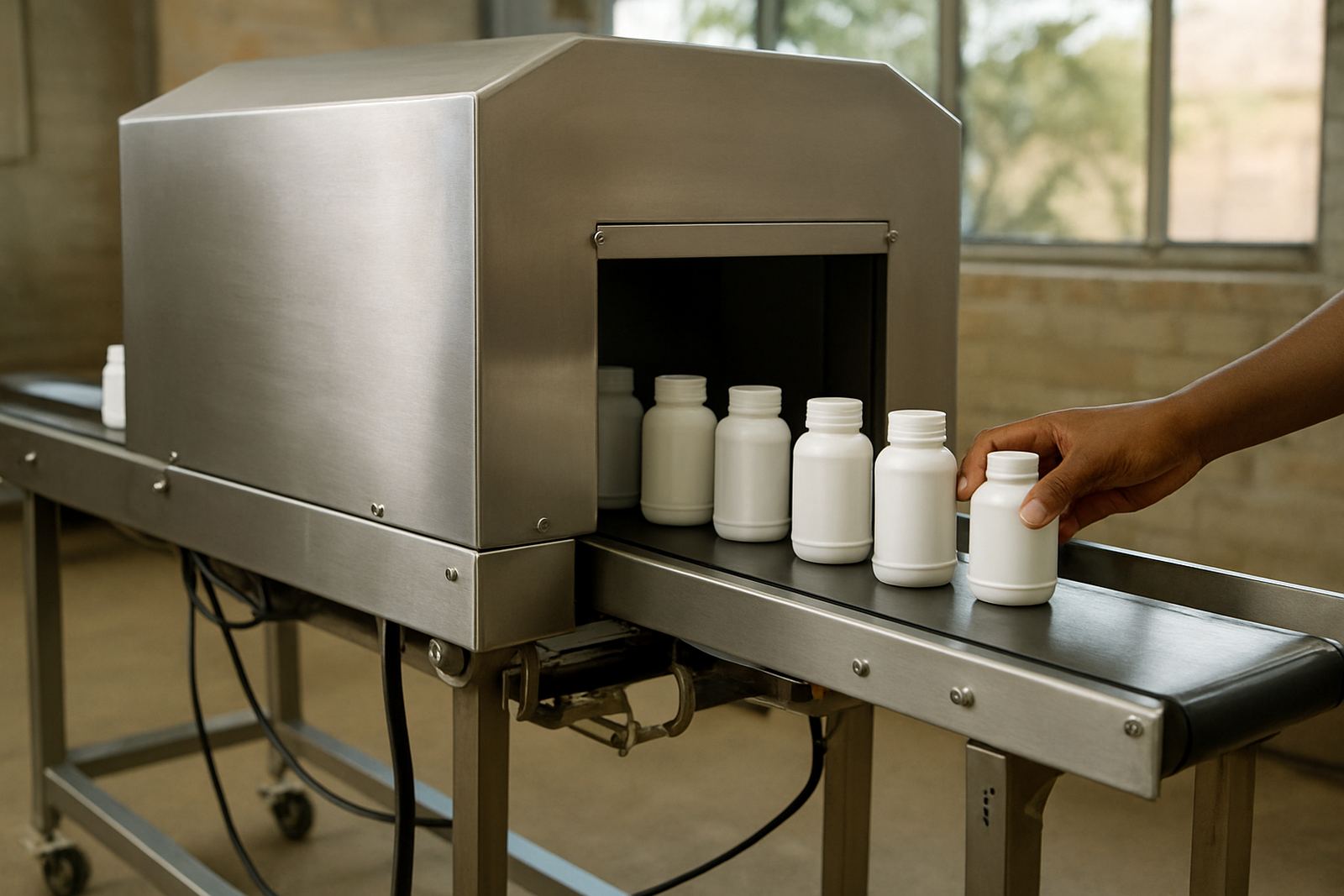
For growing rooms in Jacobs, Pinetown, Prospecton and Pietermaritzburg, this type of sealer helps keep pace with manual filling, semi-automatic capping and cartoning. The sealing head is aimed at the cap area and the operator moves each pack through one at a time, or on a simple guide track depending on the line set-up. That makes it useful where volumes are steady but the layout still changes from time to time.
Where the Bench Sealer 1000 suits best
This model is a good fit for food packs, chemical containers and pharmaceutical products that use compatible induction foil liners. It is commonly chosen for products that must stay clean in transit, or where leakage and tampering are costly. In humid coastal conditions around Durban and Richards Bay, a proper foil seal also helps with shelf life and handling, provided the container and liner are matched correctly.
- Liquid chemicals in HDPE or PET containers
- Syrups, powders and supplements in bottles and jars
- Cosmetics, creams and personal care packs
- Dry goods that need dust protection and tamper evidence
It is not the right choice for every closure. Some caps, neck finishes and liner constructions work better than others, so the bottle, cap and liner need to be checked together before supply starts.
Sizes, options and sealing head details
The Bench Sealer 1000 is supplied as a bench unit with a fixed sealing head and adjustable support for different container heights. The exact arrangement depends on the pack size, cap diameter and output target. For many packing rooms, the machine is set up to handle common bottle sizes from small 100 ml packs through to larger 2 litre containers, although the practical working height and cap profile need to be confirmed.
Options can include a simple bottle guide, height adjustment, timed seal control and a basic counter for tracking sealed units. Where the room changes product often, it helps to keep a few matched liner sizes on hand. If the line runs one product for long periods, the set-up can be tuned for that neck finish and kept there, which reduces trial-and-error on the floor.
- Bench mounted format for packing tables and short conveyor infeed points
- Adjustable head height for mixed container sizes
- Compatible with foil liners matched to the cap and neck finish
- Can be integrated into manual or semi-manual packing rooms
Power needs and site installation
Installation is straightforward, but it still needs a proper site check. The unit should be placed on a stable surface with enough space for the operator to handle filled containers safely. A neat, level bench matters because poor positioning can affect seal repeatability. If the room has dust, moisture or high wash-down activity, the surrounding work area should be kept dry and clear around the electrical parts.
Power requirements depend on the final model and control set-up, so the supply should be confirmed before delivery. Most sites need a standard single-phase supply, but the current draw and plug type must be checked against the existing board, especially in older factories with limited sockets or when load-shedding backup is already in use. Where a generator or inverter is part of the site plan, it needs to deliver stable power, not only enough watts on paper. A noisy or unstable supply can lead to poor heating and uneven seals.
If the machine is being added to a larger line, Bottle Sealers can assist with site installation, line commissioning and operator training so the packing team knows the correct seal position, dwell timing and routine checks.
How to keep seals consistent over time
Induction sealing is usually reliable when the liner stock, cap torque and product fill level stay within spec. The Bench Sealer 1000 should be checked at the start of each shift, after changeovers and after any power interruption. In a busy packing room, a quick visual check on the liner result is better than waiting for a batch of rejects to build up.
Basic care is simple, but it must be done. Keep the head area clean, make sure cable connections are sound and check that the container height guide has not shifted. On coastal sites, moisture and corrosion can creep in faster than expected, so the machine should not be left near open wash areas or outside doors. If the room is shut down over a long weekend, a dry cover and routine inspection help a lot.
- Check cap torque before sealing
- Inspect liner seating and foil integrity
- Keep the sealing head free of dirt and residue
- Record any seal failures by batch and container type
What to confirm before you order
To supply the correct Bench Sealer 1000 setup, a few practical details are needed. The most important ones are the container material, cap size, neck finish, liner type and target output per hour. If those are not matched, the machine can still run but the seal quality may be inconsistent. That is where many packing rooms waste time, so it helps to confirm the details upfront.
You should also share the available footprint, the height of the bench, whether the room uses a conveyor or manual feed, and what power is available on site. If you are in Jacobs, Prospecton, Pinetown, Pietermaritzburg or Richards Bay, local support can also be arranged for installation, liner matching and seal validation. For sites with multiple lines, it is worth saying whether the machine is for one product only or whether it must handle changeovers through the week.
If you want the set-up right first time, send clear sample packs, the cap dimensions and the expected daily volumes. That makes it much easier to match the liner and set the timing correctly, and it avoids a lot of back and forth.
Key facts
| Model | Bench Sealer 1000 |
|---|---|
| Format | Bench mounted induction cap sealer |
| Best use | Repeatable sealing for growing packing rooms |
| Typical containers | Bottles and jars with compatible foil liners |
| Power | Site confirmed, usually single-phase supply |
| Support areas | Jacobs, Durban, Pinetown, Prospecton, Pietermaritzburg, Richards Bay and nationwide |
| Services | Installation, commissioning, training, validation, maintenance and repairs |