Why glass needs a tighter sealing check
Glass is a common choice for premium food products, syrups, tinctures, reagents and many chemical packs because it gives good product visibility and resists many contents. But when you seal onto glass, you are working with a container that can have slight neck variation, a range of cap styles and, in some cases, moisture or residue on the rim. That means the induction process must be set up for the bottle, not just the cap.
In practice, the challenge is not whether glass can be sealed. The real question is whether the bottle finish, closure torque, liner specification and heat profile all work together. If one part is off, you may get scorched liners, loose seals or inconsistent peel strength. On a fast line, that shows up as rejected packs and operator frustration pretty quickly.
- Check the glass neck finish before choosing a liner.
- Confirm the cap material and liner format are compatible.
- Test a sample run at the real line speed, not just by hand.
Match the liner to the bottle and the product
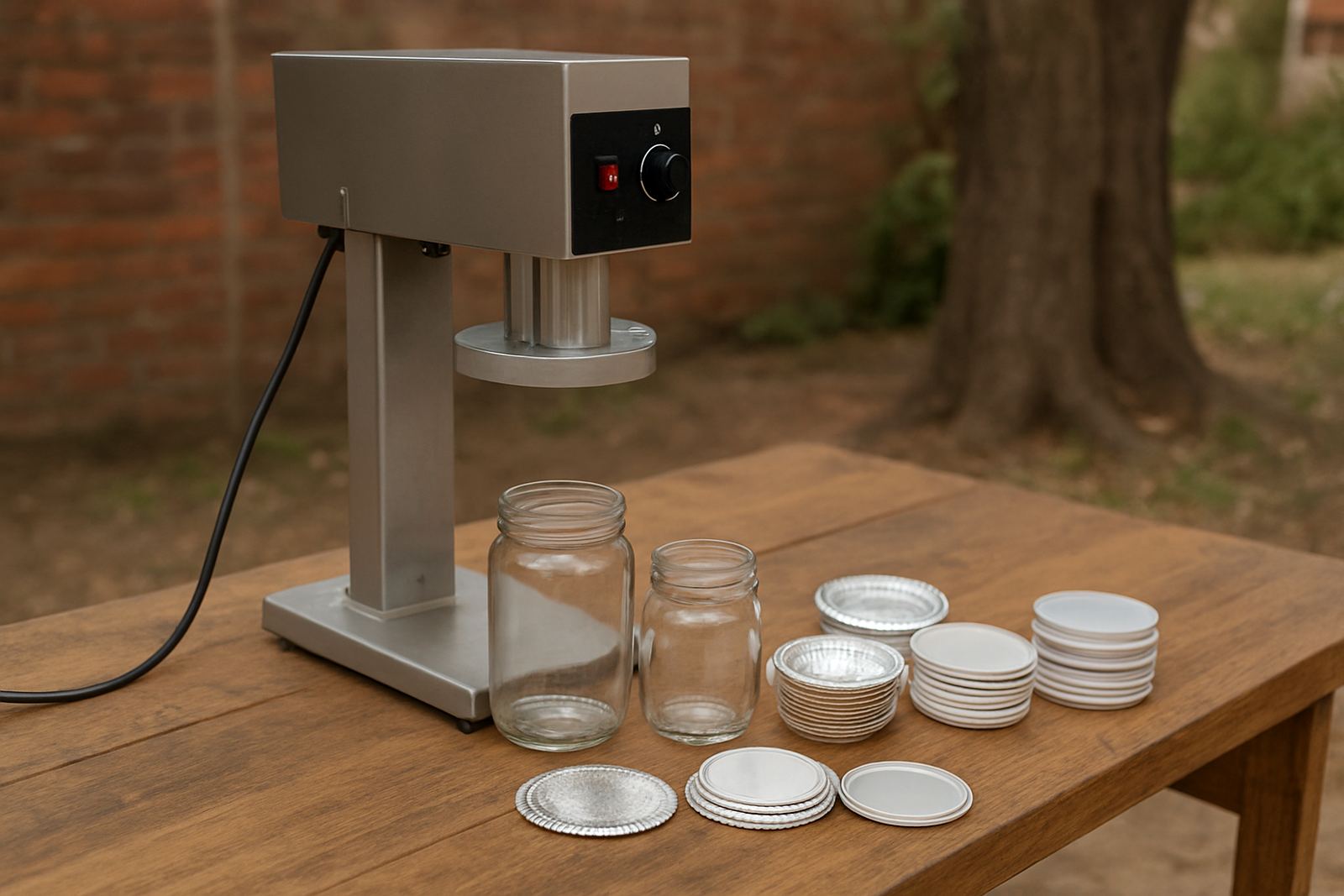
For glass bottles and jars, foil liner selection must suit the container mouth, the closure and the product inside. A pharmaceutical syrup packed in a wide-mouth amber glass bottle has different sealing needs to a jar of food sauce or a small laboratory chemical container. Some products need a strong hermetic seal, while others need easier opening for the end user. The wrong liner can either fail to protect the contents or become difficult to remove cleanly.
The product itself matters too. High-acid foods, solvent-based chemicals and moisture-sensitive powders each place different demands on the seal layer. If the contents give off vapour or if the pack will sit in coastal humidity in Durban or Richards Bay, the seal and cap combination needs to hold up over storage time, not just on the packing day.
- Match liner chemistry to the product type and storage conditions.
- Allow for any headspace movement in hot weather and during transport.
- Use a liner size that fully covers the glass opening without overhang.
For jar formats, especially where the thread is shallow, it is also worth checking cap torque consistency. Too tight and you can distort the closure or make the induction process uneven. Too loose and the liner may not seat evenly before the coil activates.
Prepare the glass rim before the seal head fires
Glass gives a clean look, but it also shows every bit of contamination. A tiny amount of product on the rim, dust from handling or moisture after washing can interrupt the seal. In a wet packing room or where bottles are rinsed before filling, the rim must be dry and clean before capping. Even a small film on the neck can stop the liner from bonding properly.
Good line preparation starts upstream. Fill levels must be controlled so product does not splash onto the sealing surface. Caps should be applied squarely, and the bottle should move through the conveyor without wobble. If the pack rocks before it reaches the induction head, the liner may already be poorly seated by the time the seal is formed. That is when you get edge leaks or partial seals that only show up later at dispatch.
- Keep bottle rims dry after rinsing or sanitising.
- Set fill nozzles to reduce splash and drip back.
- Inspect cap application for tilt or cross threading.
At our Jacobs base in Durban, we often see that the best results come from sorting the basics first. A line in Pinetown with good liner stock but poor cap placement will still struggle. The fix is usually practical, not complicated.
Set the induction equipment to suit your line speed
Induction sealing on glass depends on heat transfer, dwell time and coil position. A jar line running slowly in a small factory needs a different setup to a higher-output line in Prospecton or Pietermaritzburg. If the head is too high, too low or poorly centred, the seal can be uneven. If the power setting is off, the liner may underheat or overheat. Both are a problem.
Power dips during load-shedding or generator changeover can also affect consistency if the sealing unit is not protected correctly. For operations that need steady output, it pays to check the electrical supply, earthing and any voltage fluctuations before blaming the liner. In many cases, product complaints trace back to equipment settings rather than the sealing material itself.
- Set coil height to suit the actual cap height and bottle top.
- Test seal quality at normal production speed, not just at start-up.
- Check recovery after power interruptions and machine restart.
If the product range includes several glass formats, a line audit is worthwhile. One setting might work for a 100 ml bottle and fail on a 500 ml jar. The more varied the range, the more important changeover control becomes, so operators are not guessing between packs.
What a proper seal validation should show
Before releasing a glass pack for full production, the seal should be validated against the actual use case. That means checking more than whether the foil looks intact. A good validation process looks at peel strength, seal coverage, product compatibility and how the pack behaves after handling, transport and storage. For food and pharmaceutical packs, this is not a box-ticking exercise. It is part of protecting the customer and the business.
Validation also helps identify whether the glass finish itself is suitable. Some jars have minor moulding variation that is within tolerance for general use but not ideal for induction sealing. If the neck profile is inconsistent, you can waste time chasing a setting issue when the real fix is a different liner or a different bottle spec.
- Check seal peel results on a sample batch from the live line.
- Store samples under expected conditions, including heat and humidity.
- Inspect for leakage, liner lift and tamper evidence after handling.
For larger sites, keeping a simple seal record is worthwhile. It helps with repeat orders, complaint tracking and maintenance planning, especially when several products run through the same glass container format.
Local example: getting stable results in coastal conditions
A mid-sized packer in Jacobs was sealing glass jars for a food product that had to travel inland and along the coast. The team had good closures and a decent conveyor, but they were seeing random seal failures after morning changeovers. The issue turned out to be a mix of moisture on the jar rims, inconsistent cap torque and an induction setting that was fine on the first shift but drifted when line speed picked up.
After reviewing the line, the team tightened the rinsing and drying step, checked liner matching and standardised the cap application process. The seal head position was reset and the operators were shown how to confirm a good seal before bulk packing. Once those changes were made, rejects dropped and the line ran with fewer stoppages, even on humid days. It was a small adjustment, but it saved a lot of product and a fair bit of time.
That kind of result is common when glass sealing is treated as a system. Bottle, liner, cap, operator and machine all have to work together. When one of them drifts, the seal tells the story.
Practical support when glass packs must stay compliant
For glass bottles and jars, the safest approach is to test, monitor and maintain rather than assume the first setting will hold forever. Product changes, new bottle suppliers, cap batch differences and seasonal humidity can all shift seal performance. Regular preventive maintenance and operator refresher training help keep the line predictable. If a fault does appear, fast breakdown support matters because a missed seal can affect an entire production run.
With support from a Durban base and service across the country, Bottle Sealers works with sites that need site installation, line commissioning, seal validation, liner matching, spares supply, line optimisation and remote support. That is especially useful for packers running multiple glass formats across food, pharma and chemical applications. The goal is not just to seal a bottle once. It is to keep every seal consistent, shift after shift.
- Schedule routine checks before seal quality starts to drift.
- Keep spare liners and critical parts on hand for busy periods.
- Train operators to spot early warning signs before reject rates climb.
When glass is sealed properly, it gives a clean finish and dependable product protection. When it is not, the problems show up quickly. Careful setup is worth the effort.