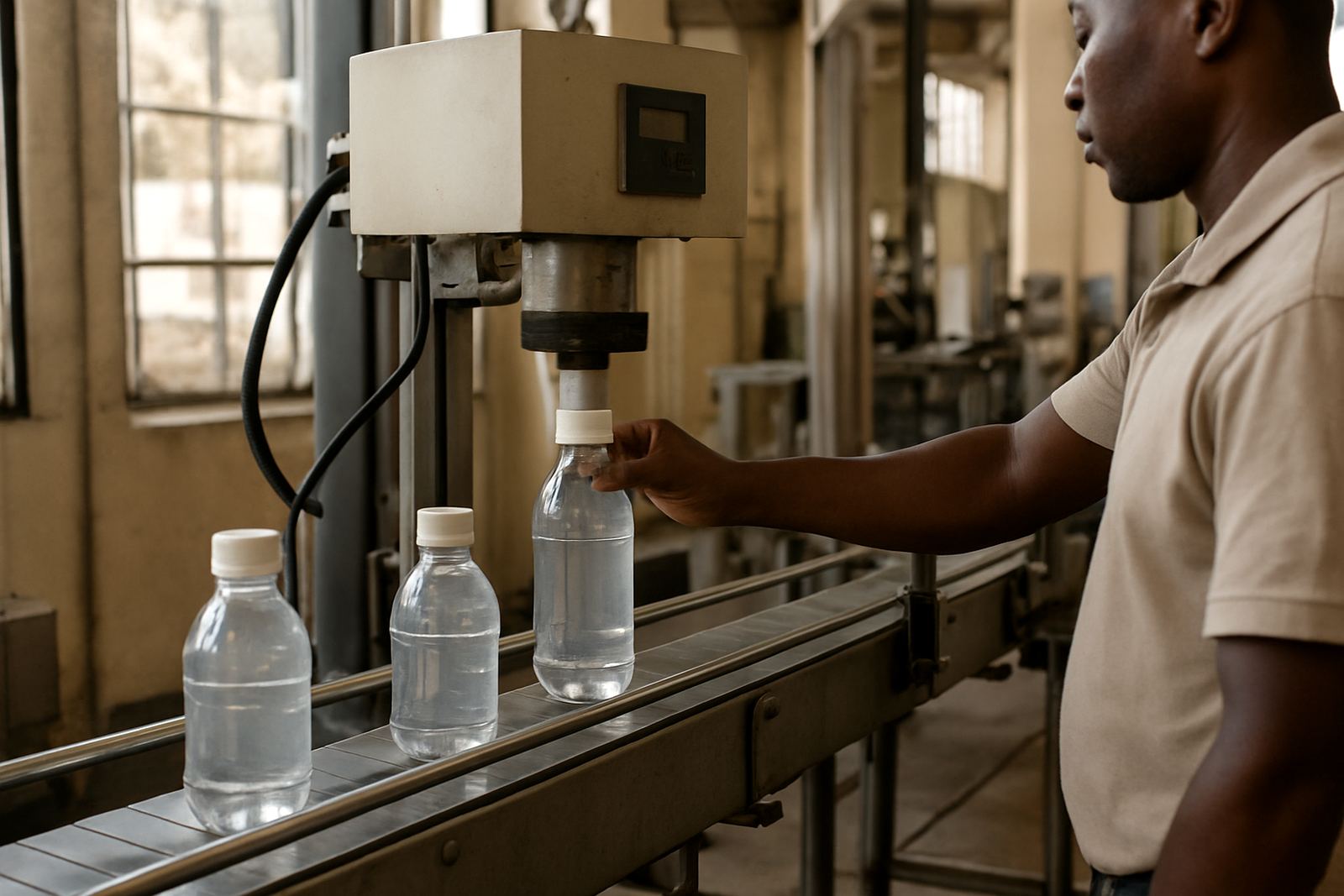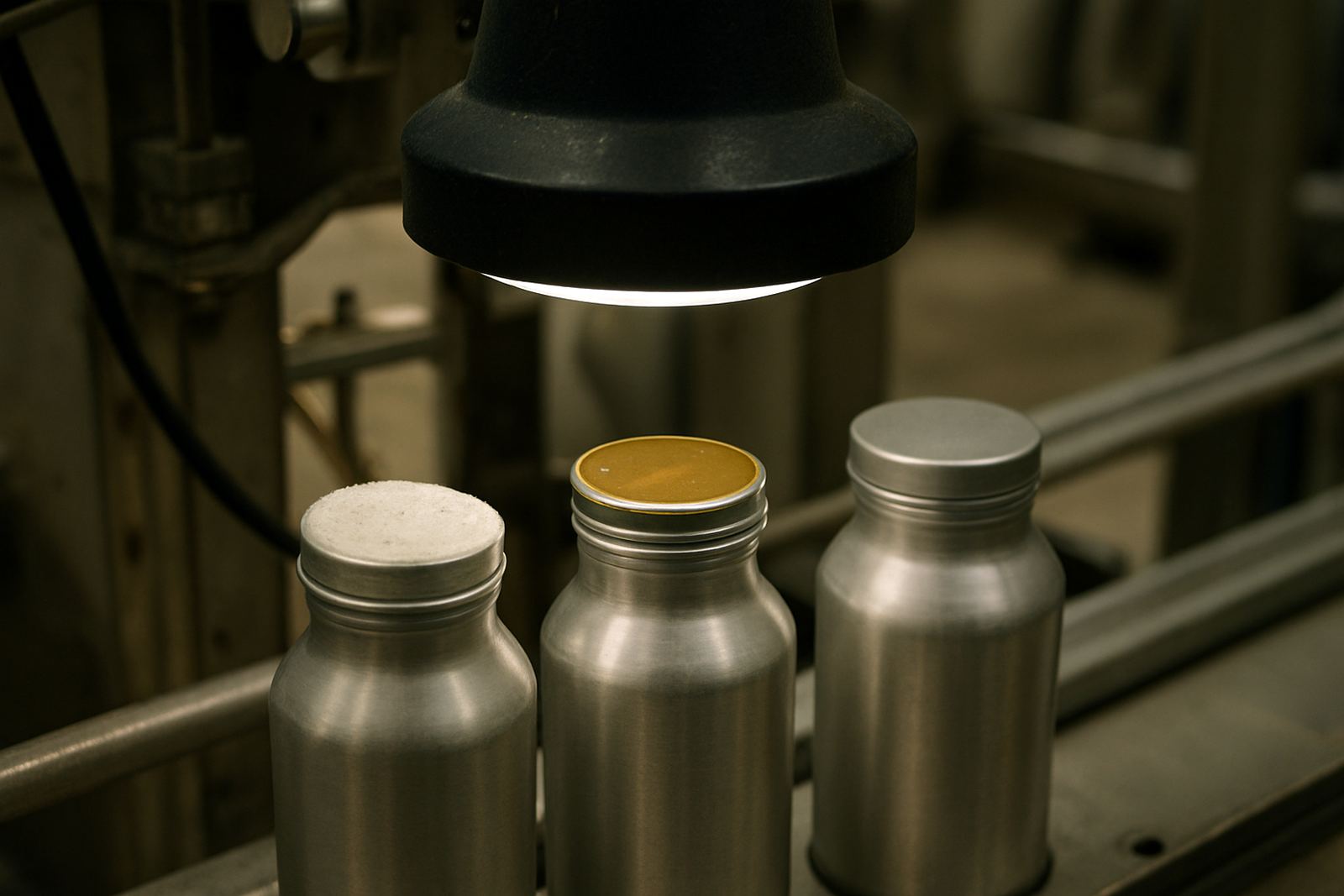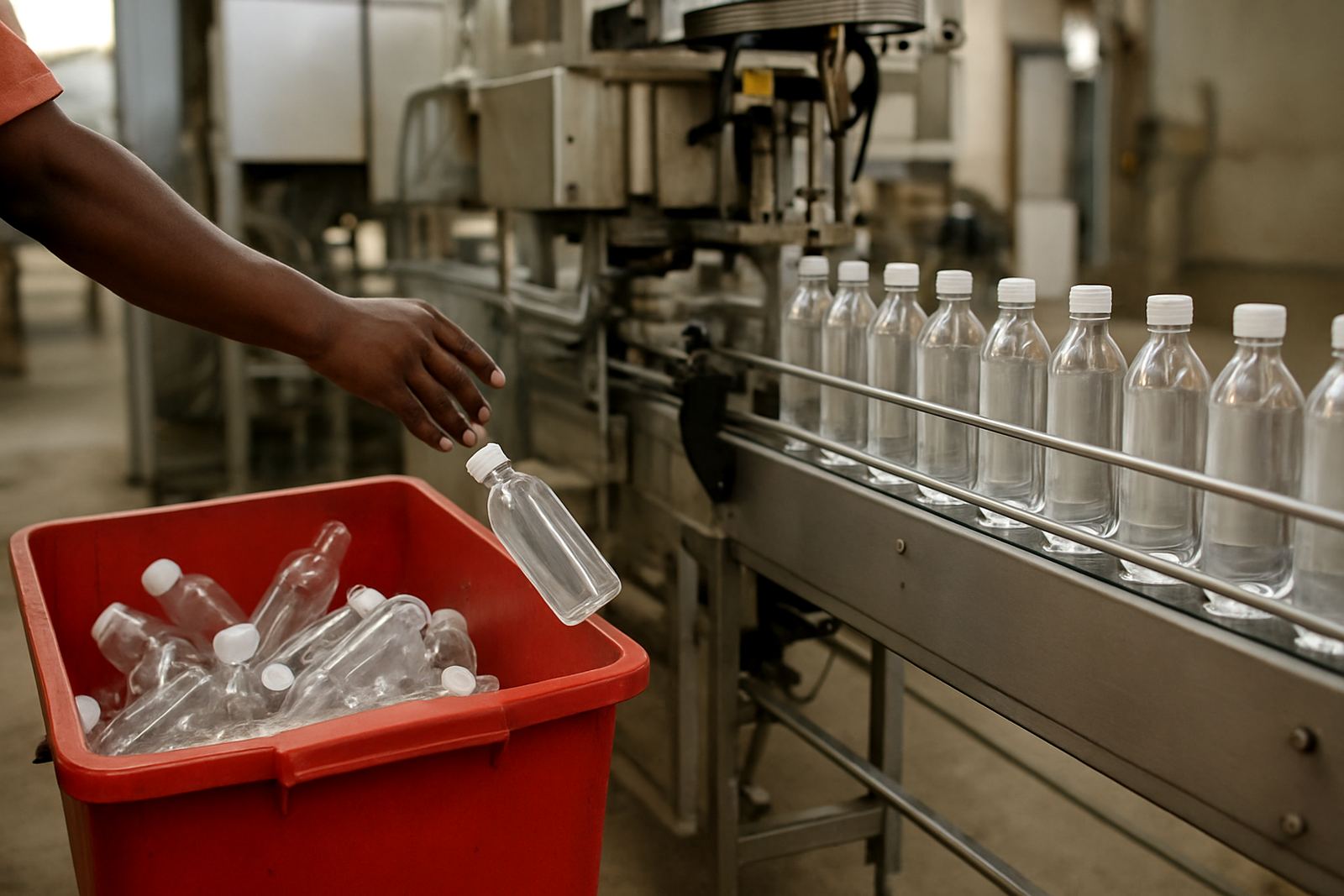
Why reject rate is more than a line speed issue
When a seal fails, the loss is usually counted as one bad bottle. In practice the cost is wider. You lose the container, the product inside, the labour already put into filling and capping, and the time spent stopping the line to sort out the fault. On food, pharmaceutical and chemical packs, one weak seal can also trigger customer complaints or a batch hold.
In Durban and along the coast, humidity adds another layer. Foil liners can pick up moisture, caps can sit differently after storage, and cartons moved between warm and cool areas can change how a closure performs. That is why reject rate reduction starts before the bottle reaches the sealer, not only at the sealer head.
A good target is not just fewer rejects, but fewer unexplained rejects. If the team can say why a bottle failed, you can usually fix the cause in a morning rather than chasing it for weeks.
Start with the four usual failure points
Most repeat rejects come from a small number of causes. The trick is to check them in order and not jump straight to the machine settings.
- Container variation: neck finish, bottle height, cap torque and thread quality all affect seal contact.
- Liner mismatch: the wrong foil thickness or heat response can seal one shift and fail the next.
- Product splash or residue: powder, liquid droplets or contamination on the rim blocks proper bonding.
- Application timing: if the cap is not seated squarely, the seal will be uneven even when the induction unit is set correctly.
At a Jacobs site, we often find the problem is not the induction head at all. It may be a capping issue upstream or a change in bottle supply. One small change in the container can move the reject rate from manageable to painful very quickly.
Keep a simple log. Record the product, bottle type, cap type, foil liner type, line speed and the reason for the reject. After a few days the pattern usually becomes obvious, if the team is honest about what it sees.
Use line checks that operators can repeat every shift
The best reject reduction plans are simple enough for an operator to follow during a busy shift. You do not need a complicated report if the line is changing every hour. What you need is a repeatable checklist and clear action when a reading drifts out of spec.
- Check cap seating before the bottle reaches the sealer.
- Inspect the first 10 sealed packs after start-up and after any stoppage.
- Watch for lifted edges, uneven marks or product seepage around the closure.
- Test a sample from each batch after changeover.
- Compare reject counts at the start, middle and end of the run.
For plants working under load-shedding pressure, this matters even more. When power drops and the line restarts, settings can shift slightly, and that is enough to create a pocket of weak seals. A quick restart check saves more stock than it takes time, and it keeps the team from blaming the last machine on the line when the issue is elsewhere.
If operators are trained to spot the difference between a sealing fault and a filling fault, the line becomes easier to manage. They stop overcorrecting one station when the real fault is two metres upstream.
Preventive maintenance keeps reject rates predictable
Sealing faults often creep in slowly. A worn component, loose cable, dusty cooling path or drifting sensor can change seal quality before anyone notices. Preventive maintenance is not just about avoiding downtime, it is about keeping rejects steady from week to week.
For lines in Richards Bay or other humid areas, keep an eye on corrosion, dust build-up and storage conditions for liners and spares. For inland sites, check for heat stress and cabinet ventilation. Both can affect output, especially on long production runs.
- Clean the sealing head and surrounding area on a fixed schedule.
- Inspect guards, cables and mounts for looseness or damage.
- Verify settings after maintenance, not only after a fault.
- Keep critical spares on site so a small issue does not become a full day stop.
It is worth matching the maintenance cycle to the plant reality. A site running three shifts needs a different routine from a smaller batch plant. The aim is to keep the machine inside a known operating window, not to tick a box once a month.
Seal validation should be part of product quality, not an afterthought
Validation gives you proof that the seal does what it is supposed to do. That matters for regulated products, but it also matters for customer trust. A seal that looks fine can still fail under handling, transport or storage.
Testing methods should suit the pack and product. Some products need simple visual checks and peel testing. Others need more formal acceptance criteria, documented sampling and batch records. If your product goes through wholesalers, pharmacies or industrial distributors, the seal must survive movement, stacking and temperature changes.
When a packaging line in Pinetown was repeatedly rejecting a small percentage of bottles, the team assumed the induction settings were unstable. In the end the foil liner was correct, but the bottle neck tolerance from a new supply lot was outside the normal range. Once the container issue was corrected, reject levels fell back to normal. That kind of finding only comes out when validation and line checks are done properly.
Practical steps that reduce waste without slowing the line
The fastest gains often come from small process changes. You do not need to rebuild a line to reduce rejects. You need control points that are easy to keep.
- Match the liner to the container finish and product type.
- Keep cap torque consistent across the run.
- Store liners and caps in dry, clean conditions.
- Separate good packs, samples and rejects clearly at the line.
- Use one clear fault code for each common reject reason.
Line optimisation helps here too. If the filler, capper and sealer are not working at the same pace, the line will produce avoidable variation. Sometimes the answer is a small speed adjustment. Sometimes it is a better transfer point between machines. Either way, the goal is to reduce scrap before it starts.
For sites with more than one shift, share the same settings sheet between teams. If each shift is making its own quiet changes, reject rate tracking becomes meaningless very quickly. A single standard saves time, and it keeps everyone on the same page.
A local example from a Durban sealing line
A packaging site in Jacobs was seeing a steady stream of rejected bottles after the afternoon shift change. The line team thought the induction unit was drifting. On inspection, the issue came from a combination of humid storage, inconsistent cap seating and a gap in operator handover. The bottles were sitting in a warmer area near a doorway, and the liners were not being checked after a short stoppage.
After the storage point was moved, the handover sheet was tightened and the first-10-bottle check became mandatory after every stop, the reject count dropped within days. No major rebuild was needed. The plant just needed a tighter routine, clearer responsibility and better attention to the conditions around the machine.
That is usually how reject reduction works in practice. Not with one dramatic fix, but with several small controls that hold the line steady, even when the day gets busy.