Why chemical packs need stricter checking than standard bottles
Chemical products can punish weak packaging. A cap that holds fine on water or detergent may fail when it meets solvents, acids, alkaline blends or vapour pressure in a warm store room. In Durban's heat and humidity, that risk climbs fast, especially where containers sit in a loading bay or wait for collection after a power cut.
The first caution is to treat the packaging system as one unit. Bottle, neck finish, cap, liner, fill level and sealing method all have to match the product. If one part is out, the line may still run but the result can be slow leaks, odour loss, swollen packs or contamination complaints. For chemical goods, that is not a small issue, it can turn into a recall or a municipal clean-up problem.
Check the product chemistry before choosing the liner
Not every liner works with every chemical. Some products attack foam, some affect paper based materials, and some will creep through a poor barrier layer. The wrong choice may look acceptable on day one but soften after a week in transit or on the shelf. That is why liner matching should always start with the actual formulation, not just the bottle size.
- Confirm whether the contents are acidic, alkaline, solvent based or moisture sensitive.
- Ask how long the pack must stay sealed before use, and whether it will sit in export containers or local stores.
- Check if the product gives off fumes that could affect seal integrity.
- Test the liner on the real container neck, not a sample that only looks close enough.
A practical example from the Durban side would be a batch moving out of Jacobs for distribution through Pinetown and Pietermaritzburg. A liner that passes a quick bench test can still fail after the packs spend a hot afternoon in a truck. We often see problems when a plant uses one liner across several chemical ranges without checking the chemistry of each fill. It saves time on paper, but creates more returns later.
Handling points that trip up chemical packing lines
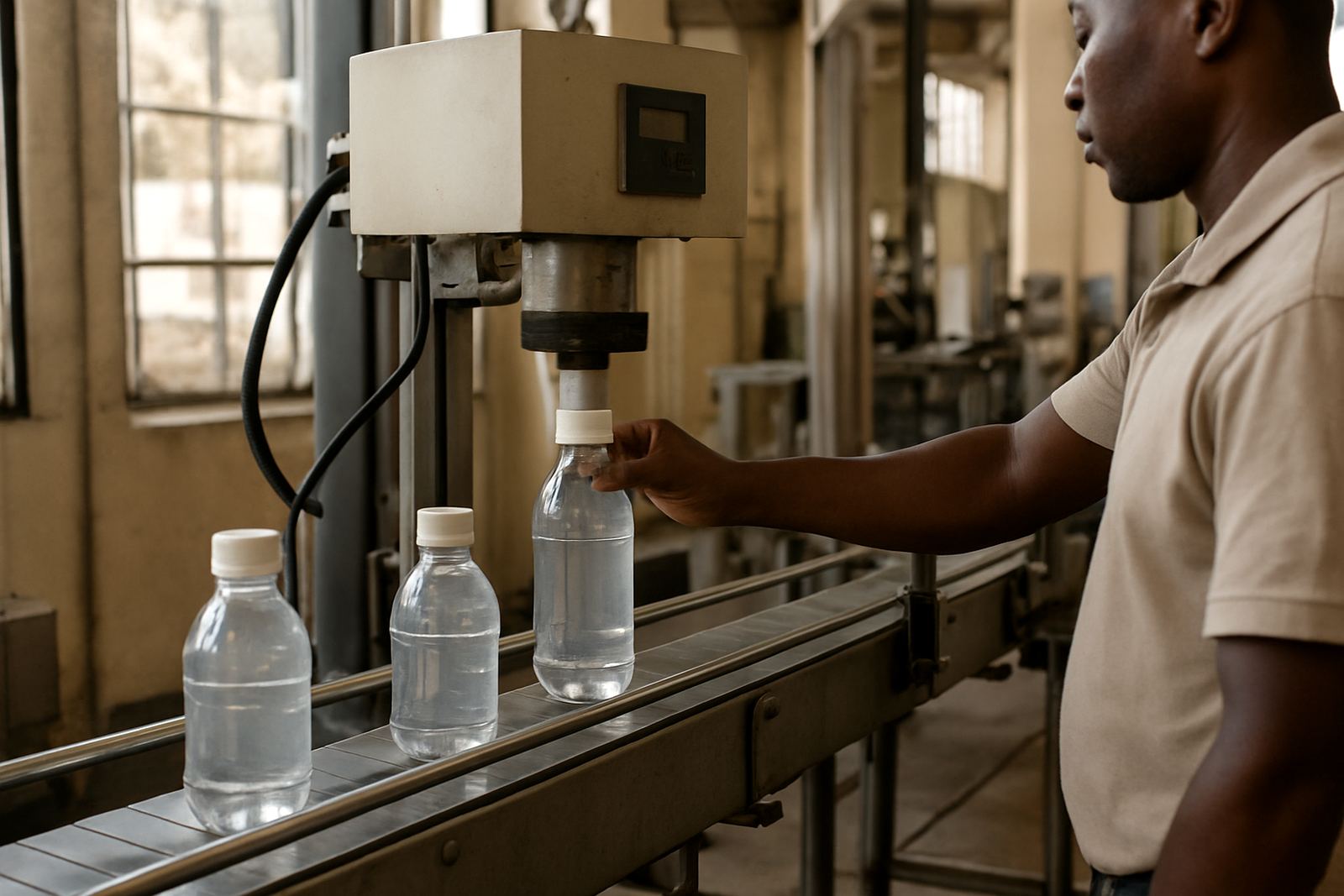
Many sealing faults are not caused by the sealer itself. They start with handling. Crushed necks, damp closures, uneven fill heights and dirty bottle tops all interfere with a proper seal. If the pack surface has residue from the fill, the liner may not sit cleanly and the induction bond can be weak. That is why the inspection point before sealing matters just as much as the seal head.
Operators should look out for containers that arrive off-centre, warped or overfilled. A slight tilt on the line can change the heat profile and the seal appearance. In some plants, we have also seen problems after night shifts where manual top-up work leaves product on the rim. The sealer then gets blamed, but the issue is really upstream.
- Keep bottle necks dry and free from chemical splash before capping.
- Reject damaged caps and misshapen liners before they reach the head.
- Set clear fill height limits for each container size.
- Train staff to spot swelling, odour and residue changes early.
Power cuts, heat and coastal air can change seal performance
South African chemical plants have to work around more than production targets. Load-shedding can interrupt a batch half way through, and if the line restarts without checking temperature, torque or liner condition, the next run may not seal the same way. Coastal humidity in Durban and Richards Bay can also affect stored liners and caps if they are kept open or in poor conditions.
That means the store room is part of the sealing process. Keep consumables in dry, closed cartons and rotate stock properly. If a site has repeated outages, it is wise to test the first run after power returns rather than assuming the machine settings are still correct. A brief recheck can prevent a full pallet of rejects. It sounds simple, but a lot of sites only discover the issue once product has left the gate.
Temperature control also matters for chemical goods. High line speed is no help if the packs are sealed while components are still outside their ideal range. The result may be seal distortion or liner shrink that shows up later, often after transport to inland depots like Pietermaritzburg or further up to Richards Bay routes.
What a proper seal validation should prove
Seal validation should do more than confirm that a cap looks tight. It should show that the pack survives the real handling conditions it will face in the market. That includes vibration, stacking, short drops, temperature swings and the specific product inside the container. Chemical packs need evidence, not guesswork.
A good validation check should confirm:
- Seal strength on the actual bottle and closure combination.
- Resistance to the intended chemical contents.
- Consistency across different shifts and operators.
- Performance after line stoppages, restarts and routine cleaning.
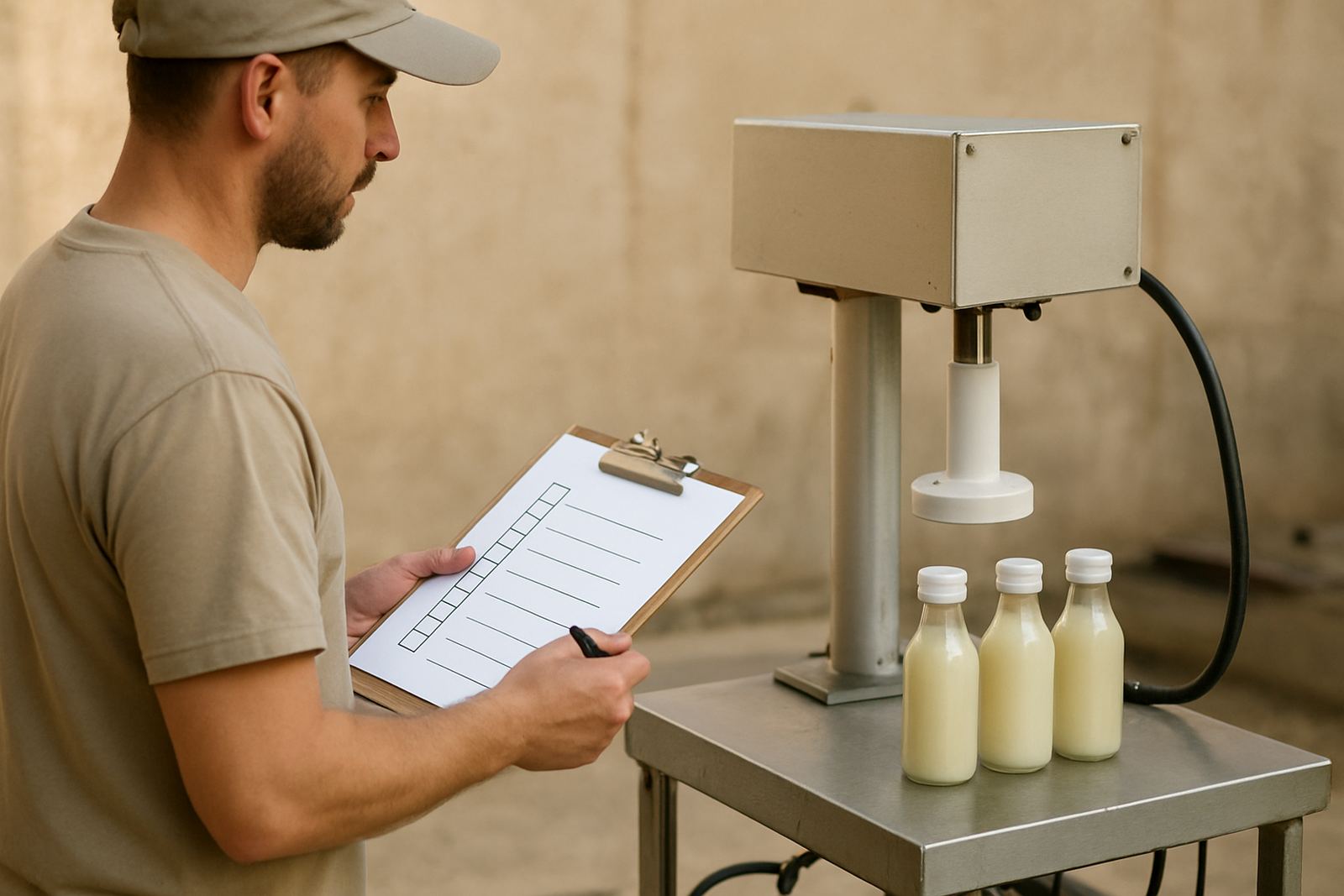
If the pack is going into industrial supply, pharmacy or bulk cleaning distribution, the test should reflect that use. One good result on a Friday is not enough if Monday's shift sets the torque differently. Plants around Jacobs and Prospecton often gain better control when they record settings and compare them after maintenance or a liner change. That record becomes useful when a customer queries a leak weeks later.
Keeping maintenance practical on busy KwaZulu-Natal lines
Preventive maintenance is not just about avoiding breakdowns. On chemical packaging lines it keeps the sealer stable, which matters when you are working with sensitive products and tight dispatch times. A worn seal head, dirty contact surface or drifting setting can all create leaks without stopping the machine outright. By the time the fault shows up, a lot of stock may already be boxed and moved.
Sites in Durban often run with limited downtime because they are balancing orders, municipal delivery windows and truck departures. That is why service checks should be planned around actual production windows, not only calendar dates. Keep spares for the parts that wear fastest, and make sure operators know who to call when the first sign of trouble appears. A small fault caught early is cheaper than a full shift of rework.
For plants with more than one site, it helps to standardise the sealing settings and training across Jacobs, Pinetown, Prospecton and Pietermaritzburg. Then the same pack behaves the same way, whether it is filled on the coastal line or sent inland. That consistency is where chemical packaging moves from being a daily worry to something the team can trust.