What cooling does in an induction sealing line
Induction sealing heads run hot because they generate heat to bond the foil liner to the bottle mouth. Cooling protects the unit, keeps output steady and helps prevent overheating when the line runs for long shifts. Without proper cooling, seals can become uneven and the equipment may trip more often, especially on hot days in places like Durban, Pietermaritzburg and Richards Bay.
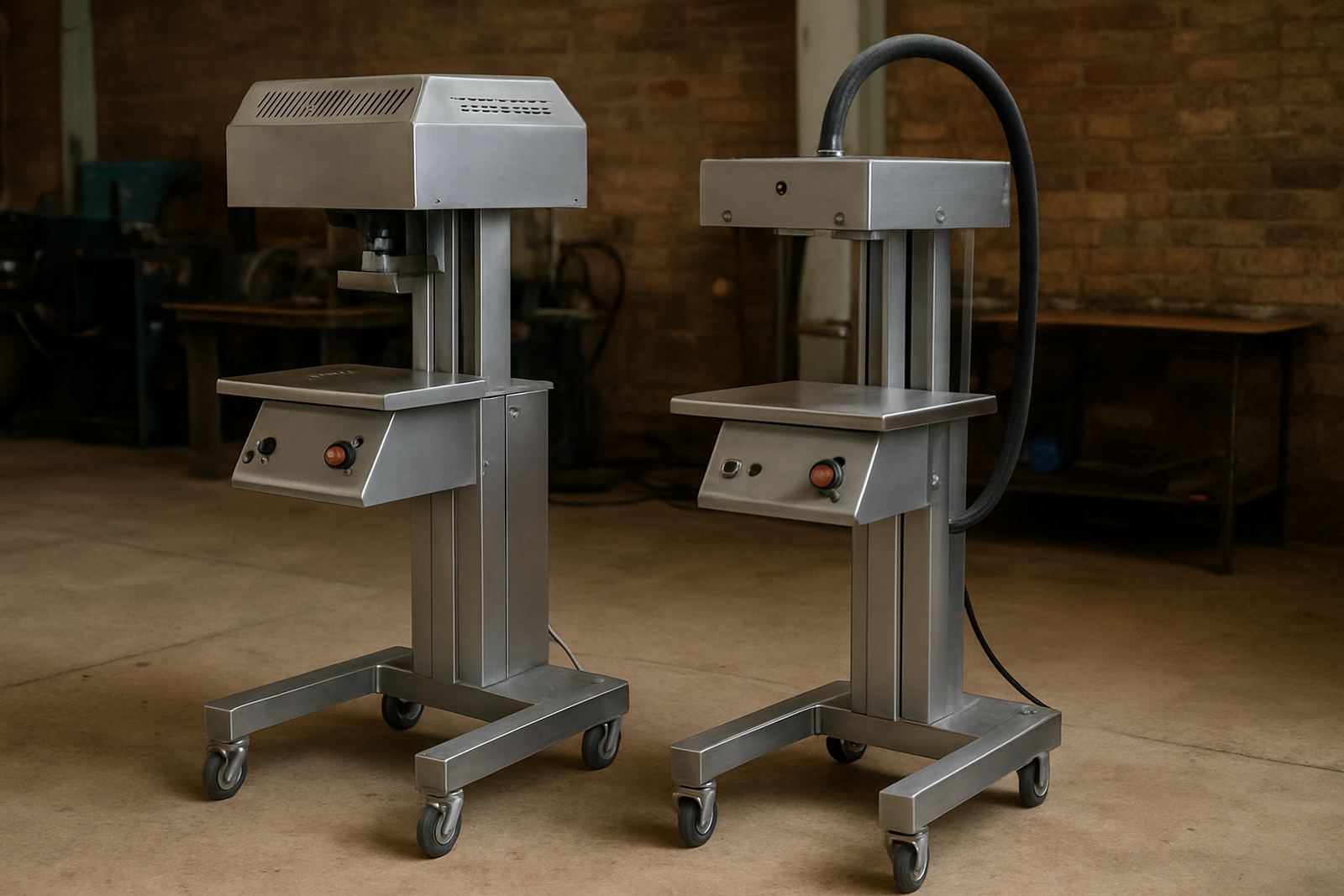
In simple terms, air cooled systems use moving air to remove heat from the head and related components. Water cooled systems circulate water through a cooling circuit and carry heat away more quickly. Both can work well, but they suit different production patterns and different site conditions.
When air cooled makes the most sense
Air cooled units are usually the simpler option. They have fewer parts, less pipework and no water circulation system to manage. That makes them appealing for smaller plants, lower to medium speed lines and sites that need easy installation with minimal maintenance.
For many South African operations, this is the practical choice where clean utility space is limited or water supply is inconsistent. It also helps where staff need a straightforward setup that can be checked quickly during a shift.
- Better for lower line speeds and shorter production runs
- Lower upfront installation effort
- No water treatment or leak checks
- Useful where maintenance teams are lean
- Well suited to packaged goods, chemicals and smaller pharmaceutical batches
Air cooled systems still need regular cleaning. In dusty areas or where carton fibres and powder build up near the line, blocked vents can reduce performance. A quick weekly check goes a long way.
Where water cooled earns its place
Water cooled systems are usually preferred on heavier duty lines, especially where the sealing head runs for long periods with little downtime. They remove heat more efficiently and tend to hold a steadier operating temperature when ambient conditions are tough. That can matter in hot production areas, during summer, or on lines that cannot afford repeated thermal cutbacks.
These systems are often chosen for higher throughput, multi shift production and operations that want tighter control over the sealing process. If your line fills and seals thousands of bottles a day, or if the sealer sits close to other heat producing equipment, water cooling can improve consistency.
- Handles higher duty cycles more comfortably
- Useful where ambient heat is high
- Can support more stable sealing performance on fast lines
- Often preferred in continuous production environments
The trade off is extra complexity. You need to watch water quality, flow rates, fittings and pump performance. In coastal areas like Durban, poor water management can lead to scaling or corrosion over time, so routine checks are not optional.
The real world cost question
Many buyers focus only on purchase price, but the better question is what the system costs across a year of production. Air cooled units are often cheaper to install and simpler to service. Water cooled units may cost more at the start, yet they can reduce thermal interruptions on demanding lines and may last better in tough operating conditions if maintained properly.
Think about electricity, water, spare parts and downtime. If a line stops because the sealing head overheats, that lost production often costs more than the cooling system ever will. On the other hand, if your production is modest and you do not run long shifts, a water cooled system can be more than you need.
A useful rule is this: buy for the line you run now, but also for the line you expect in the next 12 to 24 months. If output is due to grow, the cooling choice should leave room for that without forcing a full changeover later.
Local conditions that change the answer
South African sites are not all the same. A plant in Jacobs or Prospecton may deal with heat, salt air and long production windows. A facility in Pinetown may have different power stability or space constraints. A line in Richards Bay could face coastal humidity, while a smaller operation in Pietermaritzburg might prioritise simple servicing and fast changeovers.
Load-shedding also changes the picture. After power returns, systems can see start stop stress and cooling components may need a moment to settle before full output resumes. If your facility already manages generators or backup power, the sealing head should be chosen with that operating pattern in mind.
- Coastal humidity can affect electrical parts and metal fittings
- Heat build up is worse in enclosed packing rooms
- Water quality matters more where scale is common
- Frequent stops and starts call for stable temperature control
There is no one size fits all answer. The best choice is the one that matches your product, line speed and maintenance reality, not only the spec sheet.
How to choose between the two without overcomplicating it
A practical site assessment should start with the bottle type, closure size, liner specification and production speed. From there, look at the operating hours, surrounding heat and how much support your team can realistically give the unit. That usually points to the right cooling method fairly quickly.
If you are sealing food, pharmaceutical or chemical packs, ask whether the line must meet validation requirements or strict seal checks. Consistent temperature control can support better repeatability, which helps during seal validation and routine quality checks. If the line is mostly manual or semi automatic, the simpler route may be enough.
- Choose air cooled for simplicity, lower throughput and easier servicing
- Choose water cooled for higher speeds, longer shifts and hotter environments
- Check water supply, drainage and maintenance access before deciding
- Plan for operator training so staff know the warning signs early
In practice, a well matched system performs better than a bigger one that is badly supported. A smaller, well maintained unit often outlasts a more complex setup that never gets checked properly.
A Durban example from line commissioning
At a Jacobs based production site, the line was running long shifts with sealed bottles moving through a warm packing area. The team had intermittent stoppages when the sealing head got too warm after peak runs. Water cooling was the better fit because the line needed steadier temperature control and the site had the maintenance discipline to support it.
After line commissioning, the operator team was trained on startup checks, water flow monitoring and simple fault spotting. The result was fewer interruptions and more predictable sealing throughout the day. In another smaller Pinetown operation, air cooling was the more sensible option because the batches were shorter and the team wanted a lower maintenance setup.
That is the main lesson. The best cooling type is not the one with the most features. It is the one that suits the way your plant actually runs, shift after shift.