What the Pinetown line needed
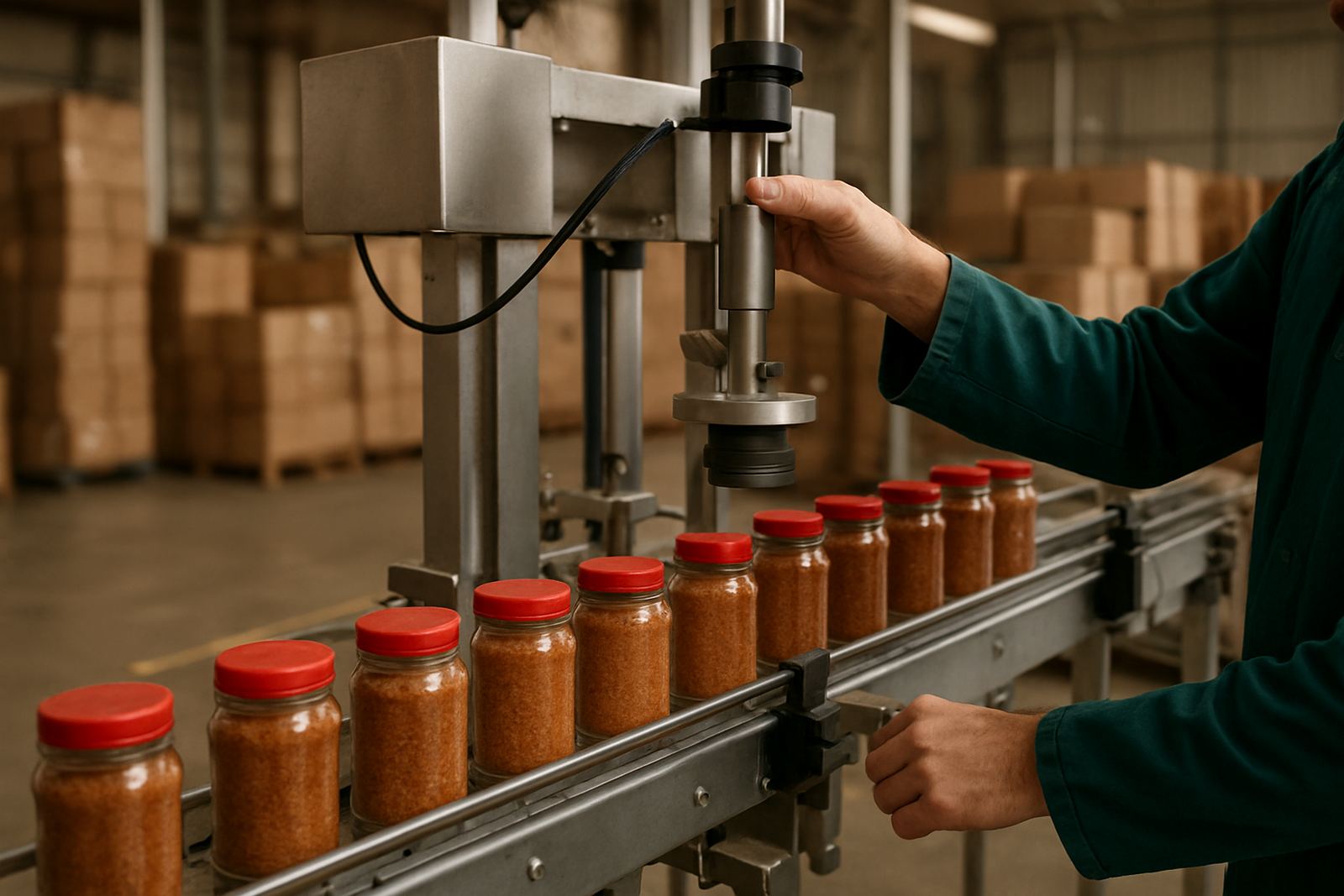
The client was a spice packer in Pinetown running mixed jar sizes for powders, blends and retail refill packs. Their main problem was not just seal quality, but the way jars moved into position before induction. Caps were arriving slightly off-centre, which meant some liner failures, extra rejects and too much operator time spent checking each case.
The brief was clear: improve cap guidance, keep the existing line layout, and reduce the delay every time the team changed over from one jar neck finish to another. They also needed a practical solution that would still work during voltage drops and generator changeovers, because the line could not afford a long stop every time power became unstable. We kept the scope tight and worked around the plant floor rules for hygiene and safe access.
- Town: Pinetown, with supply and support from our Durban base in Jacobs
- Product type: spice jars, retail packs and short production runs
- Main issue: cap misalignment before sealing
- Target: faster changeovers and more consistent seal placement
Retrofit scope and equipment changes
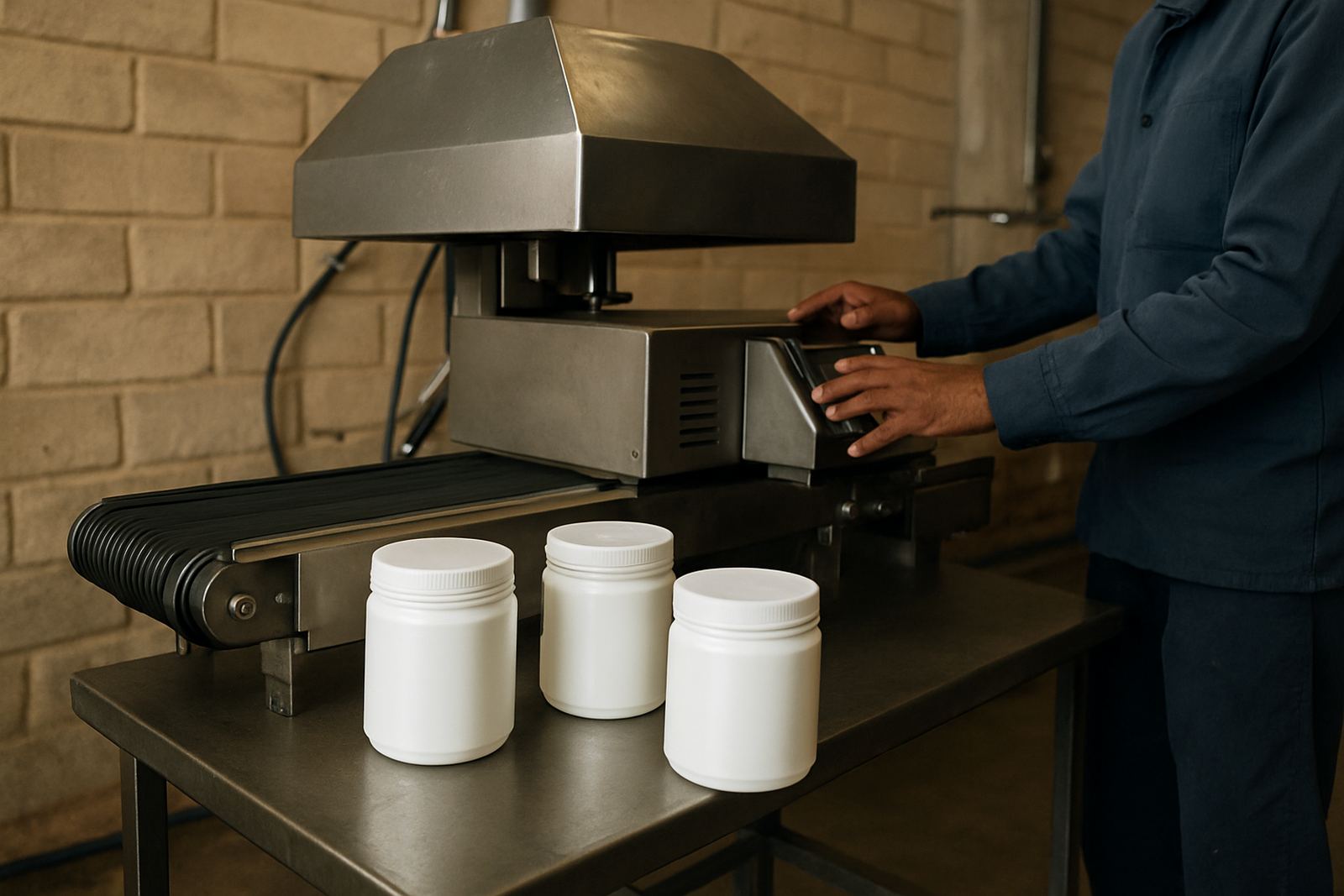
We supplied an induction cap sealing setup matched to the jar range, plus improved cap guidance at the infeed so the lids sat straighter before sealing. The retrofit kept the line moving at the same packing speed, but made the sealing section more forgiving when operators changed over between jar sizes. We also checked liner matching for the closure styles in use, because the wrong liner thickness can cause weak bonds or scorch marks.
The work included mounting adjustments, guide setting, seal head alignment and practical operator handover. The team wanted a setup they could maintain locally, so we kept the parts list simple and made sure the service points were easy to reach. In a spice plant, fine dust can build up quicker than most people expect, so we paid attention to access for cleaning and safe wipe-downs.
- Improved cap guidance before the sealing head
- Induction sealing matched to the jar and cap combination
- Changeover settings marked for the common container sizes
- Simple maintenance points for plant staff to check daily
Working around spices, dust and short production windows
Spice pack rooms are not like a liquid filling line. There is dust, flavour carryover, and a lot of stop-start work when the packing schedule changes. That meant the installation had to be completed in a controlled window with minimal disruption to filling, capping and carton packing. We planned the sequence so the mechanical changes, electrical checks and trial runs all happened in one coordinated visit rather than dragging on across several days.
Because the site was balancing municipal operating hours, hygiene controls and occasional load-shedding, we tested the line with both normal mains supply and backup power conditions. The objective was not only to make it seal properly on a good day, but also to keep it steady when the plant had to restart after an interruption. That kind of practical testing matters in KZN, especially when a line is feeding the Durban, Pinetown and Pietermaritzburg distribution routes.
- Site conditions: spice dust, short runs and frequent cleaning
- Power reality: tested for restart conditions and supply variation
- Operation focus: keep the packing crew moving with less waiting time
Timeline from first visit to sign-off
The project took three weeks from the first assessment to final sign-off. Week one covered the line survey, closure sample review and measurement of the cap feed area. Week two was for supply, preparation and build adjustments at our Jacobs base. Week three covered on-site installation in Pinetown, followed by commissioning and operator training.
The training session focused on the practical parts the team uses every day: setting the guides, checking liner orientation, spotting poor cap placement, and knowing when to stop a run before wasted product builds up. We also covered a quick response routine for minor faults so the line team could recover faster without waiting for an outside visit. There was no need for a long handover pack full of theory, just clear working steps the operators could use straight away.
- Week 1: assessment, measurements and closure review
- Week 2: preparation and retrofit assembly
- Week 3: installation, commissioning, training and sign-off
Results on the packing floor
After commissioning, the line showed cleaner cap presentation and fewer sealing rejects on the spice jars. Changeovers became quicker because the settings were easier to repeat and the cap guidance reduced fiddling at start-up. The plant team also reported less time spent on rework, which is a real saving when the line is pushing out multiple SKUs in a single shift.
For a food packer, consistent sealing is about more than appearance. It protects aroma, keeps moisture out and helps the product stay within pack spec from the first case to the last. The retrofit gave the client a stronger base for quality control without forcing them into a full line replacement. That made the project more affordable and easier to justify internally.
- Cleaner cap alignment before the seal head
- Fewer failed seals and less rework
- Shorter changeover time between jar sizes
- Better product protection against moisture and odour loss
What we would repeat on the next spice line
If we were doing the same type of retrofit again, we would still start with the cap feed and liner match before touching anything else. On spice lines, that is where most of the avoidable trouble begins. We would also keep the maintenance approach simple: regular cleaning, quick guide checks, and a planned seal validation routine so the team can pick up wear early instead of waiting for rejects to rise.
For plants in Pinetown, Prospecton, Jacobs or Richards Bay, the same approach works well when production is mixed and the building has limited stop time. It is a practical fix for packers who need better control without upsetting the rest of the filling line. Sibusiso Mthembu and the Bottle Sealers team handled this one with the kind of hands-on support that keeps a line steady after handover.
- Repeat the cap guidance review first
- Confirm liner match against every closure size
- Build in quick checks for dust and alignment
- Train operators on restart steps after power interruptions
Key facts
| Project | Pinetown Spice Pack retrofit |
|---|---|
| Town | Pinetown, KwaZulu-Natal |
| Scope | Induction sealing retrofit with improved cap guidance |
| Timeline | 3 weeks from assessment to sign-off |
| Application | Spice jars, retail packs and short production runs |
| Support | Installation, commissioning, training and follow-up from Jacobs, Durban |