Project brief for a Pietermaritzburg powder packer
The customer was a mid-sized powder packer in Pietermaritzburg serving food and industrial buyers across KwaZulu-Natal and inland routes. Their containers were leaving the filling area with inconsistent seal quality, which was a concern because even a small leak can let in moisture, product fines and handling dust. They needed a practical sealing solution that would hold up on a busy production floor and fit into an existing line without turning the line into a long stop-start job.
Our brief was clear. Seal each container cleanly, keep dust away from the sealing zone, match the liner to the container and closure, and train the operators so the line could run without constant call-outs. The site also had normal Pietermaritzburg production pressures such as shift handovers, humid days, and regular interruptions from load-shedding, so the equipment had to recover quickly after restarts and not drift out of setting from one shift to the next.
- Product type: fine powder in rigid containers
- Town: Pietermaritzburg, KwaZulu-Natal
- Pack format: multiple container sizes on one line
- Main risk: dust contamination at the seal face
- Required outcome: stronger shelf life confidence and cleaner closures
What made this line difficult to seal
Powder lines are unforgiving. If powder sits on the rim, the induction seal may not bond evenly, and if the wrong liner build is used, the seal can look fine at the capper but fail later in transit. In this case, the pack style changed between container sizes and the dust created by filling was making liner placement less predictable. The site also had a few tight points on the conveyor which meant the sealing head had to be positioned carefully to avoid product back-up.
We also had to work around the site’s cleaning routine. The customer wanted a seal system that could be wiped down daily without delicate parts being exposed. That meant keeping the set-up straightforward, using practical mounting, and making sure the operators could tell at a glance if the head height, timing or cap application had drifted. On a line like this, a good seal is not only about heat transfer, it is about control before and after the cap goes on.
- Dust control had to be managed at the closure point
- Line speed had to stay consistent through shift changes
- Container heights varied across the range
- Operators needed quick visual checks for set-up
Our supply and installation on site
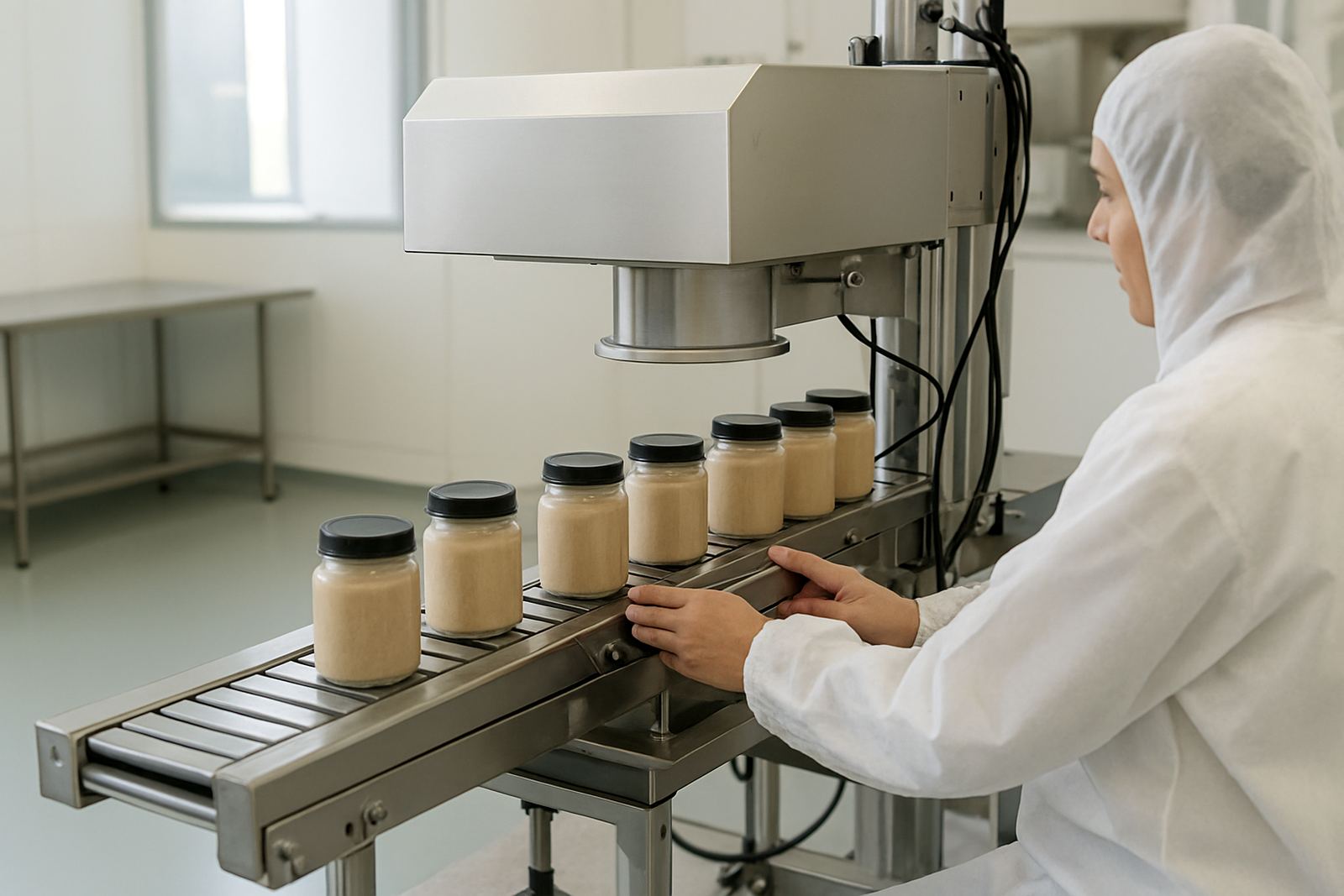
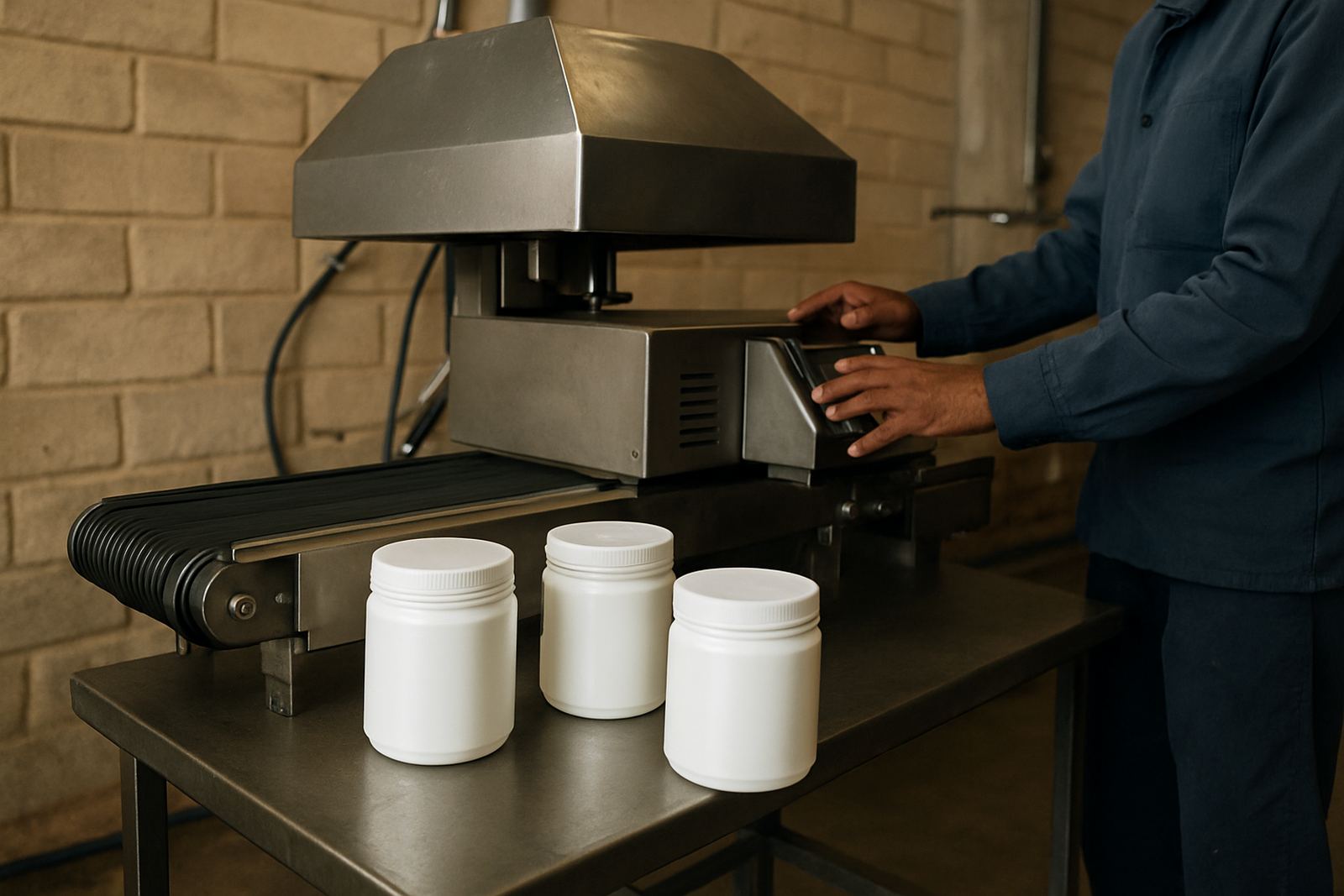
We supplied an induction cap sealing solution matched to the line speed and the container range. The installation included the sealing head, control set-up, mounting hardware, guide adjustments and liner matching support for the specified closures. We also checked the cap application sequence so the liner landed cleanly before the container entered the sealing zone.
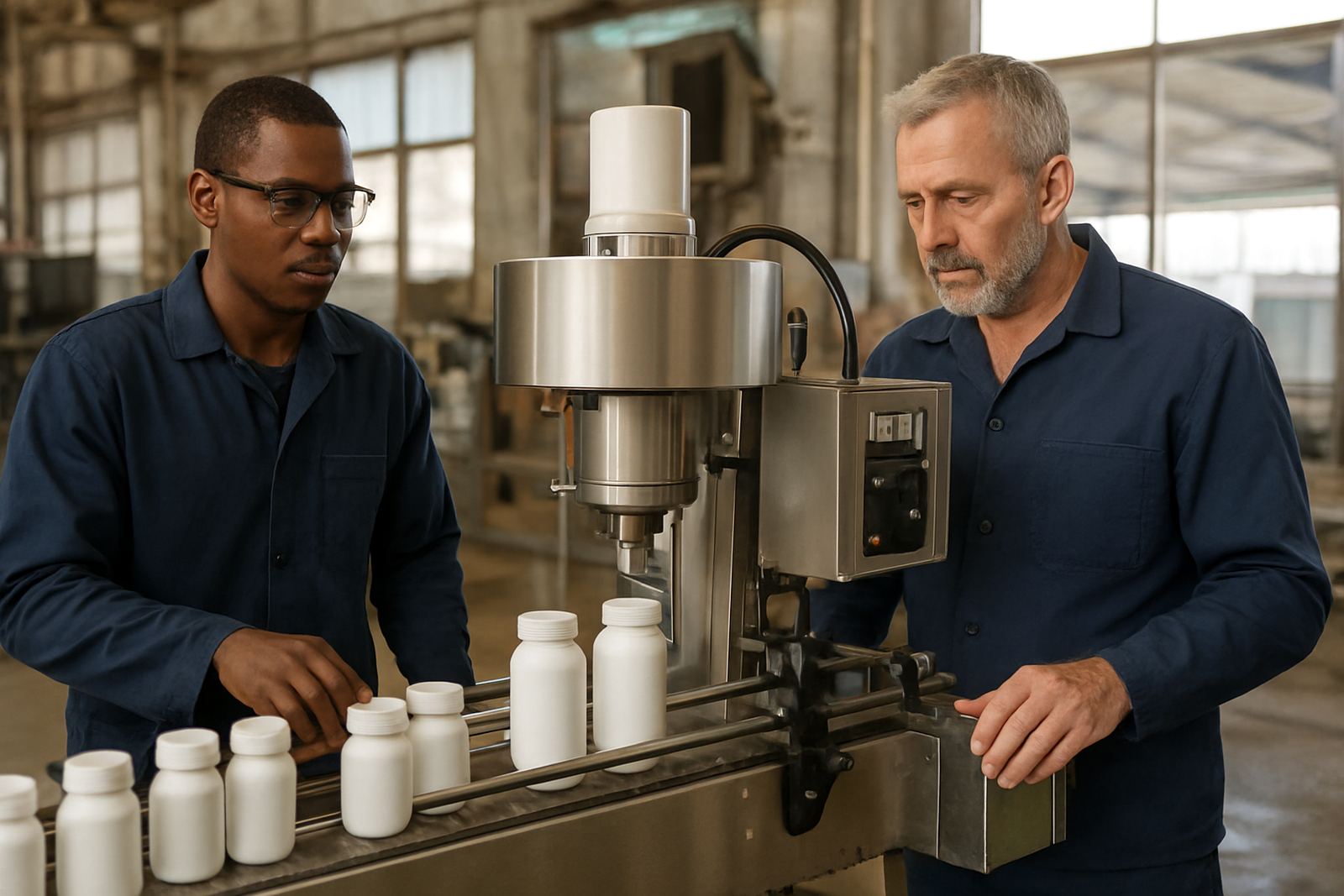
Because the site was in a working production area, the installation had to be done in sections. We isolated the line, set the mounting position, confirmed conveyor height and checked the container transfer points. Then we ran trials across the main pack sizes, starting with low speed passes and working up to the normal production rate. The liner choice was confirmed by testing bond quality after cooling, not only by looking at the cap straight away.
- Induction sealing head matched to the pack sizes
- Guide and height adjustments for different container formats
- Liner matching for closure and product compatibility
- On-site trial runs with seal checks after cooling
Commissioning, validation and operator training
Commissioning took place over two visits and was completed within 2 weeks from arrival on site to sign-off. During the first visit we set the line geometry and confirmed the correct sealing window. The second visit was used for validation across the normal product range, including checks after a full production run, because a seal that passes at start-up but weakens after the line warms up is not good enough.
Our validation focused on repeatability. We checked seal integrity, liner adhesion, closure fit and how the line behaved after short stoppages. The operators were shown how to identify signs of over-heating, under-sealing and off-centre cap placement. We also covered what to do after a power interruption, which matters in Pietermaritzburg where a line can lose time and temperature and then needs a sensible restart rather than guesswork.
- Site installation and line commissioning completed in 2 weeks
- Validation carried out on the main pack sizes
- Operator training included restart checks after outages
- Simple fault-finding steps handed over to shift leaders
Results on the production floor
After commissioning, the line was running with a more consistent seal and fewer rejects from poor liner contact. The customer saw better confidence in packed stock moving through storage and dispatch, especially where the product had to travel through humid conditions or sit in transit before end use. The dust control adjustments also helped keep the sealing area cleaner, so the sealing head was not fighting loose powder on every cycle.
For the customer, the practical gain was not only fewer failures but less time spent stopping the line to recheck caps and liners. The operators could keep their rhythm, the maintenance team had clearer service intervals, and the packs were leaving the site with a neater finish. That matters when product is sold on consistency and a leaky pack can create returns, complaints, and avoidable waste.
- Cleaner seal area around the cap and liner interface
- Lower reject rates on the main pack sizes
- Better confidence for storage and transport
- Less time spent resetting the line during production
What we would repeat on the next powder project
If we were doing the same type of job again, we would use the same approach: measure the line first, confirm the closure and liner combination, then commission against the real product not a theory. Powder products change the sealing conditions quickly, so the answer is to test under normal plant conditions and not under a quiet bench-top setup. That includes checking dust levels, cap torque and the recovery time after stoppages.
For similar sites in Pietermaritzburg, Durban or inland depots, we would again recommend a practical sealing set-up with straightforward maintenance access and a clear service plan. A powder line can be reliable, but only if the sealing stage is treated as part of the full filling process. Once the head, liner and closure all work together, the line becomes easier to run and a lot less temperamental, even when the plant is busy or the weather is sticky.
- Measure the pack range before choosing the sealing set-up
- Test liner performance with the actual powder product
- Train operators on restart and cleaning checks
- Plan preventive maintenance around production hours
Key facts
| Project location | Pietermaritzburg, KwaZulu-Natal |
|---|---|
| Client type | Mid-sized powder packer |
| Pack format | Multiple rigid container sizes |
| Main challenge | Dust at the sealing zone and liner matching |
| Timeline | 2 weeks from site start to commissioning sign-off |
| Scope | Installation, commissioning, validation, training and liner support |