Ballito client brief: neat jars, clear tamper evidence
The key challenge was making the line simple enough for daily use, but accurate enough for a product that must not leak, lift or show patchy sealing results. Supplement packaging is unforgiving. If the cap torque is uneven, the liner does not sit flat, or the seal head is not matched to the container diameter, the result shows up quickly in returns and complaints.
We first checked the jar neck finishes, cap styles and liner requirements, then matched the sealing setup to the pack range. The client needed a line that could cope with short runs and batch changes, so we kept the equipment arrangement compact and the settings easy to record. The work also had to suit local conditions. In Ballito, even a good seal can be tested by heat and humidity during storage and distribution, so consistency mattered more than speed for its own sake.
- Jar format checked before installation for cap and liner compatibility
- Settings recorded for repeat use across batch changes
- Line layout kept compact to suit the available packing space
What we supplied and installed on site
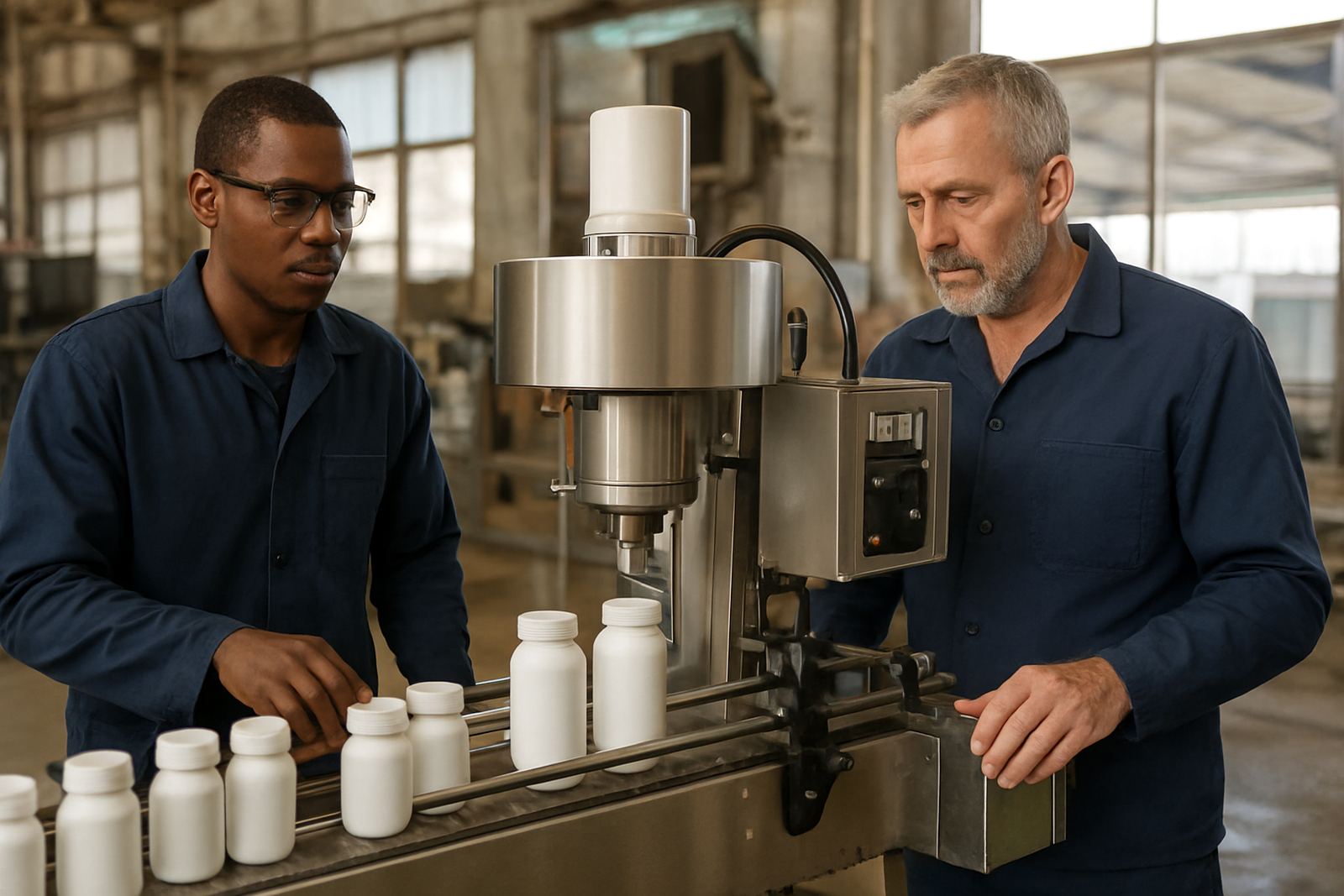
We supplied an induction cap sealing unit with the correct head sizing for the jar range, together with foil liners matched to the client’s containers. The installation was completed on site by our technical team, with the sealing unit positioned after capping and before final pack-off checks. We also supplied the practical items needed to keep the line running, including spare consumables, setup guides and basic maintenance guidance for the operators.
The installation was done with attention to access, cleaning and operator movement. That matters on small lines, because a machine can be technically correct yet awkward to use if it blocks a walkway or sits too close to a filling point. We also made sure the team could reach the machine for routine inspection without having to stop the whole pack area.
- Induction sealer sized to the container range
- Foil liners matched to the neck finish and cap type
- Operator-friendly controls for day to day use
- Safe access for cleaning and routine checks
Commissioning, training and seal validation
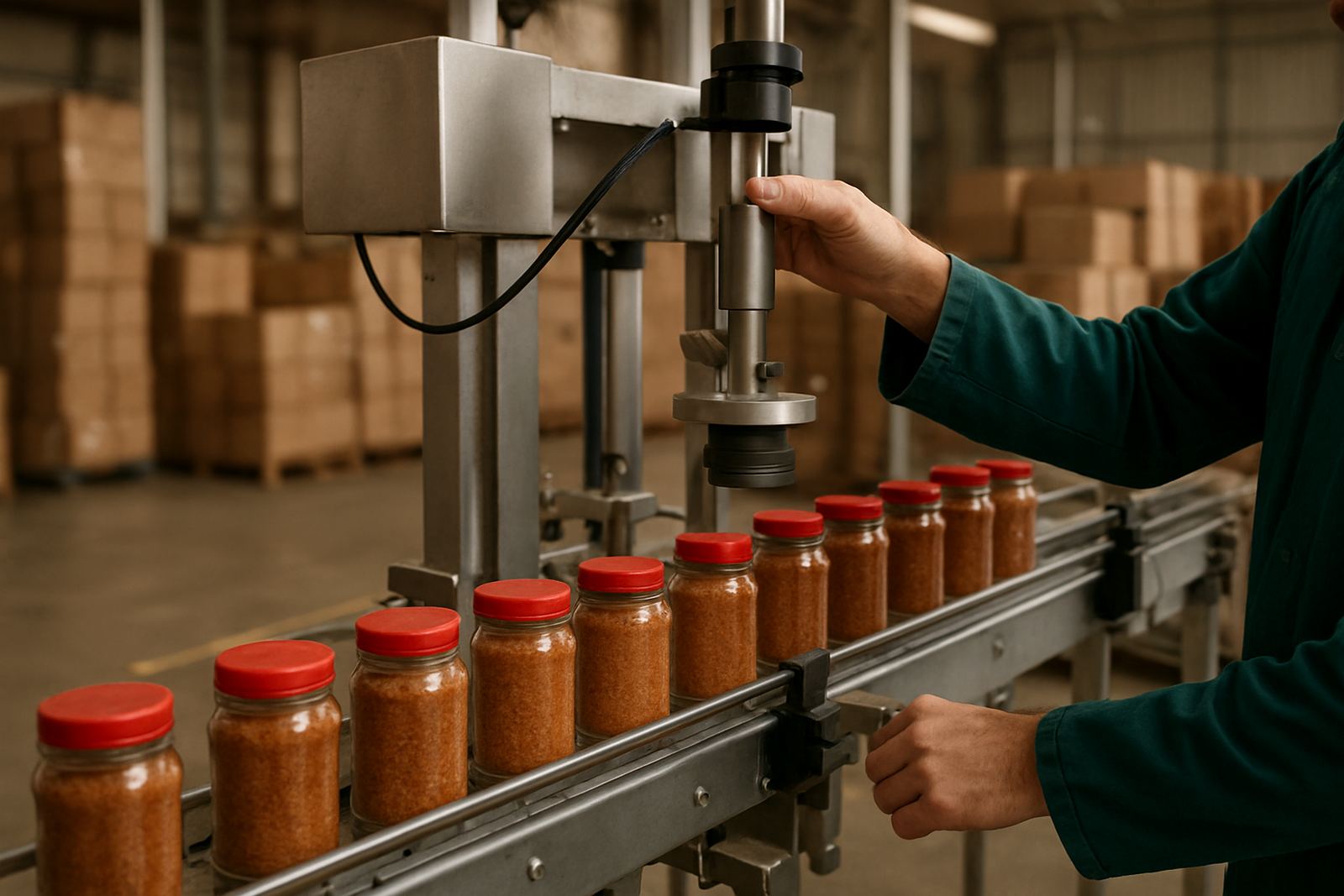
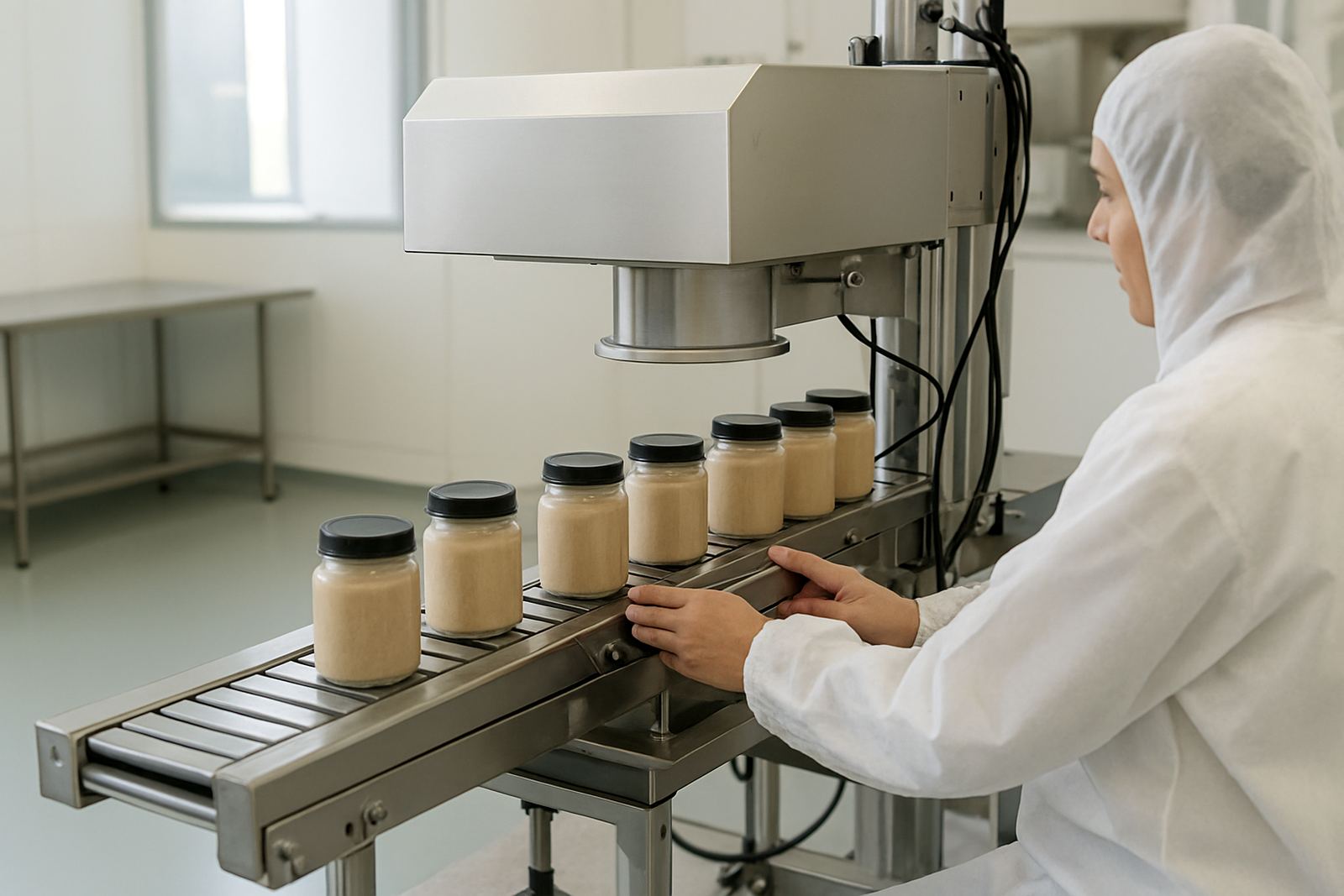
Commissioning took place over a short, planned window of two weeks from delivery to handover. During that period we ran trial seals, checked seal pull consistency, adjusted conveyor and head settings, and confirmed that the finished jars carried a full, even seal across the opening. The goal was not only to start the machine, but to prove that it held up under normal production conditions.
We trained the operators on start-up checks, liner inspection, cap torque control and basic fault finding. The team also received guidance on what to look for when a seal is not setting properly, such as uneven heating, liner movement or cap contamination. For a supplement line, these checks save time because problems are caught before cartons are closed and dispatched.
- Commissioning timeline: 2 weeks
- Seal validation completed during live production trials
- Operator training covered startup, checks and fault response
Keeping the line steady through KZN conditions
After commissioning, the line settled into a reliable routine with stable seals and a cleaner pack appearance. The client reported fewer rejected jars and less rework during final inspection. The sealing process also gave them a better tamper-evident finish, which helped with customer confidence and retail presentation. In a coastal area, that sort of consistency is worth more than people often expect.
We also looked at maintenance from the start, because an induction sealer performs best when it is kept clean and the head alignment is checked on schedule. The client now has a practical preventive maintenance routine, plus access to spares and remote support if anything needs attention. That mix is useful in Ballito and across the province, especially when load-shedding or a rushed production day puts pressure on the line.
- Fewer rejects after final inspection
- Better tamper evidence for retail and direct supply
- Routine maintenance plan set for ongoing use
- Remote support available if settings need review
What we would repeat on the next supplement line
If we were doing the same project again, we would follow the same sequence: check the container range first, confirm the cap and liner match, then set the sealer to the real pack speed rather than an assumed one. That approach keeps the project practical and avoids oversizing equipment for a line that only needs a compact, dependable setup.
We would also continue to keep operator training tied to the actual line, not a generic demo. When the people using the machine understand exactly how to read the seal and spot a problem early, the line runs better. For the Ballito project, that was the difference between a machine that simply worked and a packing process that could be trusted every day.
For clients packing supplements in Durban, Ballito, Pinetown, Pietermaritzburg or further afield, the same principle applies: match the liner, match the head, and keep the process simple enough for real production. That is what gives a neat finish and a seal that stays put.
Key facts
| Project location | Ballito, KwaZulu-Natal |
|---|---|
| Client type | Supplement packer |
| Packaging format | Supplement jars |
| Sealing method | Induction cap sealing with foil liners |
| Timeline | 2 weeks from delivery to handover |
| Support coverage | Durban base with nationwide sealing line support |