Why spice jars need proper tamper evidence
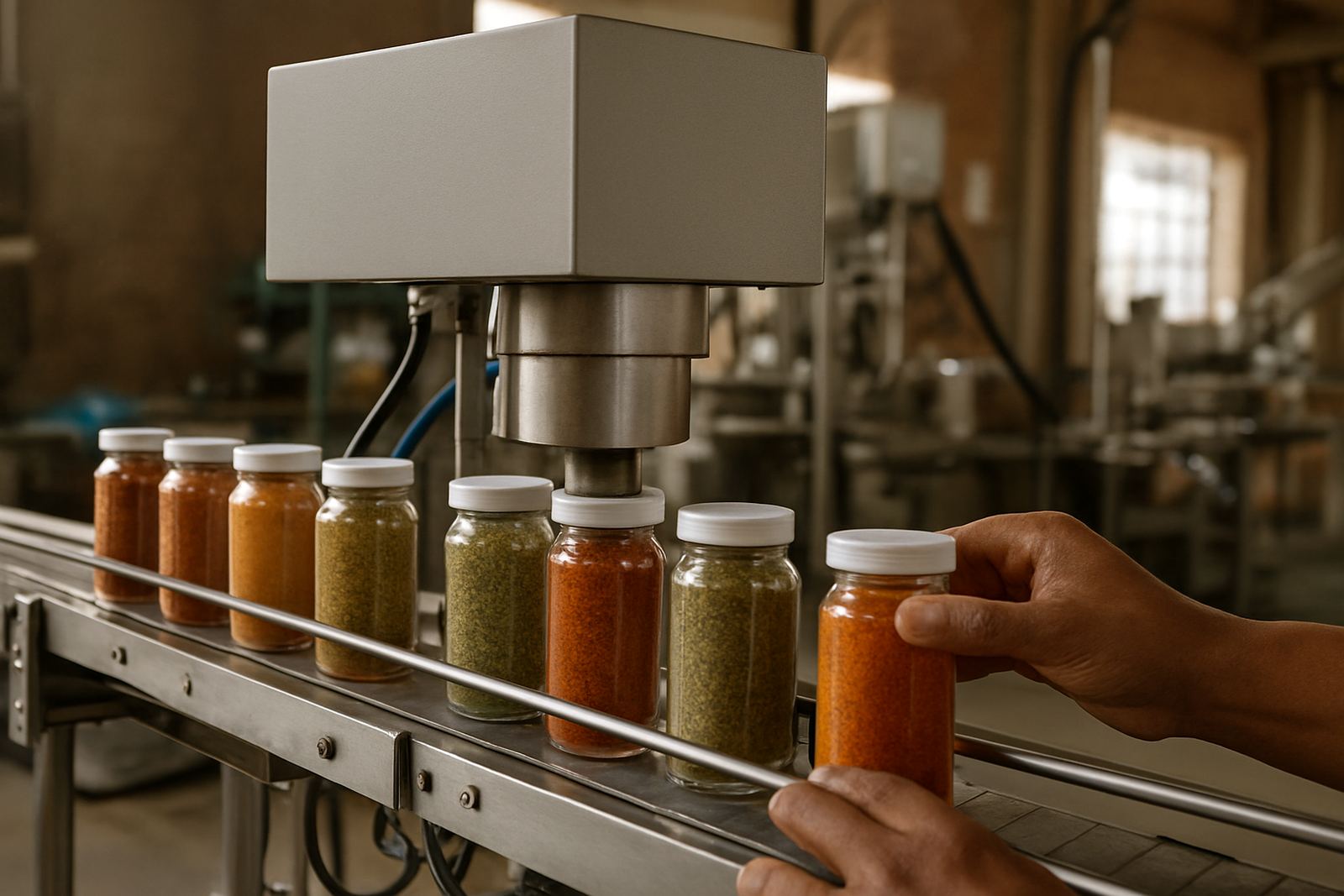
Spice and seasoning products are often packed in small plastic jars or bottles that move through hot packing rooms, busy depots and long distribution runs. A proper induction seal helps protect aroma, keeps fine powders in the container, and gives buyers confidence that the jar has not been opened on the shelf. For food packers in South Africa, that matters just as much for retail trust as it does for hygiene.
In Jacobs and Pinetown we often see spice lines working with very fine dust, uneven cap torque and product residue on the rim. If the closure area is not controlled, the liner can fail at the edge or leave a weak bond. A good seal is not only about machine output, it is also about the jar, the cap, the liner and the way the line is set up from filler to capper. Small problems become expensive when they affect a whole batch.
Typical sealing equipment for spice jar lines
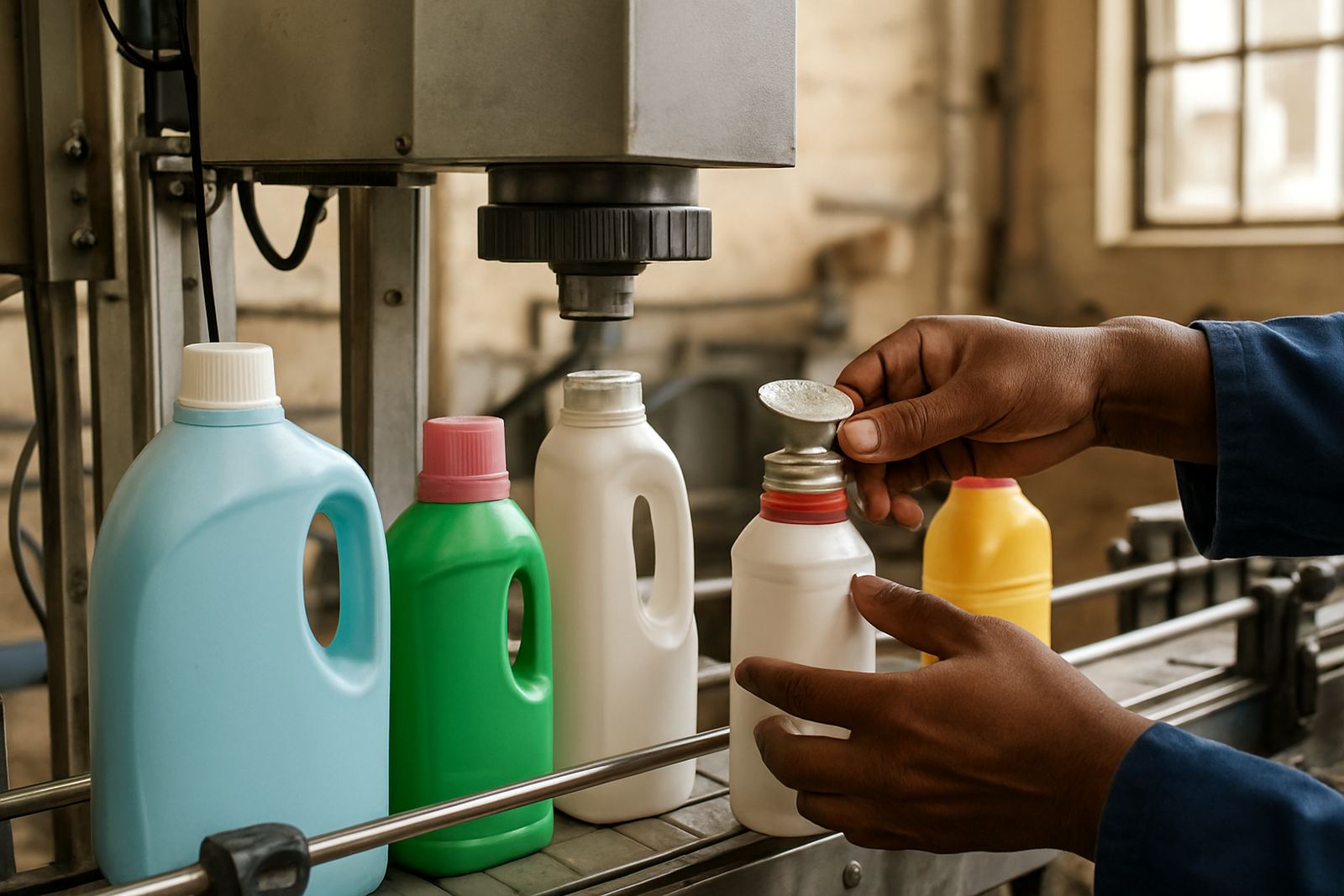
Most spice jar operations use a cap sealer matched to the container size, cap material and line speed. For small to medium packers, a compact induction head mounted over the conveyor is usually enough. Larger sites in Pietermaritzburg or Richards Bay may need a more powerful unit with better cooling and tighter control over dwell time. The right setup depends on whether the jars are round, square or moulded with narrow necks.
- Induction cap sealer sized for the cap diameter and line speed
- Foil liners matched to PP, PET or HDPE containers
- Conveyor guide rails to keep jars centred under the head
- Cap application unit with correct torque control
- Simple reject point for unsealed or badly seated jars
We also look at power supply stability. In areas affected by load-shedding, a short dip can interrupt the sealing cycle and leave a bad seal that only shows up later in warehouse checks. A line with surge protection and sensible restart procedures saves a lot of time, especialy on Friday shifts when production is pushing to clear orders.
How to plan the sealing station around the filling line
Spice jars pack better when the sealing station is planned as part of the full line, not added later as an afterthought. The capper should sit close enough to the filler to reduce spill risk, but with enough space for the jar to settle before sealing. If the product is powdery or carries seasoning dust, it helps to allow a short wipe-down or air management point before the induction head.
For sites with mixed pack sizes, line planning matters even more. A 100 ml chilli powder jar will not behave the same way as a 500 ml seasoning tub. Changeover parts, guide settings and liner size need to be easy to adjust. It is common to lose time because the capper is right, but the conveyor height or head clearance is not. That kind of issue can be avoided at the planning stage.
- Keep the jar neck and cap thread clean before sealing
- Allow enough conveyor length for cap settling
- Use consistent fill levels to avoid product contact with the liner
- Check jar stability on wet or dusty packaging floors
Common mistakes on spice and seasoning jars
One of the most common mistakes is treating all liners as the same. Spice products are sensitive to moisture and aroma loss, so the liner has to suit the jar material, closure style and product behaviour. Another issue is underestimating how much dust collects around the cap area. Even a light layer of seasoning can weaken the seal face and create a false pass during quick checks.
We also see lines where the operator trusts visual checks alone. A foil liner can look seated and still fail under pressure if the heat setting is wrong or the cap was not applied square. On busy plants this leads to returns from retailers in Durban or coastal towns where humidity makes poor seals show up faster. A practical test routine catches the problem before cartons leave site.
- Wrong liner for the jar plastic or neck finish
- Cap torque too low or too high
- Sealing head too high above the container
- Dirty rims from powder, oil or spice dust
- Skipping validation after changeover
Budget ranges for spice jar sealing in Rand
Budget depends on output, container range and how much support you need at startup. A smaller hand-fed or semi-automatic sealing setup for a local seasoning packer may start from about R45,000 to R95,000, depending on the liner type and basic fittings. A more complete line with conveyor integration, guarding and commissioning can move into the R120,000 to R280,000 range. Larger, higher-speed systems for national distribution can sit above that, especially where multiple jar sizes are packed on the same line.
There are also service costs to allow for. Preventive maintenance visits, spare heads, replacement parts and site support should be built into the annual plan, not treated as emergency spend. For many food packers, a sensible maintenance budget is far cheaper than losing one pallet of product because of seal failures. In tight-margin runs, the seal station usually pays for itself by reducing rejects and call-backs.
Support for packers in Durban and nationwide
Bottle Sealers works from Jacobs, Durban and supports sealing lines across South Africa, including Pinetown, Prospecton, Pietermaritzburg and Richards Bay. For spice jars we assist with site installation, line commissioning, operator training, seal validation, preventive maintenance, breakdown repairs, spares supply, liner matching, line optimisation and remote support. That local support is useful when a line needs to restart before a dispatch window or when a new jar is being trialled.
We normally start by looking at the jar, cap and product behaviour, then we advise on the most practical sealing setup for the site. If the filling room is humid, dusty or running on split shifts, we factor that into the recommendation. The aim is simple: keep the spice sealed properly, reduce wastage and make sure the retail pack arrives looking right.