Why pharmaceutical bottles need a controlled seal
In pharmaceuticals, the seal is part of product protection, not just packaging. Induction sealing gives a clear tamper-evident layer under the closure, helping you protect tablets, syrups, powders and healthcare liquids from leaks, contamination and handling errors. For many medicines and supplements, consistency matters as much as speed, especially when batches move through filling, capping, coding and carton packing in one shift.
Plants in Jacobs, Pinetown and Prospecton often deal with mixed bottle sizes, pressure from delivery dates and staff changes on the line. That is where a properly matched induction cap sealer makes the difference. It must suit the container neck finish, closure type and liner material so every cap gets the same heat transfer and the same result, even when the line runs through load-shedding recoveries or hot coastal afternoons.
Typical equipment set for medicine bottling lines
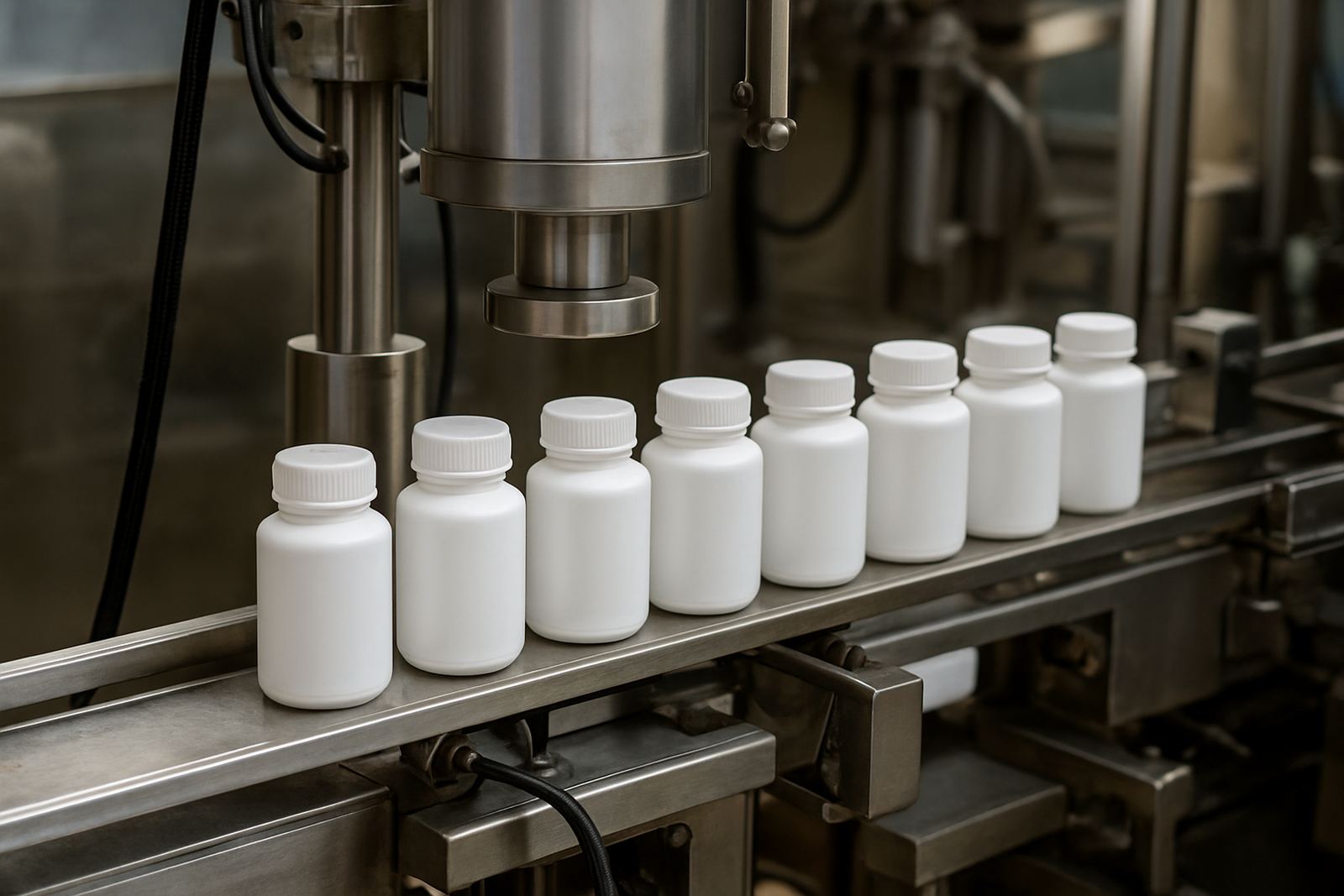
A pharmaceutical sealing station is usually built around the capper and the induction head, with bottles moving on a conveyor after filling. For higher output lines, the induction unit is mounted in line so each container passes under the sealing head at steady speed. On slower or mixed product lines, a bench unit or compact conveyor setup may be more practical, especially for smaller runs, contract packaging and medicines packs with frequent changeovers.
- Induction cap sealer matched to bottle diameter and line speed
- Foil liner type selected for PP, PET or HDPE closures
- Conveyor section with guide rails and spacing control
- Cap torque control before the sealing head
- Date coding and inspection point after sealing
We also look at bottle height, cap profile, fill temperature and whether the product is wet-fill, dry or viscous. If the line uses several pack sizes, liner matching becomes very important because the wrong material can look fine at first but fail later in transit or during warehouse storage.
Layout and planning for Durban and inland sites
Good sealing starts with layout. The head height, conveyor speed and bottle spacing must all work together, otherwise you get partial seals, overheated liners or missed bottles. In Durban, moisture in the air can affect storage of caps and liners, so we advise keeping consumables dry and sealed until use. Inland sites in Pietermaritzburg or Richards Bay often have different temperature swings, so line settings may need a small adjustment between seasons.
Before installation, we usually check the available space, power supply, earthing, line access and the route for product flow from filler to capper to sealer. If the site relies on backup power during load-shedding, it helps to plan a controlled restart sequence so bottles do not build up under the sealing head. For regulated products, the layout should also make inspection and rejection easy, with enough room for operator access and cleaning.
- Allow clear access for maintenance and liner changes
- Keep wet washdown areas away from electrical controls
- Leave space for sample pulls and seal checks
- Position the unit after capping and before final inspection
Common mistakes we see on pharmaceutical lines
The biggest problems are usually simple. Wrong liner material, loose cap torque, poor bottle filling height, or a sealing head set too high can all cause leaks or weak seals. Sometimes the line is running too fast for the induction unit, so the seal appears only on part of the cap. We also see cases where operators change bottles or caps but keep the old settings, which leads to poor results that are hard to trace later.
Another common issue is skipping validation after changes. If a new bottle supplier, closure or liner is introduced, the seal should be checked again under real production conditions. A quick visual check is not enough for medicines that will be stored, transported and handled several times. Regular seal validation, plus periodic checks during the shift, keeps the process steady and reduces rework. It saves money too, because rejected batches can become very expensive very quickly.
Budget ranges for sealing projects in Rand
Budget depends on line speed, bottle format and whether you need a single sealing head, a conveyor section or a more complete installation. For small pharmaceutical and healthcare operations, a compact system may start around R45,000 to R85,000. Mid-range in-line setups often fall between R90,000 and R180,000. Larger production lines, integration work and validation support can push projects from R200,000 upwards, depending on the number of pack sizes and control requirements.
Consumables and service should also be budgeted. Foil liners, spare parts, calibration checks and preventive maintenance are part of keeping the line in spec. If the plant runs in Jacobs or Pinetown and ships nationwide, it is worth planning for operator training and a small spares hold on site so downtime stays low when a closure type changes or a repair is needed. A cheaper machine with poor support can cost more over 12 months, especially when production is tight.
Installation, support and aftercare from Jacobs
Bottle Sealers supports pharmaceutical sealing projects from its Durban base in Jacobs, with service across Pietermaritzburg, Prospecton, Richards Bay and the wider country. Our team handles site installation, line commissioning, operator training, seal validation, preventive maintenance, breakdown repairs and remote support. For busy medicine packers, that means the sealing line is set up properly from day one and checked again when conditions change.
The aim is simple: a repeatable seal that suits your bottle, cap and product. Whether you are sealing small healthcare bottles or higher volume production runs, we help match the liner to the application and keep the process steady. If the line needs a quick fix or a planned service visit, we can assist without unnecessary delay, and the support is practical not complicated.
- Site Installation and Line Commissioning
- Operator Training and Seal Validation
- Preventive Maintenance and Breakdown Repairs
- Spares Supply and Line Optimisation
- Remote Support and Liner Matching