Why nutraceutical packs need a proper induction seal
Supplements, capsules, powders and wellness blends are usually packed in light plastic jars or bottles that travel through transport depots, chemists, health stores and online order fulfilment. In South Africa, those packs also deal with heat in transit, coastal humidity in Durban and occasional power interruptions that can upset a filling line if the sealing step is not set up correctly.
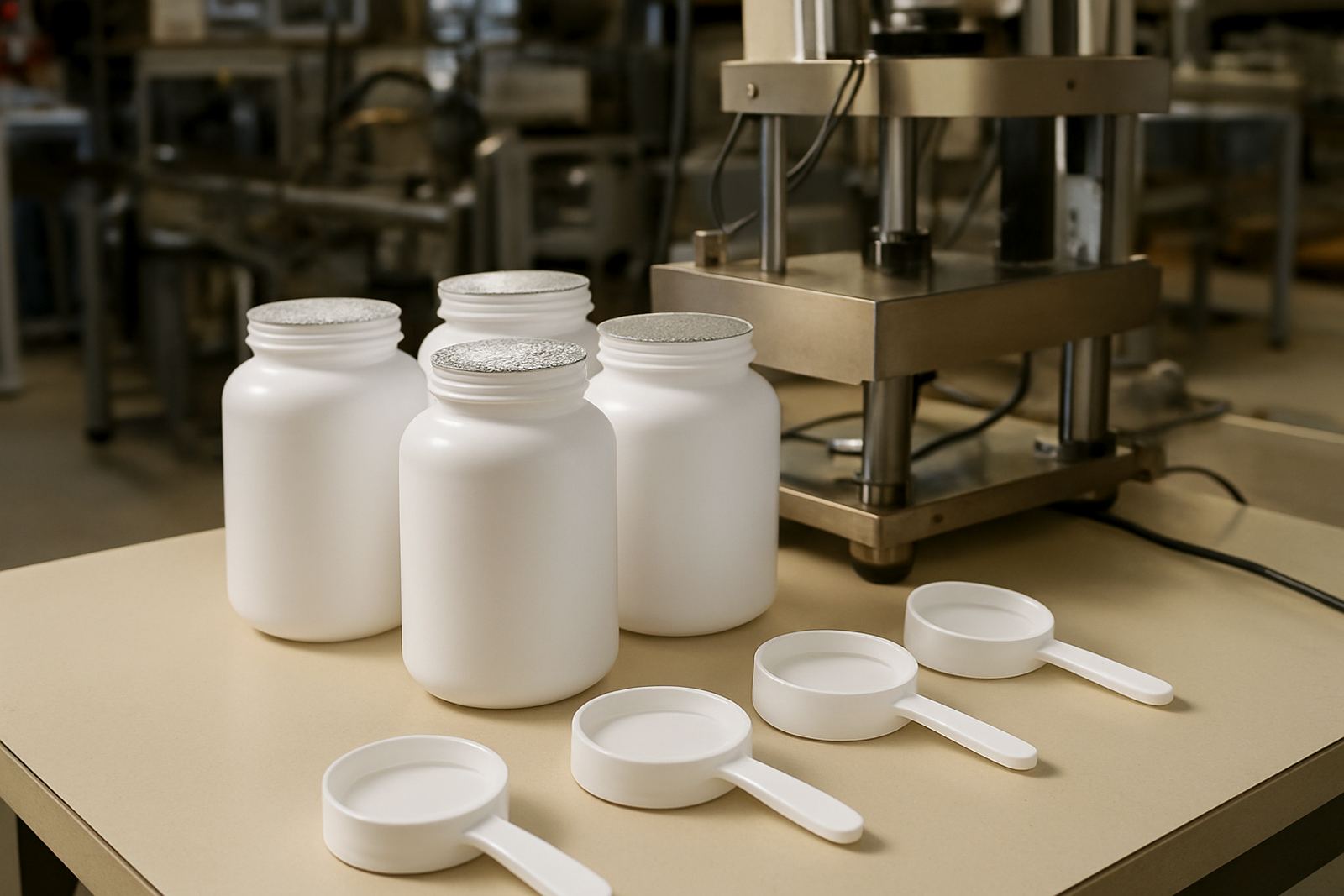
An induction seal gives the pack a clean foil closure under the cap, helping reduce moisture ingress and tamper risk. That matters for products that can clump, smell off, or lose shelf appeal when the liner is wrong. For nutraceutical packs, the goal is not just a tight cap, but a seal that stays consistent across every batch.
At our Jacobs base in Durban, we often see packers moving from hand-applied liners or mixed cap stock to a controlled induction process. The change is usually driven by product returns, customer complaints, or repeat issues with liners lifting after distribution to Pietermaritzburg, Richards Bay and inland depots. A stable seal saves packaging losses and cuts down on avoidable rework.
Typical equipment set for supplement and wellness lines
Nutraceutical packers normally need a sealing setup that matches their container size, cap type and daily output. A small line filling 1 000 to 3 000 units per shift may use a compact induction cap sealer with a manual or semi-automatic capper. Larger operations running jars and bottles for multiple SKUs often need a line-mounted unit with adjustable head height and repeatable settings.
The most common parts of the setup are:
- Induction cap sealer matched to the neck diameter and line speed
- Foil liners selected for the bottle material and product type
- Cap tightening control so the seal face stays flat
- Height guides and conveyor alignment for different container sizes
- Spare heads, liners and wear items for planned maintenance
For nutraceutical packs, liner choice matters. Some products need good moisture protection, while others need stronger tamper evidence or better performance on higher fill temperatures. If the caps are overtightened or the bottle mouths are uneven, the foil can wrinkle and leave weak spots. That is why equipment choice should be tied to the actual container, not only the volume target.
Layout and planning advice for Durban and inland pack houses
A sealing station should sit after filling and capping, with enough straight conveyor run before and after the sealer to keep containers stable. In a Jacobs or Prospecton pack house, floor space is often tight, so planning matters. Leave room for operator access, liner changes and quick cleaning. If the product range includes different jar heights, allow for height adjustment without moving the whole line.
It also helps to plan for power dips and scheduled load-shedding. A well set sealing line should recover cleanly after a stop, but operators still need a clear restart routine so the first few packs after a power return are checked. In humid coastal areas such as Durban and Richards Bay, store liners in sealed cartons away from direct heat and sunlight, because poor storage can affect performance before the liner ever reaches the cap.
- Measure neck diameter, cap style and bottle material before ordering equipment
- Keep the sealing head level with the bottle top and the conveyor stable
- Test every new container size before full production
- Allow space for inspection, rejection bins and packing-out tables
- Store liners in a dry area to avoid moisture pickup
Common mistakes that cause seal failures
Most seal issues in nutraceutical packs come from basic setup faults rather than the sealer itself. The first mistake is using a liner that does not match the bottle and cap. The second is sealing over an uneven cap torque, which can create a partial bond on one side and a weak edge on the other. Another frequent problem is line speed that is too fast for the container weight, especially on narrow bottles that wobble as they pass under the head.
We also see operators assume one liner works for every product. A capsule bottle, powder jar and wellness syrup may all need different sealing behaviour, even if the cap size looks similar. If the product has fine dust on the neck, the foil may not bond properly. If the filling temperature is too high, the liner can distort. A short validation run before production often prevents a costly batch hold.
Training is just as important. A line can be mechanically sound but still fail if operators do not know how to spot a poor seal edge or when to stop the line and call for support. That is why we include practical operator training on site, not just handover notes.
Budget ranges for foil sealing on supplement lines
Budget depends on throughput, container variety and how much automation the line needs. For many nutraceutical packers, a basic entry-level induction sealer for smaller runs may start around R18 000 to R35 000. Semi-automatic units for steadier production, with better adjustment and control, often sit in the R45 000 to R95 000 range. Higher output lines with conveyor integration and more precise control can move above R120 000 depending on the application.
It is also wise to allow for the full setup cost, not only the machine. Liners, spare parts, installation, operator training and periodic maintenance all affect the real budget. If a packer runs multiple product sizes, liner matching and changeover support should be included from the start. That keeps surprise expenses down later on.
For smaller producers in Durban, Pinetown or Pietermaritzburg, the practical approach is often to start with the container family that gives the highest turnover first, then expand as volumes grow. That keeps capital spend controlled and avoids buying a system that is too large for the actual line.
How Bottle Sealers supports nutraceutical packaging projects
Bottle Sealers works from Jacobs in Durban and supports sealing lines nationwide, from initial site checks through to commissioning and ongoing maintenance. Our team can assist with liner matching, line optimisation, breakdown repairs and spares supply, which is useful when a supplement packer needs to keep production moving through month-end demand or contract runs.
The team includes Sibusiso Mthembu as Managing Director, Nokuthula Dlamini in Operations, Jared Naidoo in Technical Sales, Lindokuhle Khumalo in Service Coordination, Megan Govender in Customer Support and Themba Zulu as Field Commissioning Technician. That means one point of contact for the practical work, whether the job is a new line in Jacobs or a follow-up call to a site in Richards Bay.
If your nutraceutical packs need better moisture control, cleaner tamper evidence or more dependable sealing on retail-ready containers, we can help plan the layout, match the liner and set the line up properly. For enquiries, send a message through our contact form.