What our operator training covers on your line
Our training is done at your site and is matched to the way your line actually runs, whether you are sealing bottles in Jacobs, Pinetown, Pietermaritzburg or further afield on a national route. We focus on the tasks operators do every day: start-up checks, cap and liner handling, conveyor control, seal head alignment, and the simple checks that stop avoidable rejects.
The aim is not classroom theory. It is practical instruction for people who work the shift, need clear steps and have to keep products moving even when power interruptions or schedule pressure make the day difficult. We also cover the effect of heat, humidity and dust on seal quality, which matters in coastal Durban and Richards Bay conditions.
- Machine start-up and shut-down sequence
- Correct bottle presentation and cap handling
- Seal head height, dwell and line speed basics
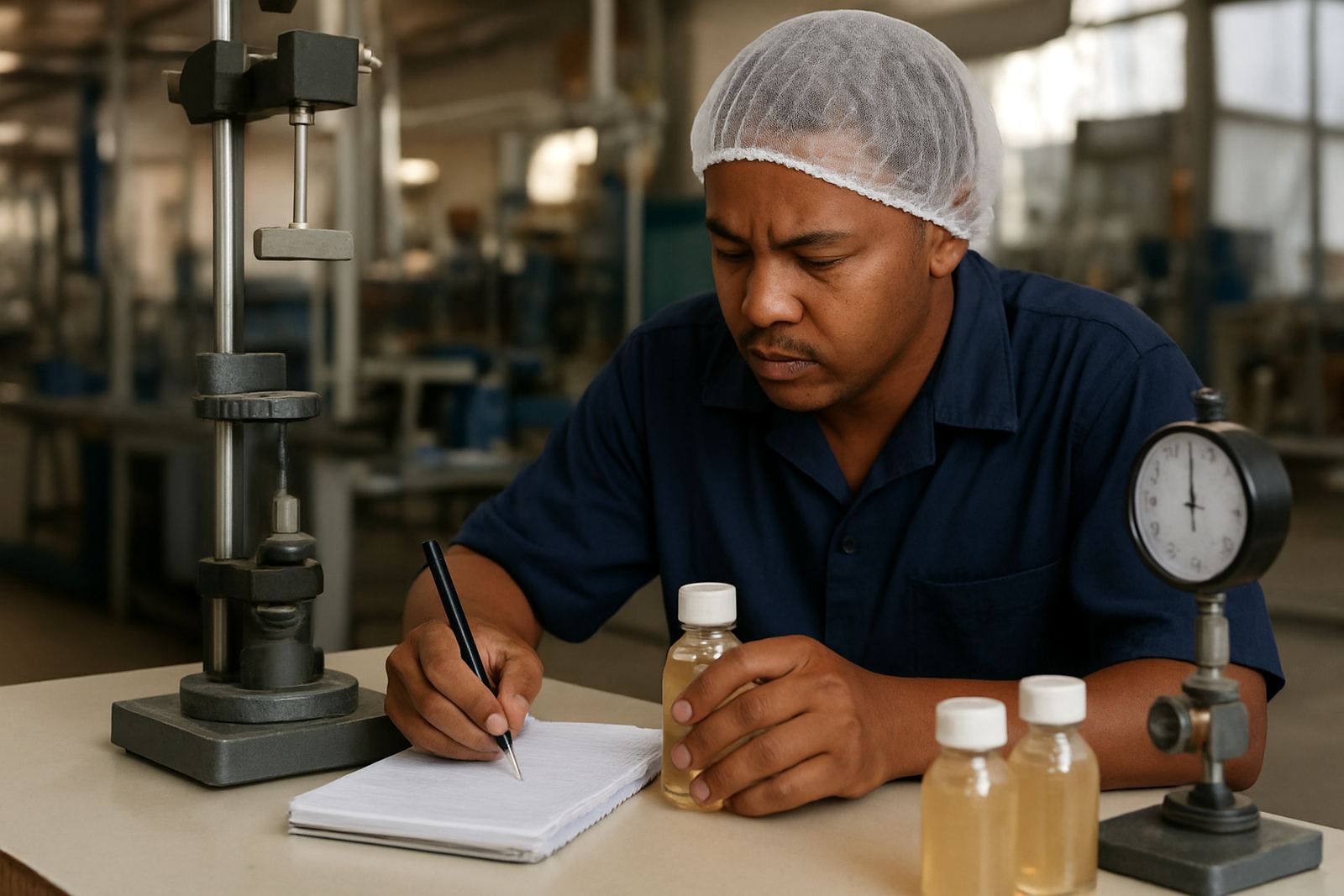
- Daily visual checks for liners, caps and bottles
- Common faults, cause checks and first response steps
Training format for operators, supervisors and line leads
We keep the training practical and short enough to fit into production planning. A standard session can be arranged for one shift, a half day, or a full day depending on the number of people and how many sealing formats you run. If your team works across two or three pack sizes, we train on each size so the operators understand where the set-up changes and where it stays the same.
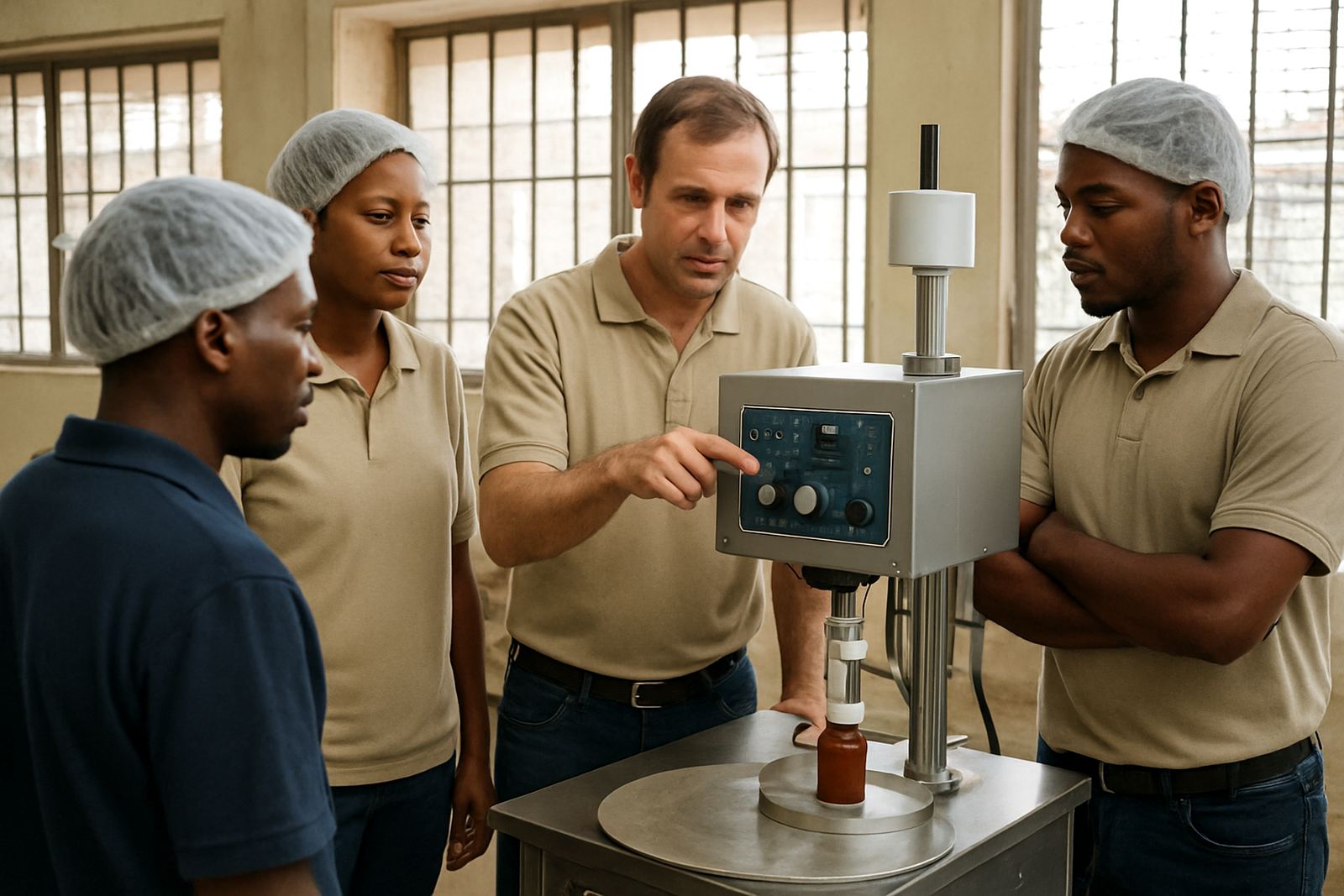
For new staff, we recommend a small group of 4 to 8 people per session. That gives enough time for each operator to stand at the machine, ask questions and repeat the steps before they go back onto the line. Supervisors and shift leaders are welcome because they often carry the first response when a seal goes wrong.
- Operator practical session at the machine
- Supervisor checklists for daily line handover
- Refresher coaching for experienced staff
- Training on one or multiple pack sizes
How the on-site training process works
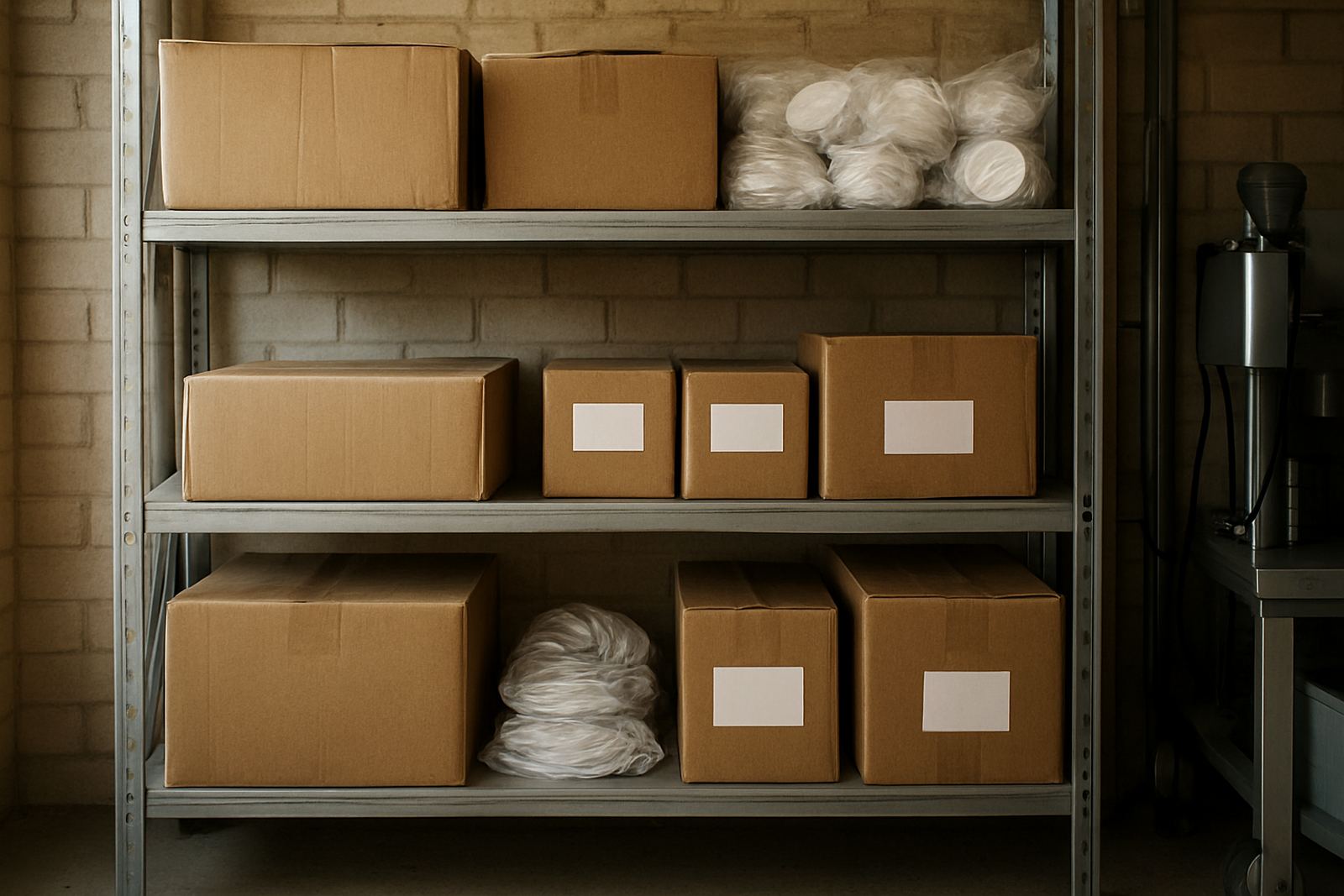
We start with a short pre-visit call or message discussion to confirm the machine type, container sizes, cap style and foil liner format you use. That helps us bring the right training material and, where needed, the right sample liners or check tools. From there we schedule the visit around your production times, including early starts or after-hours where the line must keep running during the day.
On site, we first watch how the line is running now. Then we demonstrate the correct process, let the operators repeat it, and test the understanding with live bottles. If we find a problem such as uneven head positioning, worn caps or incorrect liner match, we point it out and show the team how to spot it early. A short written summary can be supplied after the visit, including the key settings and the main watch points.
- Step 1: confirm line details and training goal
- Step 2: assess current operation and seal results
- Step 3: demonstrate correct use and routine checks
- Step 4: supervise operator practice on live product
- Step 5: leave a simple action list and maintenance notes
Checks, fault finding and maintenance intervals we teach
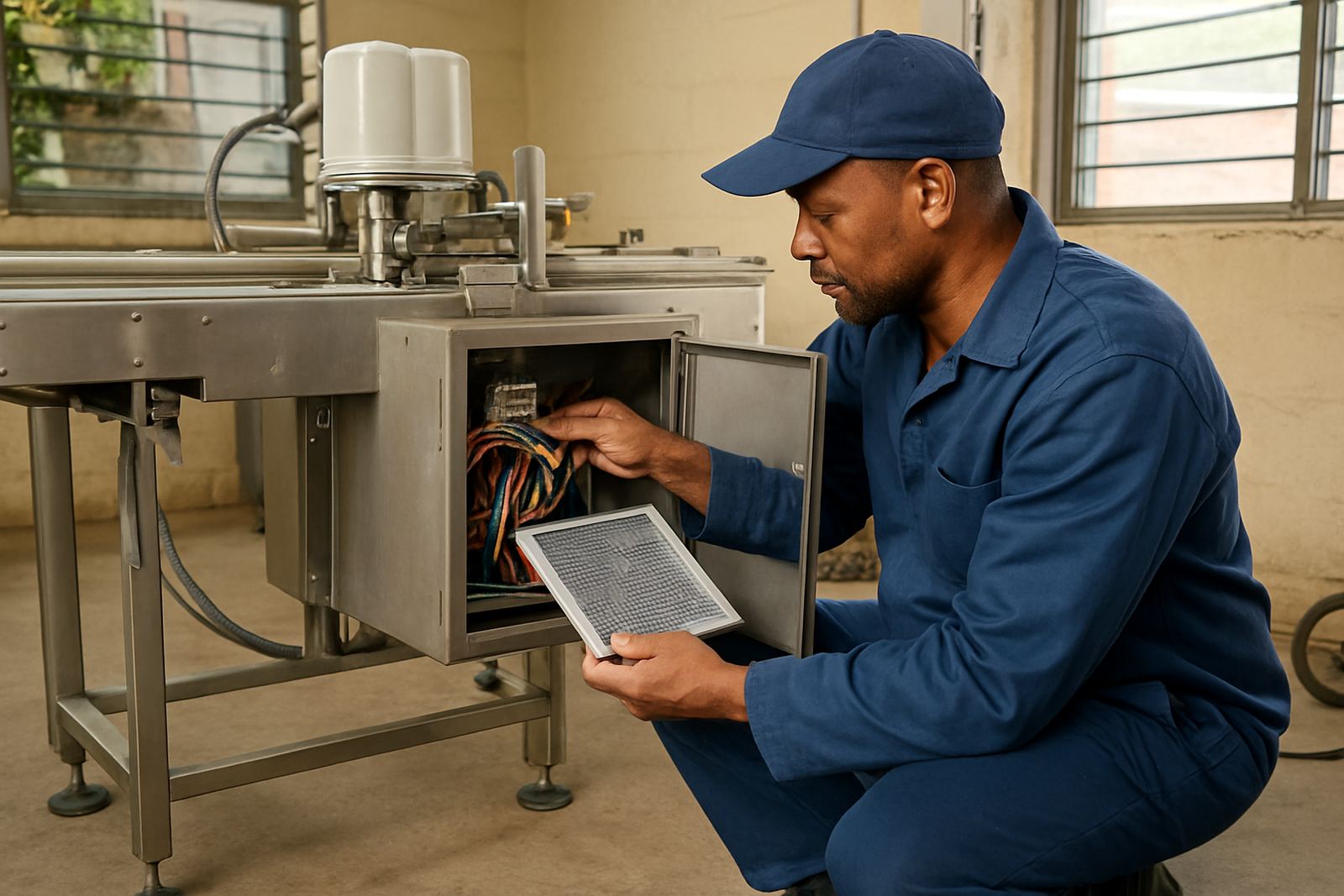
Good training includes routine maintenance habits. We show operators what to check every shift, what to inspect weekly, and what needs a planned service interval rather than a quick fix. This helps avoid poor sealing, cap damage and heat related stoppages, especially on lines running long hours in Durban humidity or where load-shedding has interrupted machine rhythm.
We also train teams to recognise the difference between an operator issue and a mechanical fault. That reduces unnecessary downtime and prevents staff from adjusting settings without understanding the cause. If the machine shows repeated faults, we teach the team how to record the symptom clearly before the service call, which saves time when a technician arrives.
- Every shift: clean, inspect and confirm seal quality
- Weekly: check alignment, cable condition and wear points
- Monthly: review settings, output and repeat faults
- Planned service: confirm electrical, mechanical and sealing performance
Turnaround time, pricing approach and support after training
Turnaround depends on your location and how much line time is available, but we work to short lead times for Durban, Pinetown, Prospecton and Pietermaritzburg where possible. For urgent training after a line change or staff turnover, we try to fit in visits quickly. National bookings are arranged by route and project size, so larger sites can be grouped for better planning.
Our pricing is based on the training time, travel, number of operators and whether the visit includes multiple product sizes or follow-up support. We quote clearly before the visit, so you know what is included. If your team needs a second session after a trial run, we can schedule refresher training or a targeted revisit. That is often cheaper than repeating product waste caused by poor handling.
After training, we remain available through our contact form or phone for basic follow-up questions on settings, liner fit and routine checks. If the issue is beyond operator control, we can arrange technical support, commissioning help or breakdown repair through our Durban base.
Who benefits most from operator training
Training is useful for new starters, production supervisors, line setters and quality staff. It also helps sites that have changed bottle sizes, added a new product range or seen seal problems after a shift change. Pharmaceutical, food and chemical packers all need repeatable sealing, but the daily handling details are not the same, so the training is adapted to the product type and pack.
We work with single line operations and larger facilities alike. If your site has multiple fillers, different cap heights or several foil liner formats, we can train the team on each setup and show them how to keep records that make handover easier. The result is a more confident crew and fewer stops for preventable issues.
- New operators who need hands-on guidance
- Existing staff moving onto a different line
- Quality teams needing better fault recognition
- Shift leaders responsible for daily output
Key facts
| Service type | On-site operator training for induction cap sealers and foil liner systems |
|---|---|
| Typical session length | Half day, full day or split session by arrangement |
| Group size | 4 to 8 operators per practical group |
| Coverage | Jacobs, Durban, Pinetown, Prospecton, Pietermaritzburg, Richards Bay and nationwide |
| Training focus | Machine use, routine checks, basic troubleshooting and safe sealing practice |
| Follow-up support | Phone and messages, with revisit options if needed |