What line commissioning covers on site
Line commissioning is the stage where the induction sealer is brought into full working order on your packing line and tested under real production conditions. We check the cap, liner and bottle combination, confirm the conveyor height and head position, then set the power and dwell settings so the seal is consistent from the first bottle to the last. For plants in Jacobs, Pinetown, Prospecton and Pietermaritzburg, that usually means working around existing fillers, cappers, labellers and date coders without disrupting the rest of the shift.
Our commissioning work is practical and hands-on. We look at product movement, operator access, reject handling and any issues caused by vibration, humidity or uneven floor levels. In coastal areas like Durban and Richards Bay, moisture can affect liner performance if the cap stock or finished packs are left open too long, so we factor that into setup and testing.
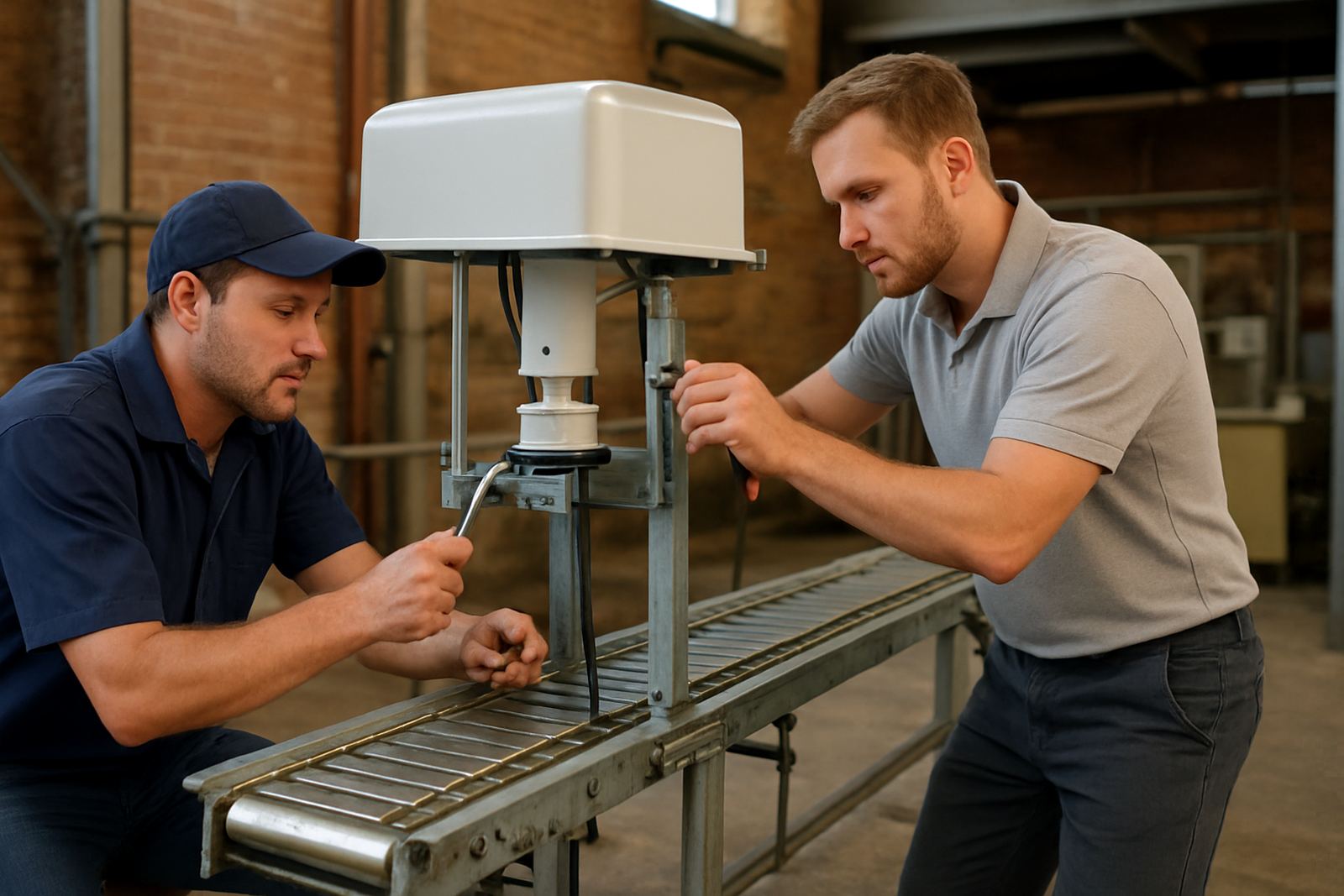
- Sealer positioning and head alignment
- Power setting and speed matching
- Container, cap and liner compatibility checks
- Integration with existing conveyor flow
- Initial seal tests and sample review
Tests carried out before the first production run
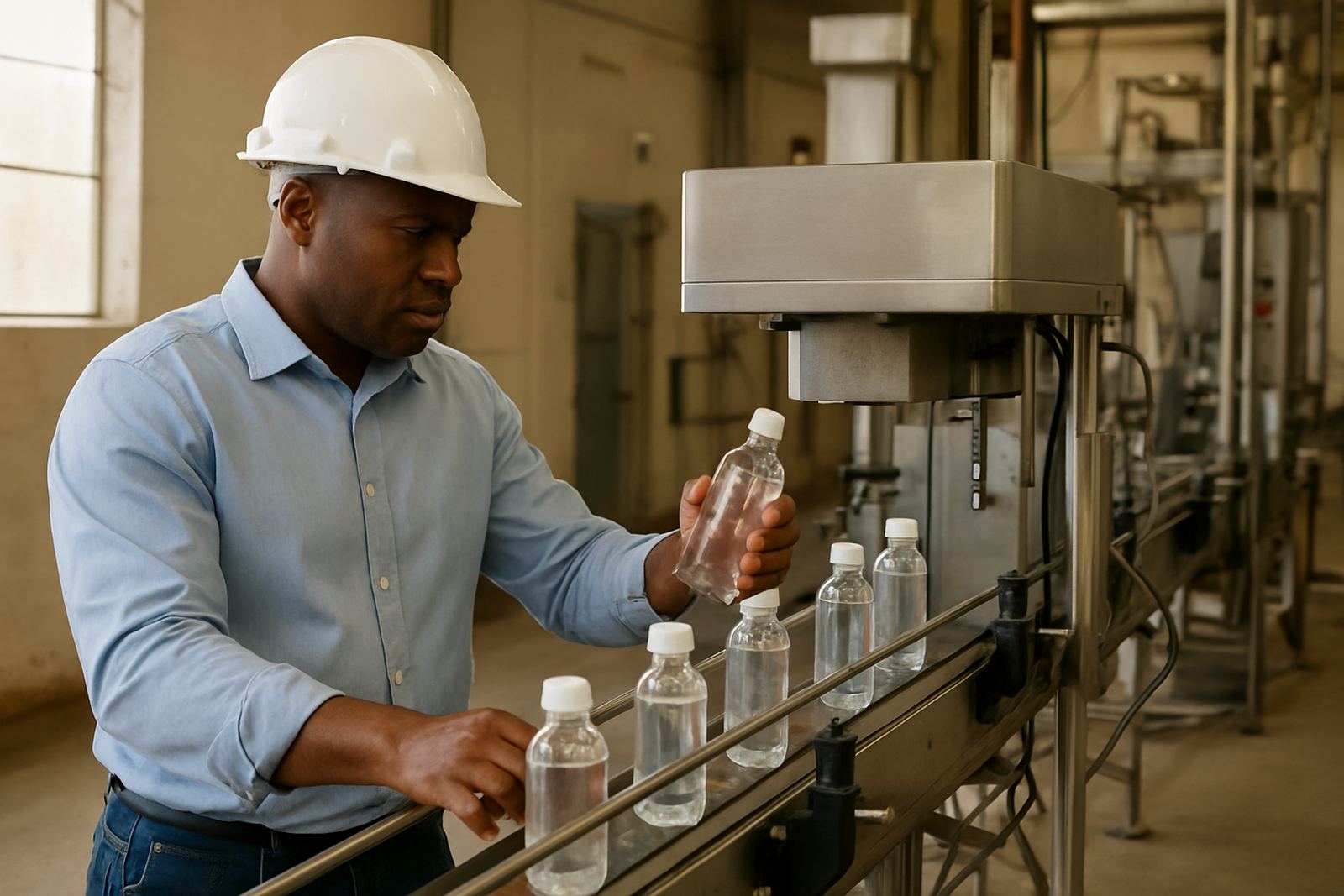
Before handover we run a sequence of checks to confirm that the sealing system is safe and fit for daily use. This includes test sealing on actual production packs, checking for full foil transfer, and confirming that there is no scorching, under sealing or cap distortion. If the product is sensitive, such as tablets, syrups, powders, sauces or solvents, we adjust settings to suit the container material and fill level.
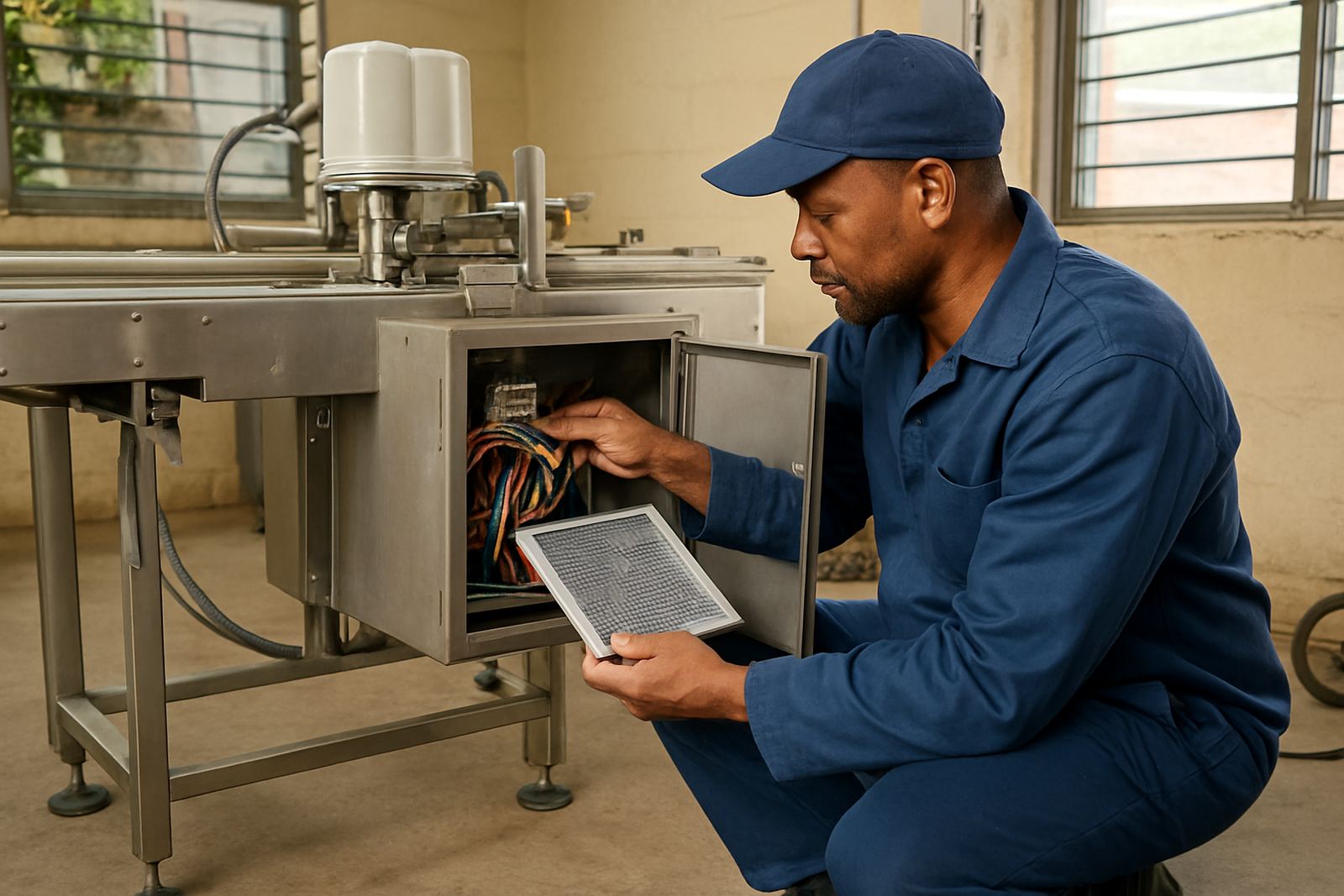
We also review electrical supply and control points so the unit works properly during normal load conditions and during load-shedding recovery. Where a line uses a generator or stabilised supply, we test the sealer again under those conditions because inconsistent voltage can affect output. If needed, we will flag any upstream issue that needs fixing before the line can run at full pace.
- Seal integrity and lift test review
- Temperature and power stability checks
- Cap torque and liner seating inspection
- Reject sample verification
- Operator safety and guarding check
How we commission your sealing line
Every site is different, so we follow a clear process rather than forcing one setting across every product. A standard commissioning visit starts with a technical review, then moves into mechanical fit-up, test running and final sign-off with your production team. We record the machine settings used for each pack format so your operators have a repeatable reference for future runs.
Typical commissioning is completed in one visit for a straightforward single-head unit. Larger or multi-format lines may need a second visit if there are several bottle sizes, cap types or line speeds to confirm. Where the line is still being installed, we can work with your contractor or plant team to make sure the sealer is aligned with the conveyor and capper. That saves time and prevents the common problem of a unit being mounted correctly but set too high or too far back for proper sealing.
- Site assessment and packing line review
- Mechanical setup and first tests
- Live production trial and adjustment
- Recorded settings and operator handover
- Final check with your team lead or supervisor
Turnaround times and commissioning duration
For Durban and nearby industrial areas, we can often schedule commissioning within a short lead time once the line is ready and product samples are available. Turnaround depends on the job size, access to the line and whether other trades are still on site. A basic line with one induction head and a stable conveyor setup can usually be commissioned in a few hours. More complex lines, or sites with several pack sizes, may need most of a shift.
We keep the process moving by asking for bottle samples, cap samples and liner details ahead of time. If a plant in Richards Bay, Pietermaritzburg or further inland sends product info early, we can arrive with a better starting point and reduce time spent on trial and error. In many cases, that makes the difference between a same-day handover and a return visit the next day.
For urgent breakdown recovery we also support existing lines where a sealer has drifted out of setting after maintenance, transport or product changeover. If your operators have moved the machine or changed a pack format and the seal has started failing, we can reset it quickly and confirm the results on the line.
Pricing approach for commissioning work
We quote commissioning according to the work involved, not just the number of hours on site. The main factors are the number of machines, pack formats, travel distance, whether new spares or liners are needed, and whether the line is being commissioned as part of a new installation or as a recovery job on an existing line. This keeps the pricing fair for small producers and larger plants alike.
For customers in Jacobs, Prospecton and Pinetown, the travel portion is usually straightforward. Sites outside KZN are priced with route and time in mind, especially if the job needs a return visit. If special foil liners are required for difficult products, we will quote those separately so the equipment and consumables are clear from the start. No one likes a surprise once the line is already down.
- Fixed price for clear, single-format setup work
- Itemised quote for multi-product lines
- Separate pricing for spares, liners and travel
- Optional follow-up visit after production feedback
Handover, operator training and maintenance intervals
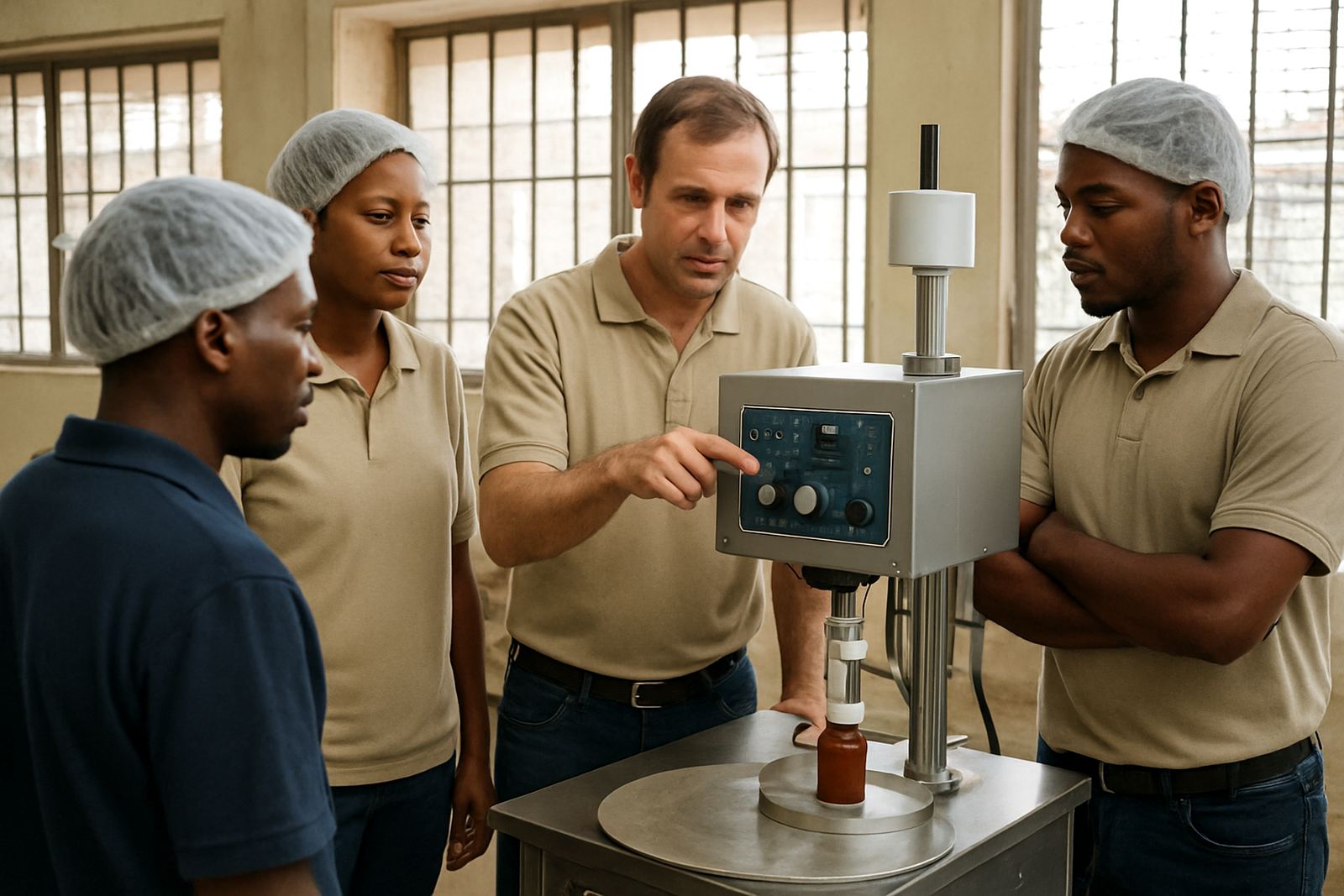
Commissioning is not finished until your operators know what normal looks like. We hand over the recommended settings, explain the warning signs of a weak seal and show the team how to spot poor liner seating before it turns into product returns. That matters in pharma and chemical packing where closure integrity and traceability are not negotiable.
After commissioning, most lines benefit from a check-up after the first production week and again after 3 to 6 months depending on throughput. If the line runs daily, or if there is high dust, heat or coastal humidity, a more regular preventive maintenance cycle is sensible. We normally recommend a quarterly inspection for busy lines and a six-month interval for lighter duty operations, with extra checks after any product changeover or mainline electrical work.
- Weekly operator visual checks
- Monthly seal sample review on high-output lines
- Quarterly preventive maintenance for busy plants
- Six-month setting verification for lower-volume sites
Our service team in Durban supports Jacobs, Pinetown, Prospecton, Pietermaritzburg and Richards Bay, with nationwide commissioning available where sealing lines need careful startup support.
Key facts
| Typical line compatibility | Single-head and multi-head induction sealing systems |
|---|---|
| Cap size range | Common pack sizes from 20 mm to 120 mm |
| Product types | Liquids, powders, granules, tablets and chemical packs |
| Production speed | From low-volume lines to high-throughput packing lines |
| Power considerations | Works with stable mains supply and planned generator backup |
| Service coverage | Jacobs, Durban, Pinetown, Prospecton, Pietermaritzburg, Richards Bay and nationwide |