How induction sealing works on your filling line
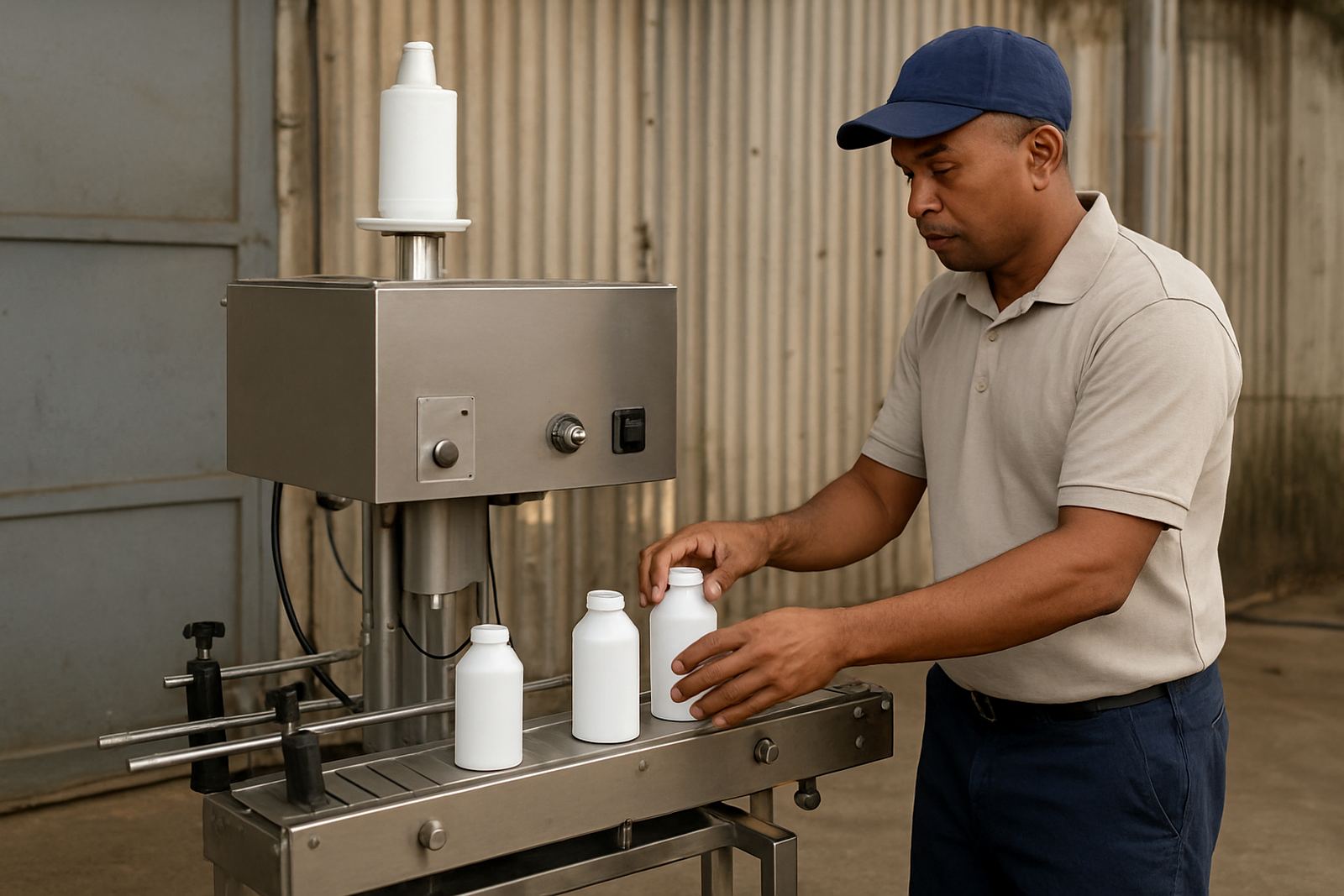
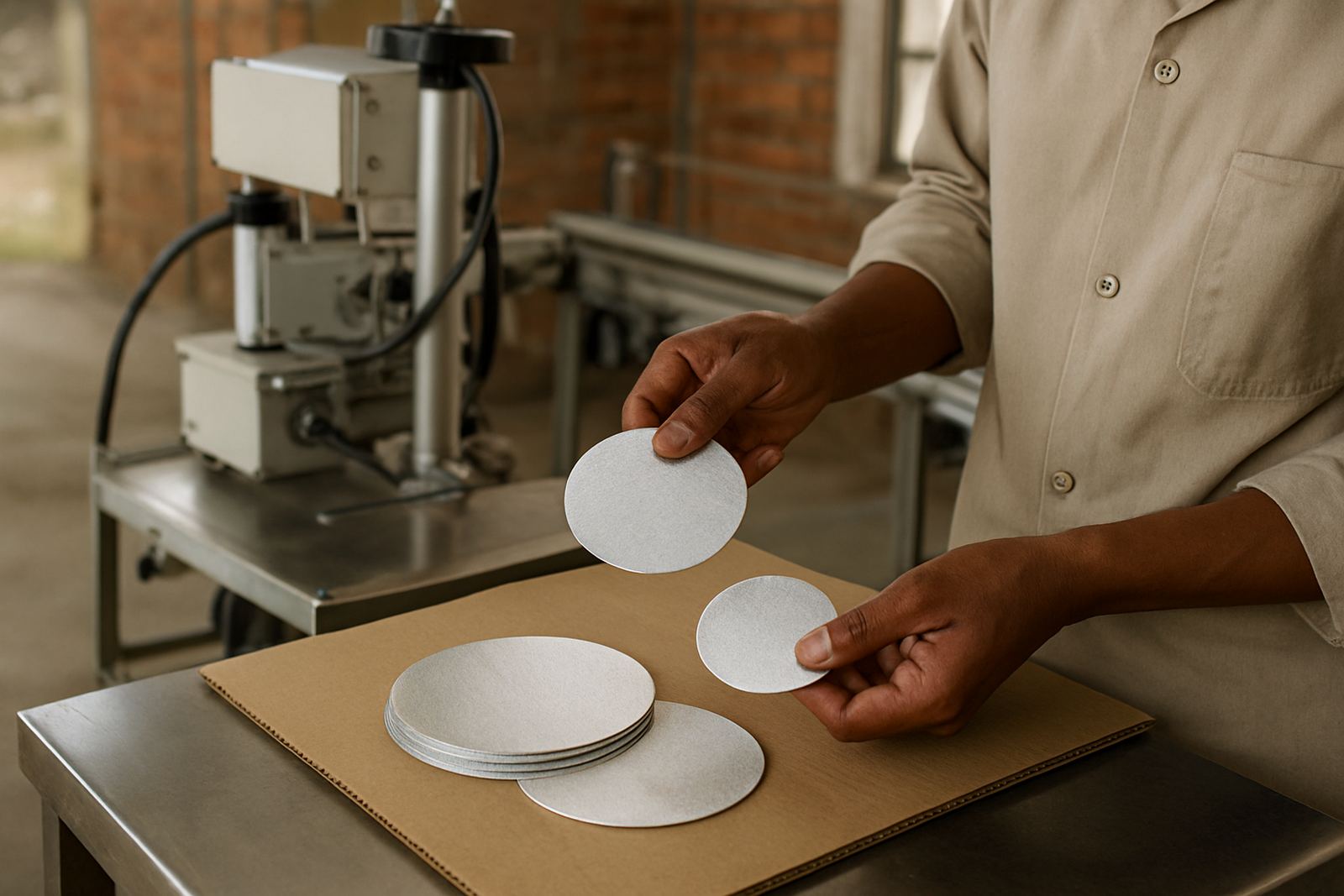
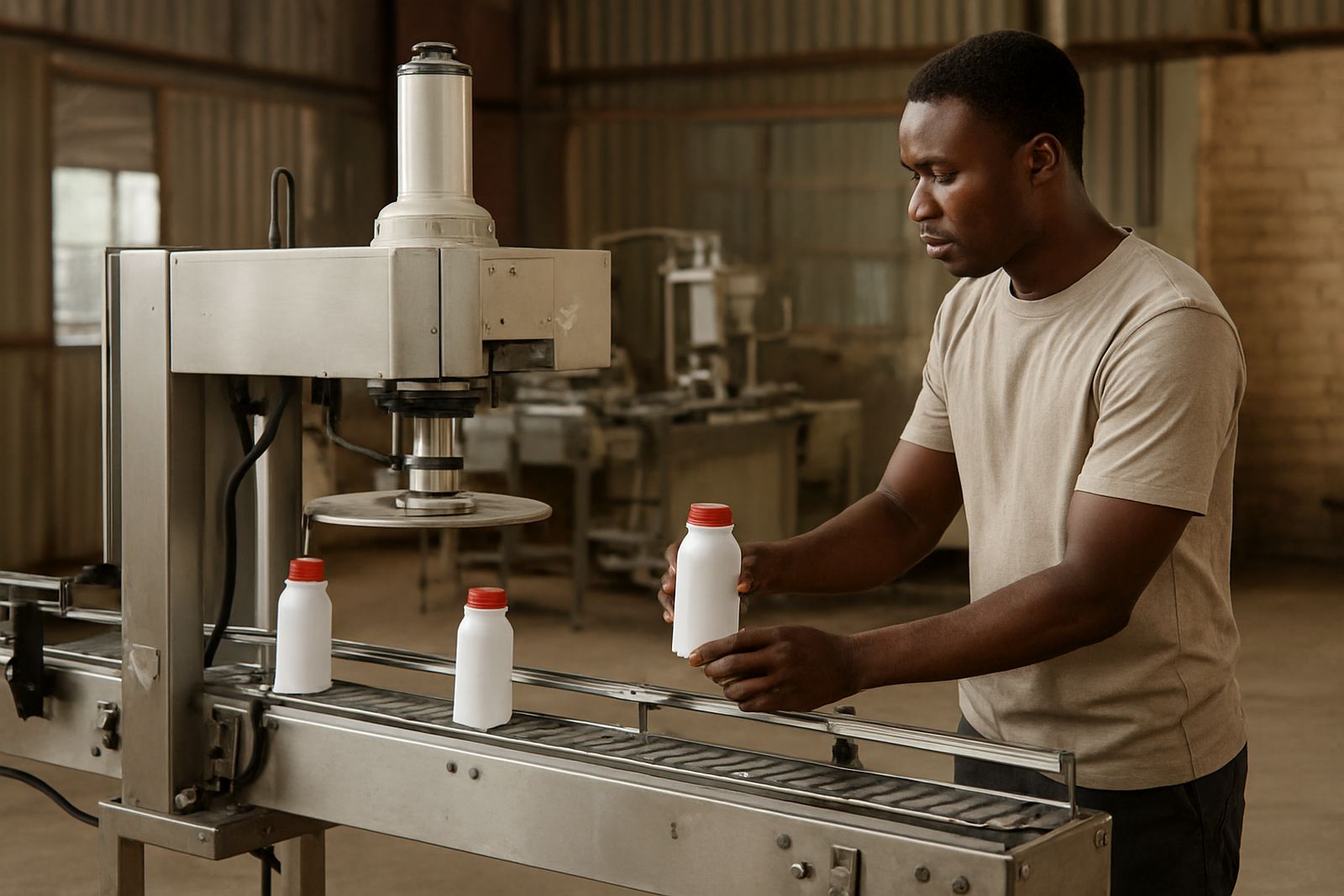
Induction sealing uses a foil liner inside the cap. After capping, the bottle passes under the sealing head, which heats the liner through the cap and bonds it to the container mouth. The result is a clean seal that helps protect against leaks, contamination and product tampering.
For Durban factories dealing with heat and coastal humidity, the setup must be matched to the bottle material, neck finish, cap type and line speed. A good seal is not only about the machine setting, it also depends on correct liner size, cap torque and whether the product is dry, oily or chemical based.
Which caps and containers can be sealed
Most rigid plastic bottles and many glass containers can be sealed, provided the closure and liner are compatible. We normally check the neck finish, cap style and product type before recommending a liner. Some containers need a different liner material, especially where the pack contains solvents, powders or hot fill product.
- Plastic bottles with a standard neck finish
- Glass jars and bottles with suitable cap liners
- Containers for food, pharma and chemical products
- Lines running from small batches to high output production
If you are not sure, send us the bottle dimensions, cap sample and product details. That saves time and avoids buying liners that do not bond correctly. It also helps if you tell us whether the line runs in Jacobs, Pinetown, Pietermaritzburg or further out on a site in Richards Bay.
Common reasons a seal fails
When a seal is weak or missing, the issue is usually one of a few things. The liner may be the wrong size, the cap may be overtightened or under tightened, or the sealing head may be set too high or too low. Dirty bottle mouths and moisture on the rim can also affect bond strength, especially in coastal conditions.
- Wrong liner spec for the product or container
- Cap not centred over the bottle mouth
- Incorrect sealing head height or dwell
- Contamination on the rim, threads or liner face
- Line speed too high for the current setup
Before calling for service, stop the line and inspect ten bottles in a row. Look at the liner position, the cap thread engagement and whether the foil is lifting on one side. A small adjustment can solve the problem, but if the issue keeps returning we recommend a proper check on site.
What our support team needs from you
To help quickly, we ask for a few details from the line and pack. The more accurate the information, the faster we can match the liner and confirm the setting. If you are in production during load-shedding and working on backup power, please mention it because power changeovers can affect repeatability.
- Bottle material and neck size
- Cap type and closure dimensions
- Product name and whether it is liquid, powder or oily
- Current line speed and sealing head position
- Photos of the bottle mouth, cap and failed seal
Send the information through our contact form and one of our team will advise on the next step. If needed, we can arrange remote support first, then site attendance if the line needs hands-on attention.
Installation, commissioning and training questions
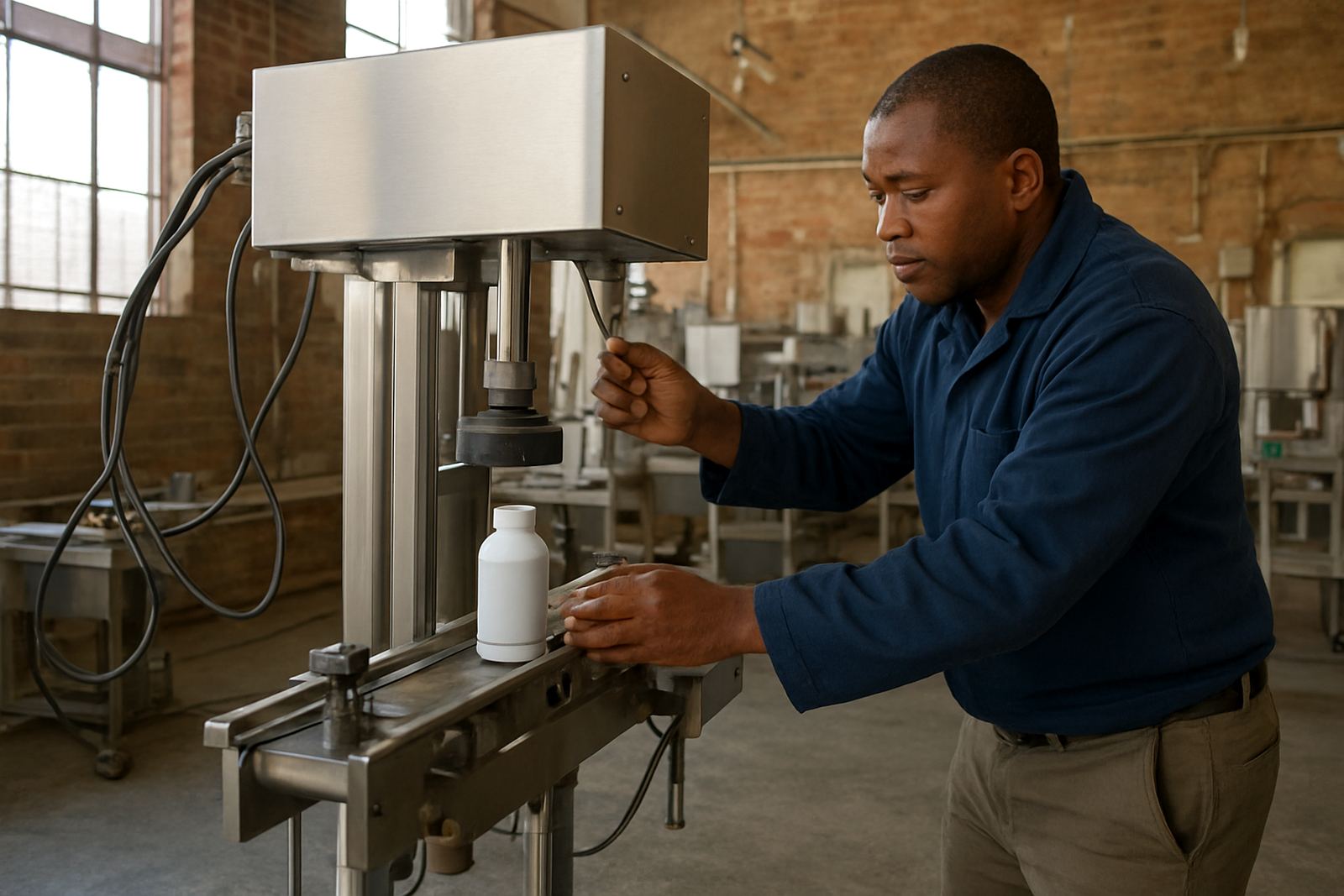
Many customers ask whether we only supply equipment. We also handle site installation, line commissioning and operator training. During commissioning, we check the line height, guide settings, capper timing and sealing head position. We then verify seal quality and make sure the operators know how to spot faults early.
For plants in Prospecton, Jacobs and Pinetown, we often work around shift patterns so the line does not stop for longer than needed. Training is practical and focused on what your team must do on shift, not theory. We show the checks to do every day, every week and after a stoppage.
Maintenance and spare parts support
Preventive maintenance is the best way to avoid unexpected downtime. Induction sealers work best when the head, cables, cooling and controls are checked on schedule. In humid areas near the coast, regular cleaning matters because dust and moisture can build up around the machine and liner handling area, and that causes problems over time.
We supply spares, assist with breakdown repairs and support line optimisation where sealing is inconsistent or slow. If your line has started giving you loose seals or hot spots on the cap, we can inspect the settings and advise whether the issue is electrical, mechanical or related to the liners. Sometimes the answer is small, sometimes it needs a full recheck.
When to ask for seal validation
Seal validation is worth doing when you introduce a new bottle, change the cap supplier, switch product formulation or move production to a different site. It is also wise after a machine relocation, because vibration and transport can change settings without it being obvious.
Validation gives you confidence that the seal holds under normal handling and transport. For pharma and chemicals, that matters for safety and compliance. For food, it helps reduce leak risk and returns. We can test the line, confirm liner match and advise on the setting range to keep in production.