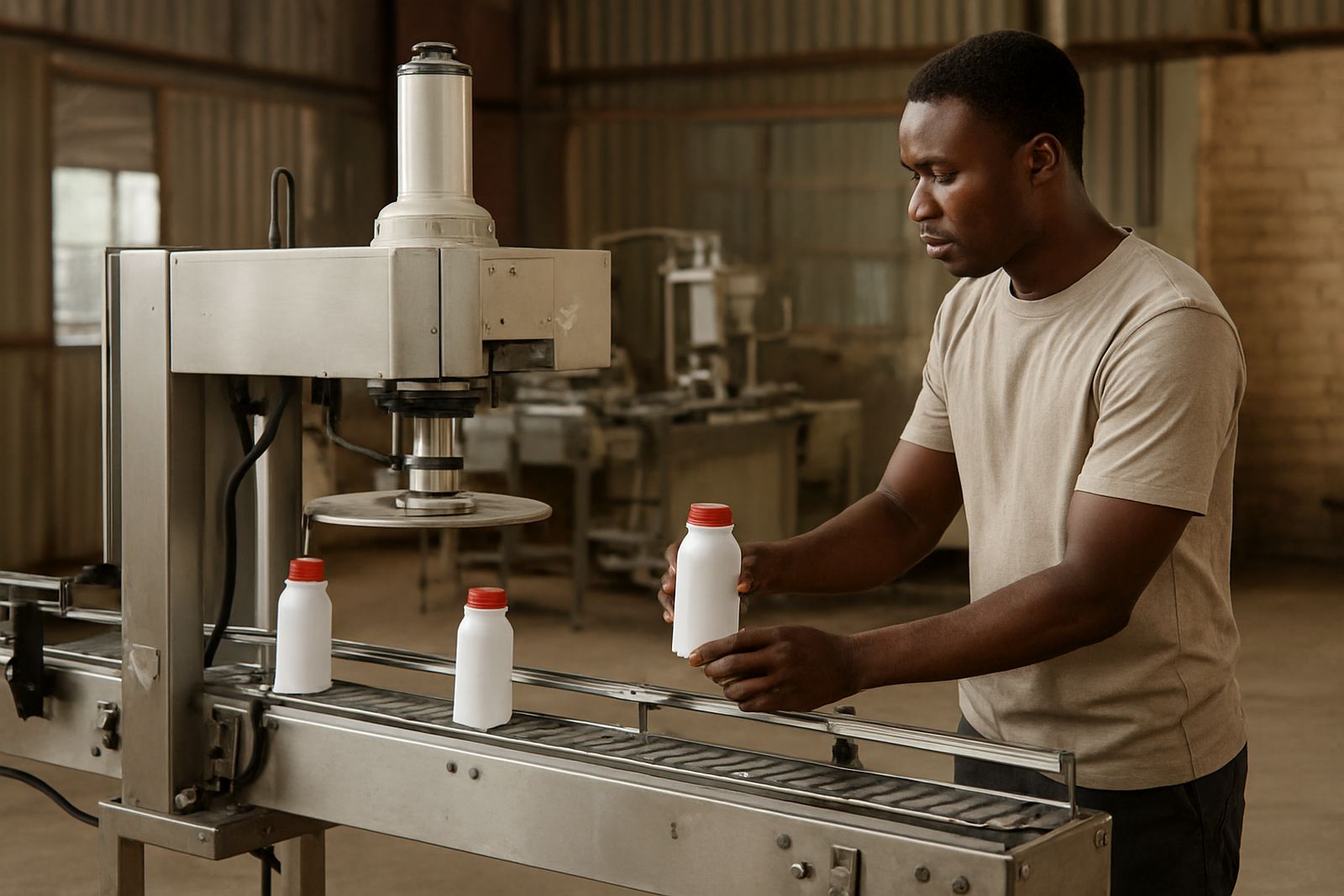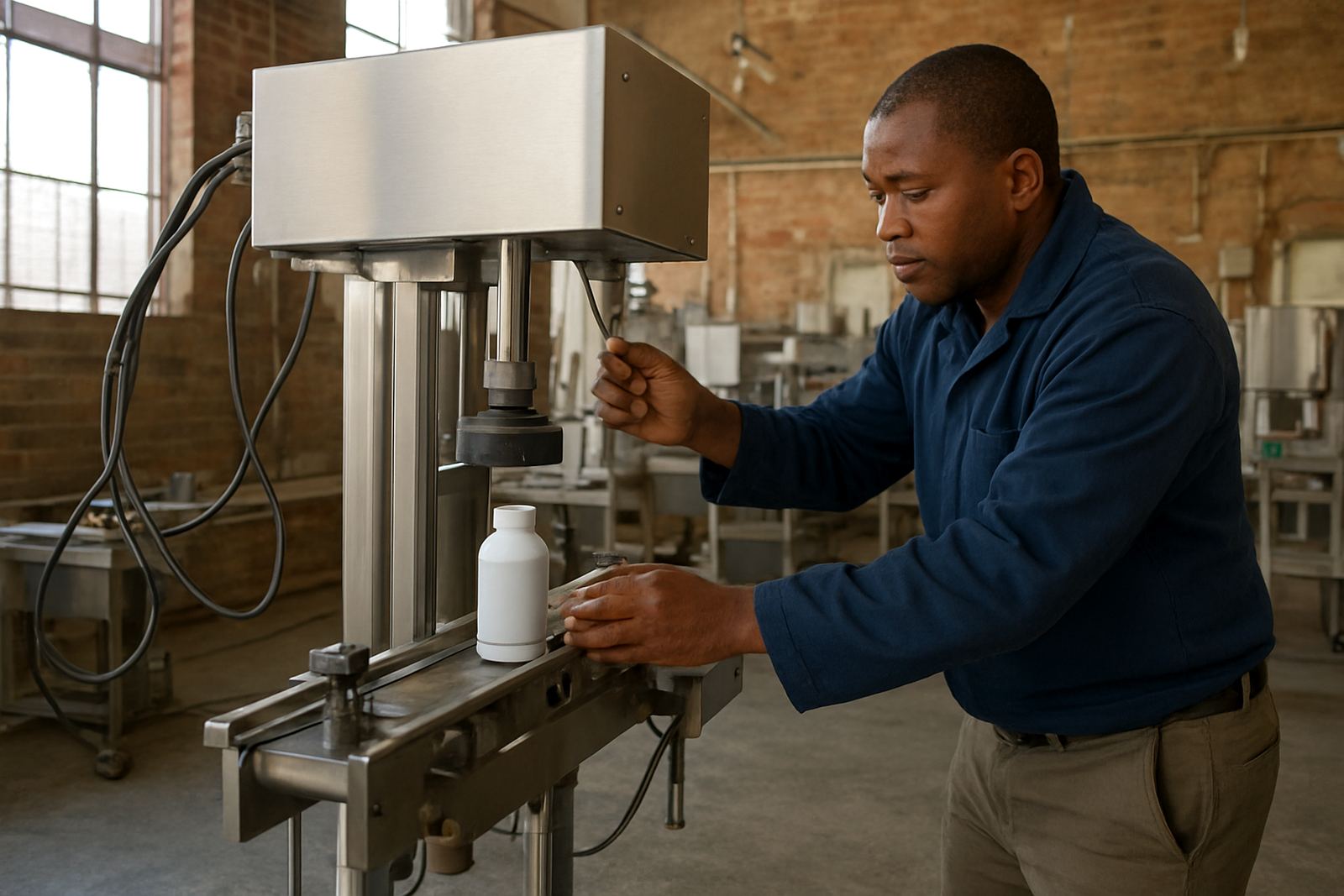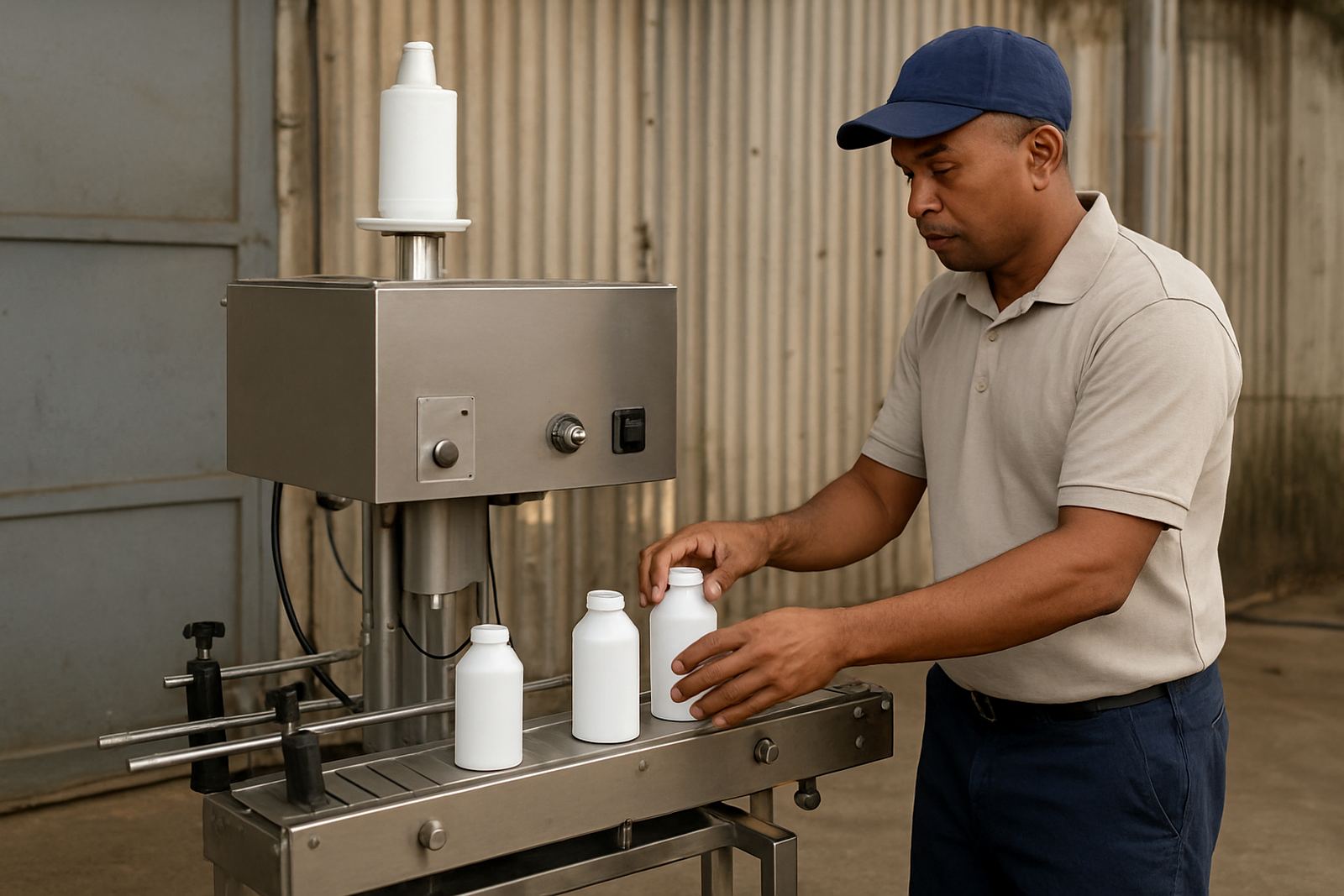
What you can download for your sealing line
The downloads section is set up for production teams, maintenance staff and purchasing managers who need the right information without wasting time. You can use it to request or keep on hand brochures, liner reference sheets, commissioning checklists and practical technical documents for your sealing setup.
These files are useful for pharmaceutical, food and chemical packing lines where seal quality has to stay consistent across shifts. Whether you are sealing glass or plastic bottles in Jacobs or running multiple lines in Richards Bay, having the correct reference sheets makes setup and fault finding much easier.
- Product brochures for induction cap sealing equipment and liner options
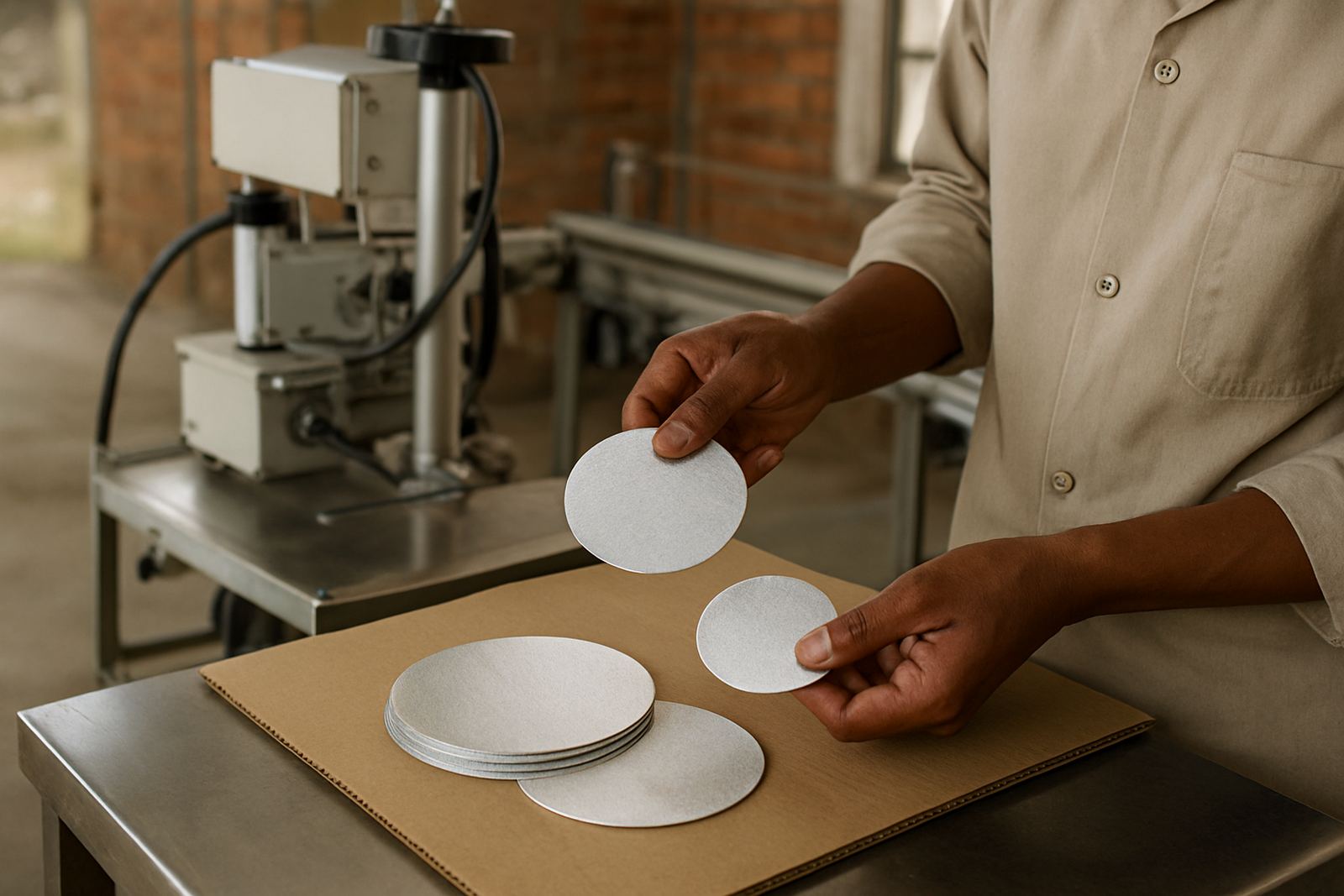
- Liner reference sheets for cap sizes, material types and matching guidance
- Commissioning checklists for new installations and line handover
- Technical notes for operator training, maintenance and validation
How to use the documents during setup and production
Start with the brochure or product note so your team can confirm the sealing head type, cap range and container format before installation. Then use the liner reference sheet to check the cap diameter, liner material and closure compatibility. This saves time when ordering spares and avoids the common mistake of fitting a liner that looks right but does not seal properly.
During commissioning, the checklist helps you record machine position, bottle height, conveyor flow and seal test results. If the line is in a plant with load-shedding backup or variable power, the documents also help your technicians confirm stable settings after any restart. A simple paper trail helps when QA asks for proof of settings later on.
- Confirm the cap size, bottle neck finish and liner type before the machine is set
- Record sealing height, dwell time and line speed during commissioning
- Keep test samples from each shift for internal QA checks
- Use the same reference sheet when ordering repeat spares
Commissioning checklist for first runs and handover
When a new sealer is installed, the commissioning checklist gives your team a clear sequence to follow. It is especially useful when the line is handed over at a site in Prospecton or Pinetown and several people are involved, including production, maintenance and quality control.
A good handover should never be rushed. Check the mounting position, confirm cap presentation, inspect the container path and run a small batch before full production starts. If the line is near the coast, like Durban or Richards Bay, also keep an eye on humidity and storage conditions because they can affect liners and caps if they are left open too long.
- Verify supply voltage and earthing before switching on
- Check cap feed alignment and bottle guide position
- Run seal tests on at least three sample containers
- Capture final settings for future reference
Liner reference sheets for correct matching
Liner matching is one of the most useful parts of the downloads section because it reduces sealing failures before they start. The reference sheets help you compare cap diameter, container material and product sensitivity so you can choose the right liner for the application. That matters on food and pharmaceutical lines where product protection is not optional.
If your operation handles multiple pack sizes, keep one reference sheet at the pack room and another with maintenance. That way the team does not rely on memory when a replacement cap arrives or when stock is moved between Jacobs and Pietermaritzburg. It also helps when a customer asks for a different bottle format and the line needs a quick changeover.
When to ask for support instead of guessing
Use the downloads for everyday reference, but bring in support when the line keeps throwing up the same fault or when a seal test fails after a setup change. If the cap size, bottle shape or liner material has changed, it is worth checking the full system rather than adjusting one setting at random. A small fault can become a bigger one if the operator keeps compensating for it.
For sites in Durban, Pinetown, Richards Bay and farther inland, support can be arranged around line timing so production is not interrupted longer than needed. The team can assist with remote guidance, field checks, spares supply and commissioning follow-up when a document alone is not enough.
- Repeated seal failure after a shift change
- Heat, power or feed issues after load-shedding
- Changeovers to a different cap or liner format
- Any QA concern about seal integrity or consistency
How to request the right file first time
To make sure you get the correct document, send the container type, cap size, product sector and site location with your request. If you have a photo of the cap or liner, include that too. It helps the support team match the file to the line faster and avoid back-and-forth messages.
Keep your request simple and practical. Mention whether you need a brochure, liner sheet, commissioning checklist or a technical note, and state if the line is in Jacobs, Prospecton, Pietermaritzburg or another area. For urgent production issues, the message route is the quickest option and the support team can guide you from there.
Contact: our contact form