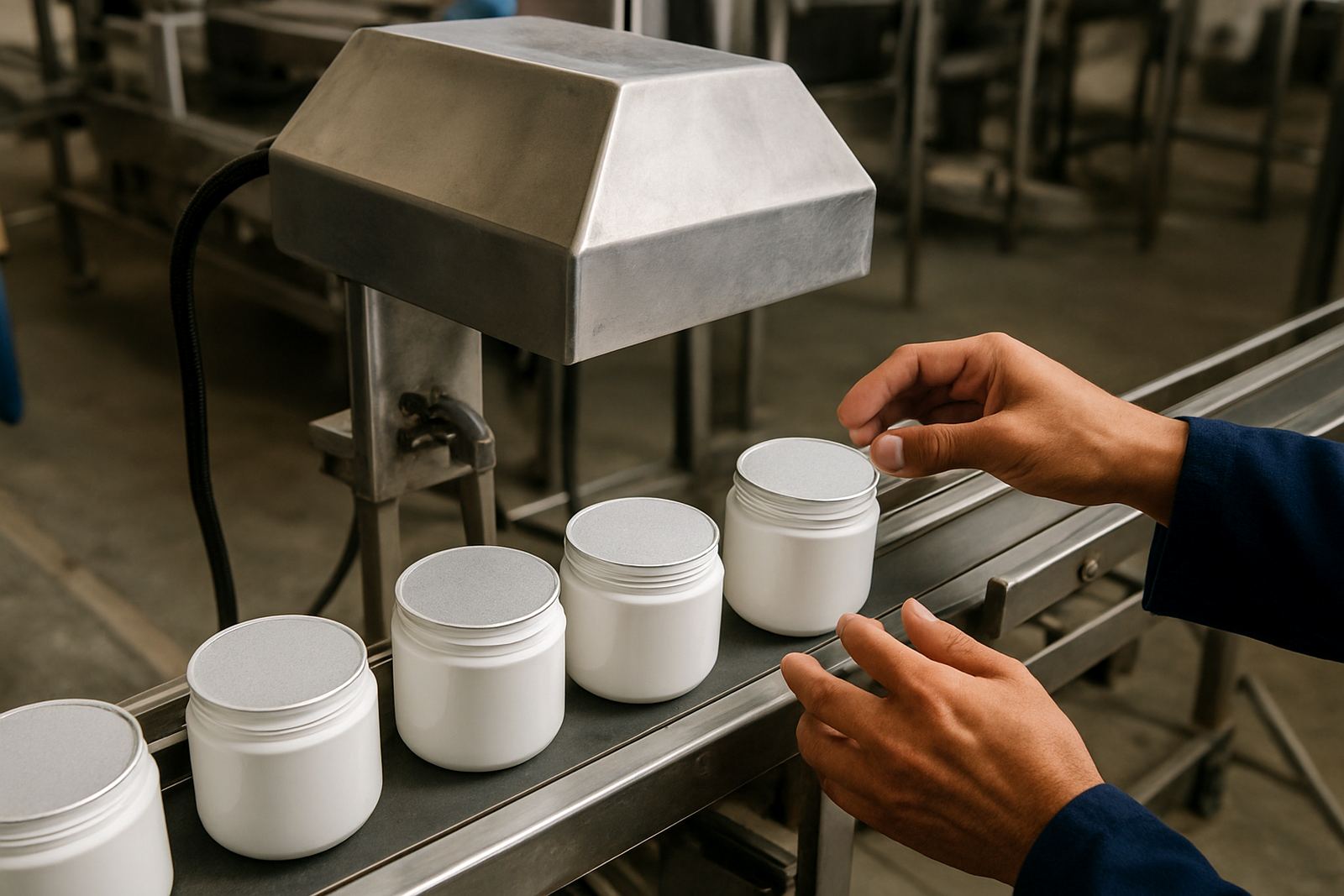
Why airflow matters on induction sealing lines
Air-cooled induction sealing equipment depends on steady airflow to remove heat from the sealing head and internal components. When the fan filter is clean, the unit can move air freely, hold temperature better, and work with more consistency across long runs.
In a plant sealing pharmaceutical bottles, food tubs or chemical containers, poor airflow can show up quickly. Operators may notice a hotter casing, slower recovery between seals, or seals that look fine at first then weaken as the shift goes on. That is not usually a liner problem alone. Very often, the fan filter is already loaded with dust, paper fibres, label scrap or packaging powder.
In Jacobs, Prospecton and Pinetown, where many sites run mixed packing activity close to loading bays and forklift traffic, fine dirt gets pulled into equipment more easily than people expect. On coastal sites, humidity can help that dust cling to the mesh and build up faster, so a light weekly check is better than waiting for a fault.
What a blocked fan filter does to sealing performance
When airflow drops, heat stays inside the equipment. That puts extra stress on the sealing head, control parts and wiring, and it can shorten component life. It also makes the machine work harder during busy production windows, which is exactly when no one wants interruptions.
A blocked filter may not stop the machine immediately, but it can create small problems that become bigger over time. You may see reduced seal strength on some packs, or more variation between the first bottle of the run and the last one before tea break. If the line is already affected by load-shedding, heat stress from poor airflow makes restart checks even more important.
- Higher internal temperature during long production runs
- More frequent thermal cut-outs or nuisance alarms
- Uneven sealing results across the batch
- Shorter life for fans and electrical parts
- Extra downtime for repairs that could have been avoided
In practice, this means the maintenance team may spend time chasing seal faults when the root cause is simple air starvation. A clean fan filter is a low-cost control point with a clear effect on uptime.
How often to check and clean the filter
There is no single schedule that suits every site. A clean, enclosed line in Pietermaritzburg may only need a weekly inspection. A busier Durban site near dock activity, cardboard handling or powder filling may need checks several times a week. The right interval depends on dust levels, shift length and how hard the equipment runs.
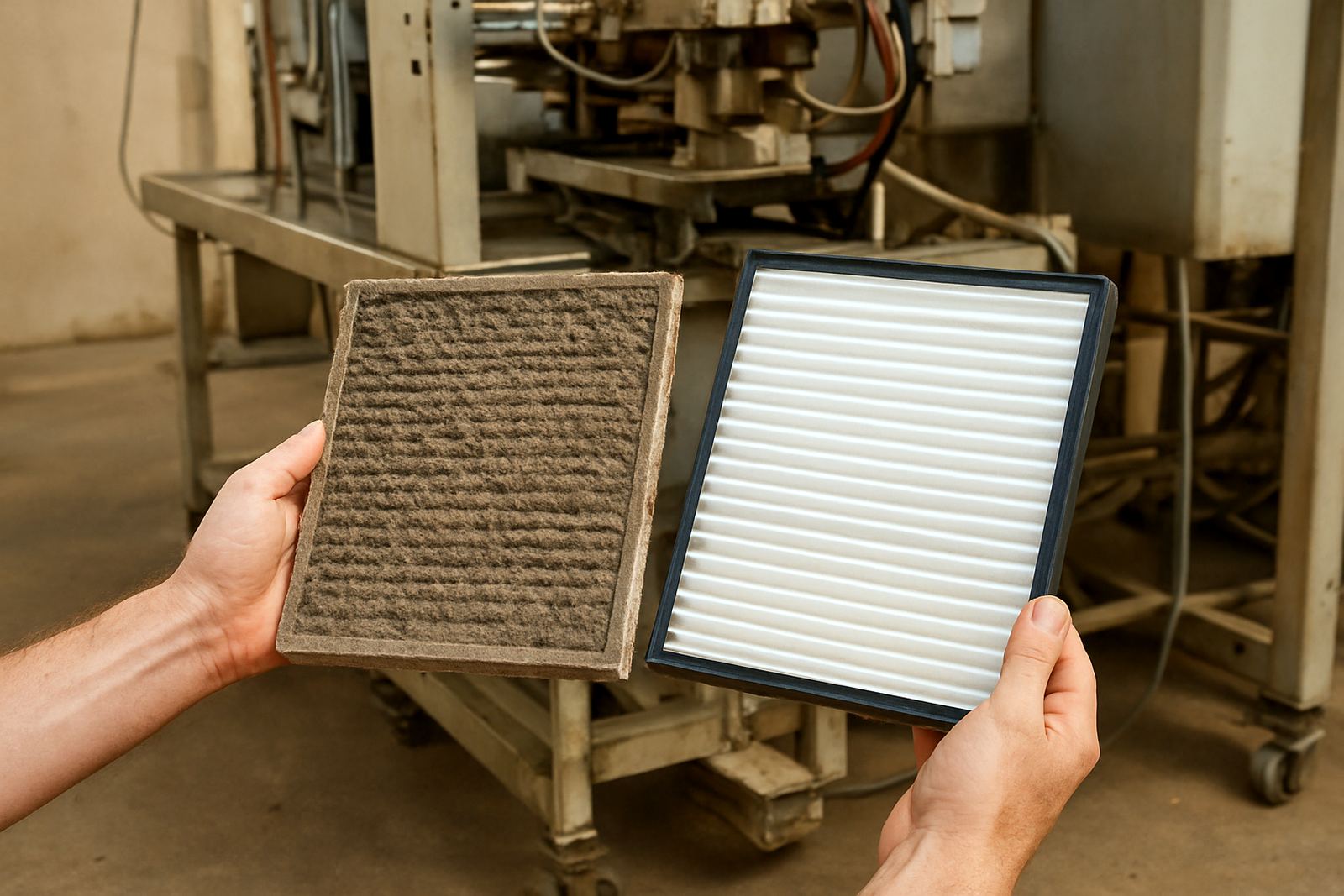
A practical rule is to inspect the fan filter during planned line cleaning or pre-start checks. If the filter looks grey instead of open and light, clean it. If it is damaged, warped or oily, replace it. Waiting until the machine overheats usually means the filter has already been neglected for too long.
- Daily visual check on high-dust lines
- Weekly clean on medium-duty packing lines
- Immediate cleaning after maintenance work that creates dust
- Replacement when the mesh no longer clears properly
- Extra check after power interruptions or abnormal stop-start running
It helps to assign the task to a named person on shift. That small bit of ownership often prevents the filter from becoming everyone’s job and no one’s job.
Good cleaning practice without damaging the unit
Fan filter maintenance should be simple, but it must be done carefully. Rough handling can bend the frame, push dirt deeper into the mesh, or let debris fall into the unit. Always isolate the equipment before opening covers and make sure the area is safe for the operator doing the work.
For most sites, a soft brush, dry compressed air used carefully, or a light vacuum is enough. If the filter is washable, let it dry fully before refitting it. A damp filter can trap more dust and create corrosion around the housing, especially on coastal sites where the air already carries moisture.
- Switch off and isolate before removing the filter
- Use low-pressure cleaning, not aggressive air blasting
- Check that the filter sits back in its frame properly
- Look for torn mesh, cracked clips or rust stains
- Record the cleaning date on a simple maintenance sheet
If the same filter blocks again within a few days, that is a sign the local environment is dirty or the equipment needs closer attention. Repeated clogs can point to poor airflow path, worn seals on the cover, or a site layout that pulls in more dust than it should.
A Durban example from a mixed packing floor
On a Jacobs production floor, a team sealing plastic bottles for a chemical product noticed the first 20 minutes of each run were fine, then a few packs started showing weaker seal consistency. The operator had already checked the liners and the bottle finish, so the issue looked harder than it was. During inspection, the fan filter on the induction unit was blocked with fine cardboard dust and a light film from nearby handling activity.
After the filter was cleaned and the airflow path checked, the machine returned to steady operation. The team then added the filter to their daily start-up routine and the issue did not repeat. It was not a major repair, just a maintenance point that had been missed in a busy line changeover. That kind of problem is common where packaging, loading and cleaning all happen in the same area.
For plants in Richards Bay, Durban or Pinetown, the lesson is the same. If the air-cooled unit cannot breathe properly, sealing performance will drift. Cleaning the fan filter is not glamorous work, but it protects output and keeps the line easier to manage during demanding shifts.
When to call for service support
If the filter is clean and the unit still runs hot, the issue may be deeper than routine maintenance. Fans can weaken, airflow paths can be restricted, or the equipment may need a full inspection after a breakdown, surge or repeated restart. That is when proper fault finding saves time and prevents further damage.
Bottle Sealers supports sealing lines nationwide from Jacobs, Durban, with service across Pinetown, Prospecton, Pietermaritzburg and Richards Bay. The team handles installation, commissioning, operator training, seal validation, preventive maintenance, breakdown repairs, spares supply, liner matching, line optimisation and remote support.
For plants that cannot afford repeated seal failures or unnecessary downtime, having a service partner that understands local conditions makes a real difference. Salt air, dust, load-shedding and long production hours all affect the life of sealing equipment, so maintenance has to be practical and on time.
Keep the air path open and the seals steady
Fan filter care is one of the simplest maintenance tasks on an air-cooled induction sealing line, yet it has a direct effect on seal quality, energy use and equipment life. A clean filter helps the machine stay cool, work consistently and avoid unnecessary stops. Ignore it, and small airflow problems can become bigger production issues very quickly.
For advice on fan filter checks, seal validation or line support, contact the Bottle Sealers team at our contact form. A short inspection now can save a long stoppage later.