What the Richards Bay team needed from the line
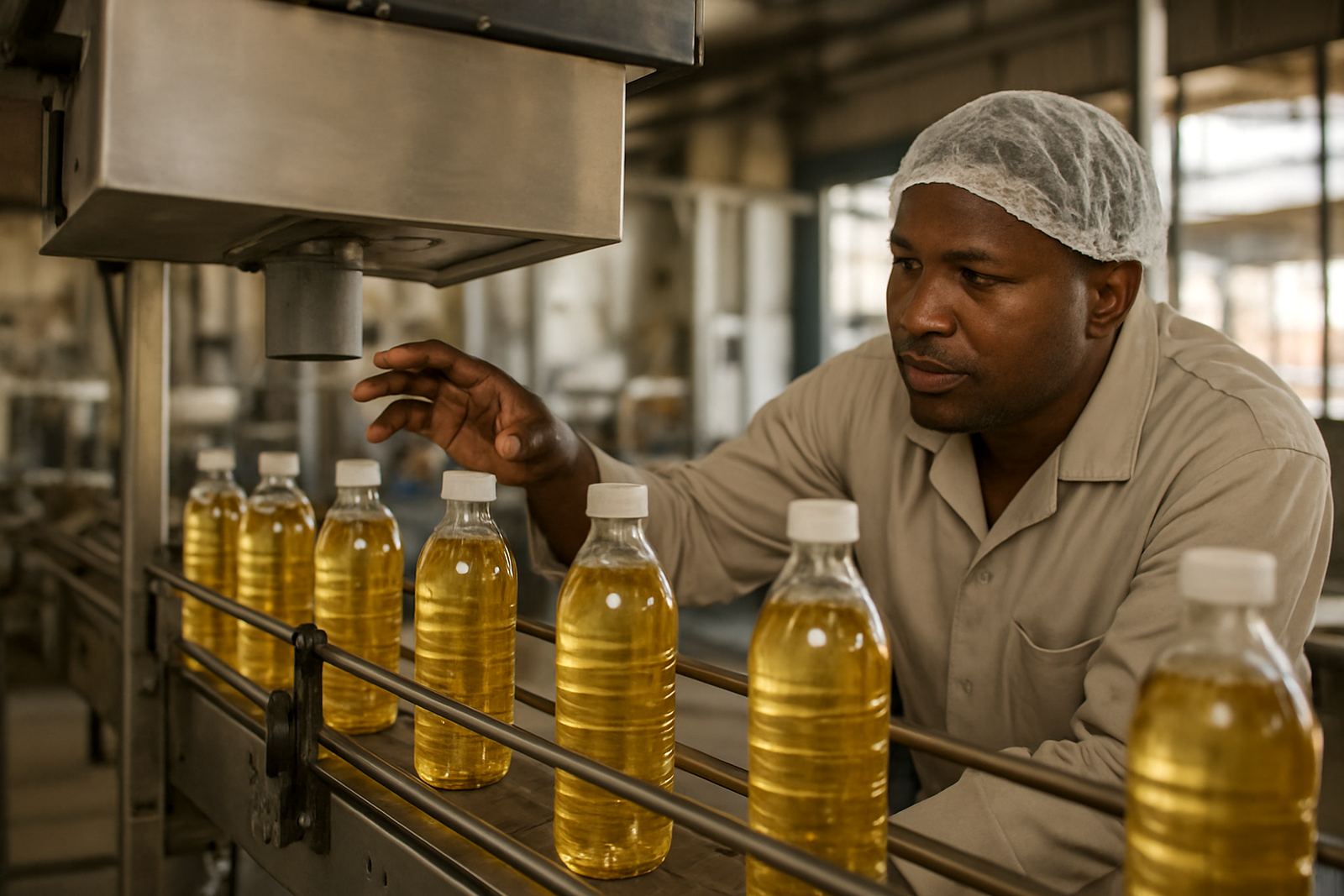
The client was a food packer in Richards Bay handling edible oils in multiple bottle sizes for retail and trade. Their main concern was simple enough to say but not always easy to hold on a live line: every cap had to go on cleanly, every seal had to hold, and the finish had to look right on the shelf. Any oil residue around the neck would affect the seal area, so the system needed to be set up with proper cap control and a disciplined sealing process.
The brief called for a clean cap application stage, reliable induction sealing, and practical support for the operators working different shifts. The line was running in a coastal area, so humidity and heat were always part of the picture. They also needed equipment that could cope with power interruptions and a production rhythm that changed between smaller trial batches and full commercial runs. In other words, it had to be steady, not fussy.
- Product type: edible oil packs in plastic bottles
- Focus: clean cap application and strong induction seals
- Operating area: Richards Bay with support across KZN when needed
- Production challenge: residue control, humidity and shift-based throughput
Why sealing oils needs a different approach
Oil filling brings a few problems that do not show up in dry products. A small amount of product on the bottle neck can interfere with cap placement, and once that happens the induction liner may not sit correctly. If the liner is not properly seated, the seal can weaken during handling or transport. For edible oils, that is not just a packaging issue, it affects shelf life, product confidence and returns.
We looked at the full cap and seal path, from bottle top condition through to liner fit and post seal inspection. The goal was to reduce rework and keep the finish consistent from start to finish. We also checked how the line behaved during start up after stoppages, because in a coastal plant even short delays can change the way a sealing head performs. The client wanted a line that could recover quickly after a pause and keep pace without constant handholding, which is fair enough.
- Clean necks and caps before sealing
- Correct liner matching for edible oil containers
- Stable seal performance after pauses and restarts
- Simple settings that operators could repeat across shifts
What we supplied and set up on site
We supplied an induction cap sealing solution matched to the bottle format and production speed, along with foil liners suited to edible oil packaging. The setup was tuned for clean application, with the sealing head positioned to give even heat transfer and a proper bond across the liner. We also checked cap material, bottle finish and container size so the seal could be validated under real line conditions, not just in theory.
Our team handled site installation, line commissioning and operator training. During commissioning, we worked through cap feed, seal head alignment, liner seating and line speed adjustments. We also covered the practical bits that matter on the floor, like how to spot a bad cap before it reaches the sealing station and how to confirm that the line is still holding its settings after a stoppage. A few small adjustments made a big difference, especially at the start of a shift when the team wanted the line up and running quickly.
- Induction cap sealer matched to bottle and closure format
- Foil liners selected for edible oil packs
- Site installation and line commissioning
- Operator training for daily running and basic fault checks
- Seal validation during live production
Timeline from installation to production handover
The project ran over four weeks from first site assessment to handover. Week one covered the initial inspection and liner matching. Week two was installation and mechanical alignment. Week three was commissioning, trial sealing and operator training. Week four was used for validation, minor optimisation and close out support while the line settled into regular production.
That timeline worked well because it gave the operators time to get familiar with the process without rushing the changeover. Richards Bay plants often plan around production slots, delivery windows and utility interruptions, so a short but structured programme was the right fit. We kept the schedule practical and made sure the client had enough time to test different pack sizes and confirm that the seal held after handling. The changeover was steady, not dramatic, which is what you want on a food line.
- Week 1: site review and liner matching
- Week 2: installation and alignment
- Week 3: commissioning and operator training
- Week 4: validation and final optimisation
Results on the pack line
Once the system was running properly, the line produced cleaner cap application and more consistent seal integrity. The team saw fewer bottles needing rework at the end of the shift, and the visual finish improved because the caps were seating more evenly. That matters in edible oil packaging, where the bottle has to look neat on shelf and stay secure through transport and storage.
The client also appreciated that the settings were easy to repeat after breaks or power interruptions. In a coastal town like Richards Bay, a line may stop and start more often than planned, so recovery time has real value. Seal validation checks showed good repeatability across the agreed bottle range, and the operators picked up the process quickly. A well set line saves time every day, even if the improvement looks small on paper.
From Bottle Sealers’ side, this was exactly the kind of project we like to support. It combined the technical side of seal performance with the practical side of production reality, which is where most packaging problems actually live.
What we would do again on a similar oil project
If we were starting a similar edible oil project again, we would follow the same approach. Start with the bottle neck condition, confirm liner compatibility early, and spend enough time on operator training before the line goes into full production. That small amount of preparation reduces a lot of avoidable faults later on. We would also keep a close eye on cap feed and sealing temperature during the first few days, because oil packs can behave differently once production speed picks up.
For Richards Bay and other coastal plants, we would again plan for humidity, dust and power interruptions from the start. Preventive maintenance and quick breakdown support are not extras on a line like this, they are part of keeping the process steady. Where required, we can also support remote troubleshooting, spare liner supply and line optimisation for other pack sizes. The point is to keep the sealing process practical for the people running it every day.
- Check liner fit before full production starts
- Train operators on cap quality and seal checks
- Build in maintenance for stoppages and shift changes
- Match the sealing setup to the actual bottle range
Key facts
| Project location | Richards Bay, KwaZulu-Natal |
|---|---|
| Client type | Edible oil packer |
| Main task | Clean cap application and induction sealing |
| Bottle format | Plastic bottles for edible oil |
| Timeline | 4 weeks from site review to handover |
| Services used | Installation, commissioning, training, validation and support |